



Flight attendants often work across business, economy class, and premium economy on long-haul routes. Some are especially trained and designated to look after the first class cabin. Passengers in premium cabins differ: some are just bored and well used to the business class experience, while others act entitled and a little bit precious. However, one of the joys of flight attendants is seeing first-timers in a premium cabin.
There are many things a flight attendant will notice about first-timers in the business class cabin, including passenger requests, behavior, and more. Business class is not just champagne and lie-flat seats; there are unwritten rules of the cabin where comfort, quiet, and privacy are key. Let’s take a look here in more detail.
Seat Confusion & Luxuries
When moving from an economy seat to a business class seat for the first time, passengers can honestly find it a bit overwhelming and likely to be confused. There is so much to learn about with multiple recline positions, the opportunity of a lie-flat bed, massage functions, privacy doors, and embedded controls; it can be genuinely difficult to operate. The first time, they may well have to ask a flight attendant for assistance. They may need help operating the privacy door and finding the tray table, which may be in the armrest or even under the seat.
An amenity kit in business class is often filled with luxurious designer skincare, socks, and sleep masks. Although it might be tempting to keep it unopened as a souvenir, it is better to use it to enhance the flight experience. A rich moisturizing cream will help fight the dry skin that the Aircraft cabin tends to produce. The sleep mask and socks will improve comfort whilst sleeping. Some passengers love collecting amenity kits but don’t use them, but that is a wasted opportunity to really enjoy the flight.
It is also a good idea to keep the pouch that comes with the kit, as flight attendants often recommend using it to store chargers and cables when traveling. It can be used later as a travel organizer according to Business-tickets, which also says that those new to business class may need assistance, as the sheer number of new and unfamiliar items compared to traveling in economy can be confusing.
Simple Flying Quiz
Easy (15s)Medium (10s)Hard (5s)
Passenger Behavior

Passengers are always documenting their experience of business class, photographing the lie-flat bed, what is in the amenity kit, and the meals, with champagne, of course. It is an understandable reaction for first-timers in business class, as it is an exciting experience compared to the usual economy class seat. Although regular business travelers rarely do, as it’s simply not new to them anymore, and doesn’t need to be documented.
The atmosphere in the business class cabin is significantly set by both the passengers’ and the flight attendants’ behavior. As a general rule, it is a good idea to observe other passengers and the flight attendants’ manner, and match it, to create the right mood. More often than not, it is discreet, quiet, and calm. The idea that business class travel means flashy or entitled behavior is, fortunately, a common misconception, according to Business-class, and only happens on occasion.
One of the most endearing things that flight attendants notice about first-time passengers in business class is the look of delight and excitement on their faces when they turn left. They notice the spacious seat, are happy to be offered a glass of champagne on board, and look forward to enjoying the entire experience. Experienced crew members never get bored with seeing that and often encourage them to enjoy the experience.
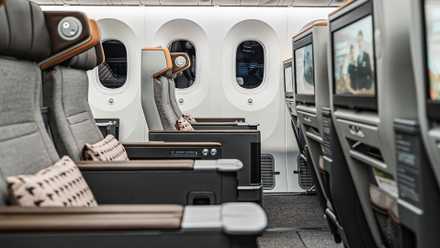
The Striking Differences Between Business Class & Premium Economy On Ultra-Long-Haul Flights
The differences go far beyond price, with business class passengers enjoying more space, better service, and lounge access.
Passenger Etiquette

A telltale sign of a first-timer is being overly polite, which is much appreciated, but can sometimes be borderline self-conscious. When someone is being served in a luxurious environment, a passenger may feel that interactions with the flight attendants become apologetic. Some may feel they need to earn their place in the business class cabin, but flight attendants can tell who is comfortable in the cabin and who is not.
Flight attendants will notice what passengers are wearing when they board. This is partly for safety, as they are looking for sharp objects and clothes that are not practical in an emergency evacuation. Sharp items such as high heels and studded garments can puncture the slide during an emergency evacuation, and no one wants that to happen. It is also for etiquette, in that someone’s clothing may be too revealing or offensive; in this case, flight attendants can ask a passenger to change their clothing or at least cover it.
Clothing also says something about your flying experience. Flip-flops, pajamas, tight jeans or yoga pants, and high heels are all signs that the person doesn’t fly often or doesn’t know how to dress for airline comfort. Business class passengers often dress smart casual, whereas first-timers tend to dress more formally.
The Unusual Habits

First-timers often can’t resist collecting everything available, and of course, the crew do notice this. Some ask if they can take items such as blankets, pillows, and headphones, although technically these should remain on the aircraft. When a passenger takes multiple items, such as snacks, it shows a scarcity mindset, and for those who do not fly on a regular basis, every extra feels all the more valuable. Regular business class passengers, in contrast, often leave the amenity kit completely untouched, according to One Mile At A Time.
Passengers who don’t fly often want to make sure they don’t miss out on anything included in their business class ticket price, whereas regular passengers will rarely finish their first drink. They are not concerned about missing out, as the experience is very routine for them. First-timers will often work through every course, most drink options, and every snack available — while seasoned business travelers often eat lightly or skip meals entirely in order to make the most of their sleep time.
Although first-timers in business class may want to take advantage of everything available, it should be advised that they should not continuously use the call bell for more items. The flight attendants will take care of you, but they are not servers or butlers and are there for your Safety. Also, the business class cabin is often dense in seats, with a longer service, so it is often difficult to answer call bells unless in an emergency. The passenger may be excited to be in business class and overly enthusiastic, but the crew will notice and know it’s not a demanding regular passenger.
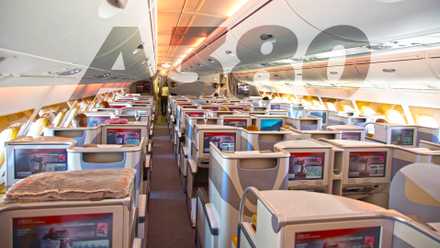
The 5 Most Comfortable Airbus A380 Business Class Seats You Can Book Today
Discover the best business class on the giant Airbus.
Visible Signs Of The First-Timer

Another sign of a first-time business traveler is that they intensely watch the flight attendants. They observe how the meal is plated, how the wine is served, and how the flight attendant approaches each passenger. Flight attendants are essentially behavioral analysts at 30,000 feet, and they start their assessment the moment you step on board. Those first 30 seconds tell everything whether a passenger may need extra help during an evacuation, or if they are sick or may become disruptive.
Passengers tend to just board, not look at the crew, or even greet them. But if a passenger smiles and genuinely greets them, they will be remembered, especially in a business class cabin, where things can be very formal. If there is common courtesy, then the crew are likely to respond, as it is quite unusual these days, when air travel is akin to getting on a bus. If they can upgrade a meal or offer extra drinks and snacks to a ‘nice’ passenger, they will.
Experienced business travelers can sometimes be demanding and not always polite, but often they will keep service to a minimum and want to be left alone. The flight attendant distinctly knows how to react to this. Long-haul business class passengers often prefer to sleep. Passengers new to the business class cabin will be noticed by flight attendants, as they are often in awe of being seated in a premium cabin. The flight attendants tailor their service to each passenger, providing more assistance to those new to the business class cabin.
Key Takeaways

There is no doubt that business class offers more comfort, privacy, space, and seat recline than economy. The little touches like amenity kits and hot towels make for a premium flight experience, as well as having upgraded menus and welcome drinks. Priority boarding and lounge access may also be included. First-time business class passengers may be eager to enjoy everything on offer and be overly enthusiastic, which is understandable. Flight attendants can spot first-timers quite easily.
It is a good idea to observe the mood in the cabin, how other passengers are acting, and the style of the flight attendants’ manner, and match it. Courtesy is very important; the business class cabin is a shared space, so it is important to be considerate of others. This includes keeping your space clean and organized and not encroaching on other passengers’ space. Etiquette should be observed, and dress should be smart casual.
Kindness matters enormously. As one flight attendant revealed at Silicon Canals: “We remember the helpers. When I have an extra amenity kit or a better meal option, guess who’s getting it?” It is clear that respect and courtesy towards crew members don’t just make for a better passenger but often result in better service. Treat the crew well, and they will look after you, in essence.
