


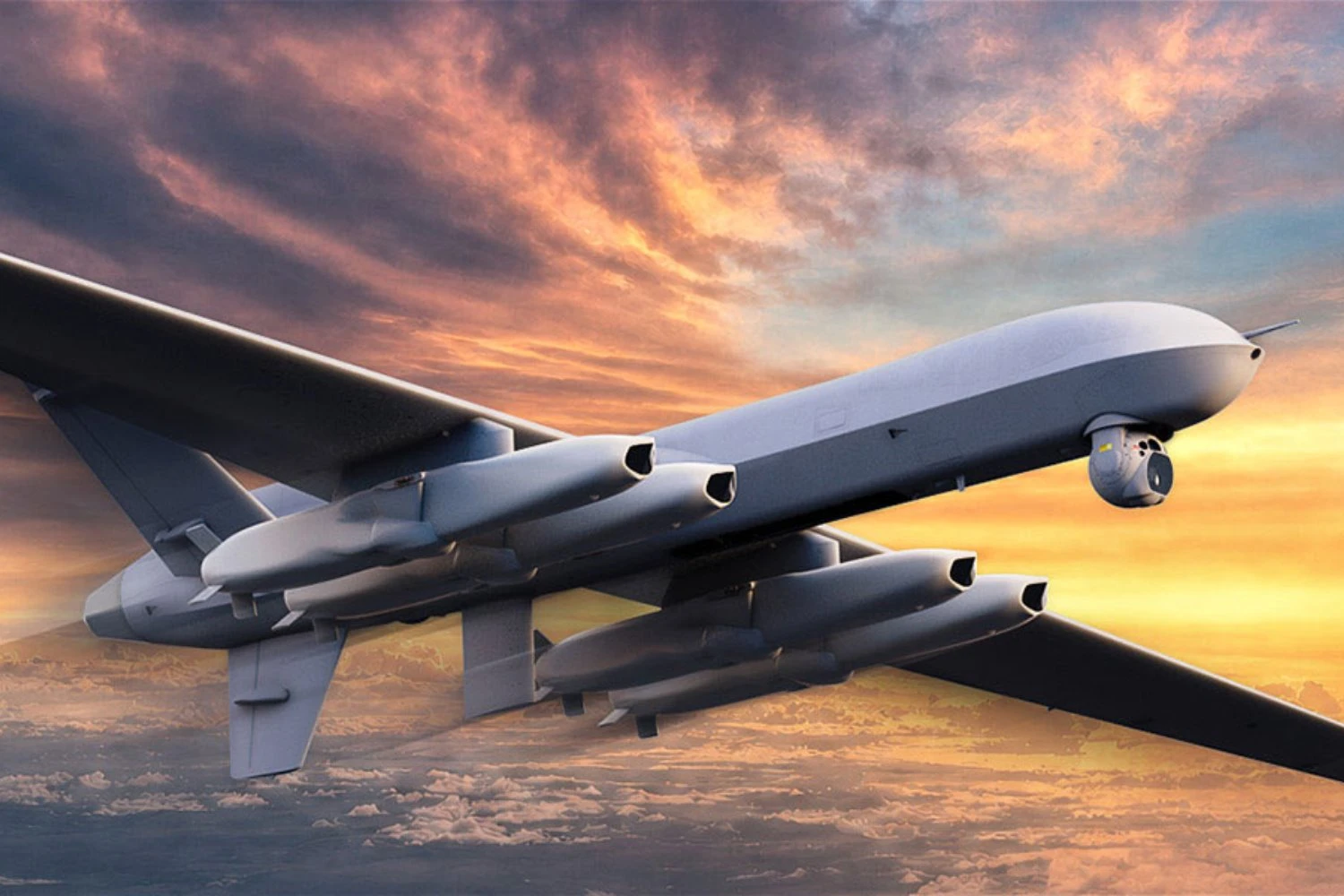
General Atomics Aeronautical Systems has unveiled the Wildfire, a new unmanned aircraft developed for the U.S. Air Force’s search for an eventual replacement for the MQ-9A Reaper.
The aircraft is the company’s proposal for the Massed Modular Aircraft (MMA) program, an initiative being conducted by the Air Force with the Defense Innovation Unit. The service says the program will help define requirements for the aircraft that eventually succeeds the MQ-9.
Follow Air Data News: WhatsApp | Instagram | LinkedIn | Twitter | Facebook
General Atomics has not been selected to provide that replacement, but its position as manufacturer of the MQ-9 and other Predator-family aircraft gives the Wildfire an obvious connection with the requirement. The company says it can also use its existing production infrastructure to bring the new aircraft into service faster than originally envisioned by the Air Force.
Wildfire retains some of the familiar characteristics of the Reaper, including a long-span wing and rear-mounted pusher propeller, but was designed around a different set of priorities. General Atomics promises greater payload and range than the MQ-9A at a substantially lower acquisition cost.
The Air Force wants the MMA air vehicle to cost around US$10 million before sensors and other mission equipment. The requirement calls for a payload of at least 2,800 lb (1,270 kg), a combat radius of at least 2,300 nm (4,260 km) while carrying a mission payload and a ferry range of at least 8,000 nm (14,800 km).
General Atomics says the Wildfire will exceed the 8,000-nm requirement, although it has not released its exact range, endurance, speed, ceiling or dimensions.
Heavy weapons and autonomous operations
One of the most significant differences from the MQ-9A is the weapons the Wildfire is intended to carry. General Atomics says the aircraft will be capable of flying with two AGM-158C Long Range Anti-Ship Missiles (LRASM) or four Joint Strike Missiles (JSM), as well as other weapons, sensors and launched effects.
The LRASM is a large stand-off anti-ship weapon derived from Lockheed Martin’s JASSM family. Carrying two of them would give the Wildfire an offensive capability against heavily defended targets from well outside the range normally associated with Reaper operations.
The aircraft is also being designed for a different approach to control. Instead of relying on a conventional ground control station and the personnel-intensive operating model associated with the MQ-9, Wildfire will use government-provided autonomy software.
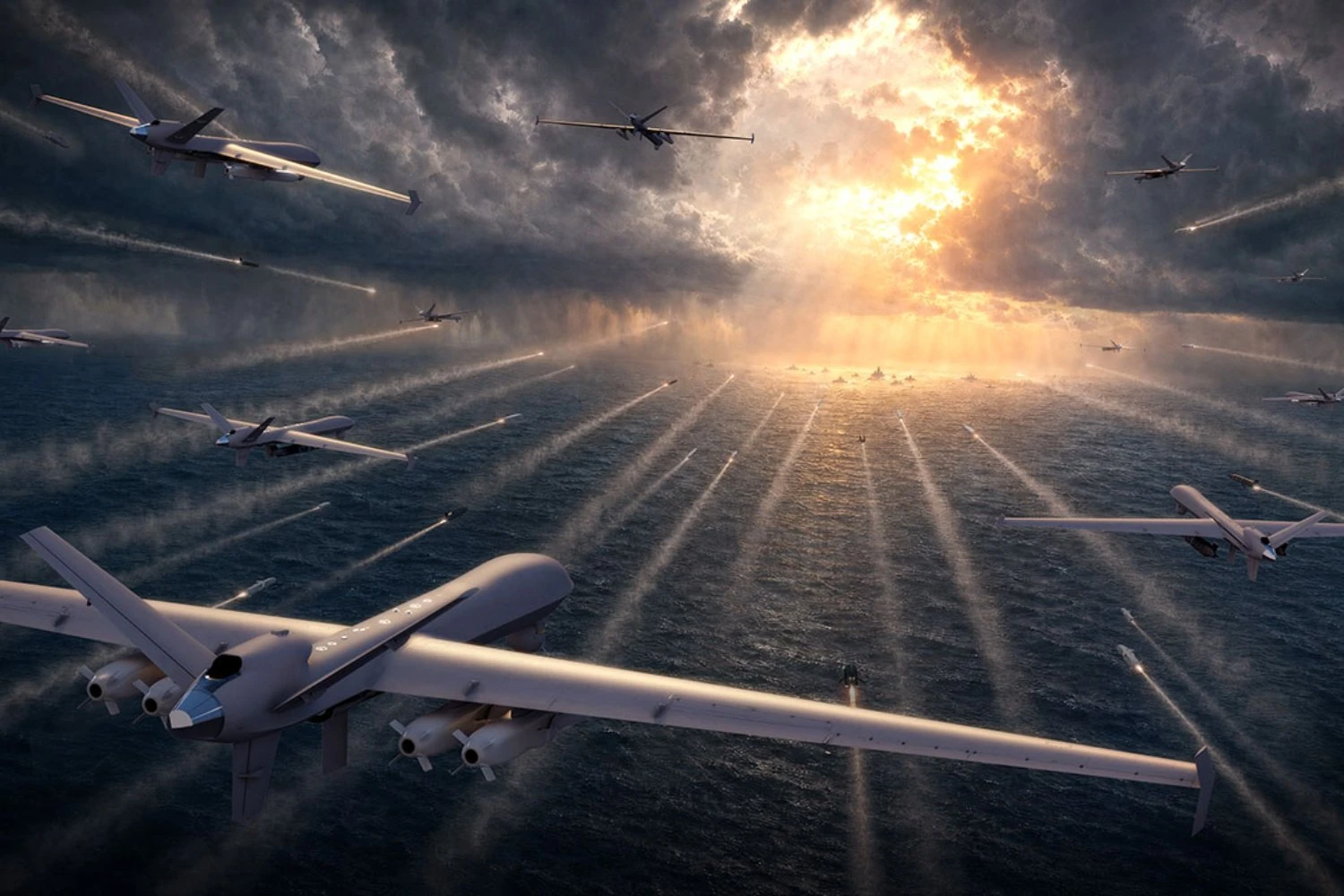
General Atomics says the technology will draw on work conducted for its FQ-42A Collaborative Combat Aircraft and could eventually allow operators to control dozens of Wildfires collaboratively.
The concept fits the “massed” element of the Air Force program. Rather than concentrating capability in a smaller number of expensive unmanned aircraft that commanders may be reluctant to expose to modern air defenses, the service wants aircraft inexpensive enough to be deployed in larger numbers and tolerate combat losses.
Combat losses increase urgency
The requirement has gained urgency after substantial MQ-9 losses during recent combat operations. Air Force officials said this month that experience against Iran demonstrated the need to accelerate development of a Reaper replacement and acknowledged that the number of aircraft lost had become a concern.
The original MMA schedule called for a full-scale prototype within 21 months of contract award and 20 mission-ready aircraft by fiscal 2031. The Air Force is now examining whether an operational capability could be brought forward to around 2029.
General Atomics says it could deliver Wildfire several years earlier than the original schedule and produce more than twice the number of aircraft initially requested during the same period. The company points to manufacturing capacity developed through decades of Predator and Reaper production, which at its peak reached about 100 unmanned aircraft per year.
The Air Force has indicated a potential requirement for at least 180 MMA aircraft, although the program remains in the requirements and competitive development stage.
Different role from MQ-9B
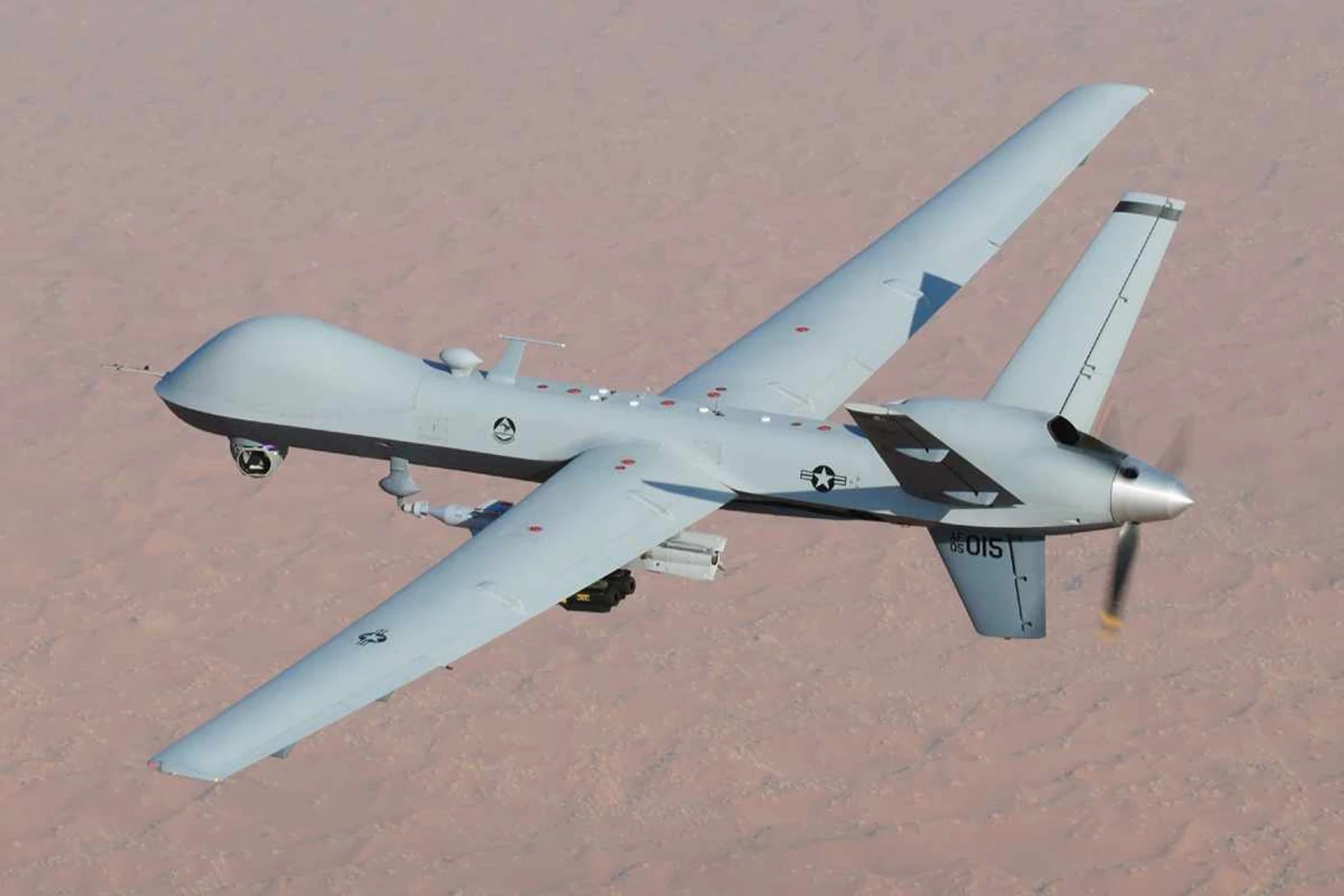
General Atomics does not see Wildfire simply replacing every member of the Reaper family. The company continues to market and develop the larger MQ-9B SkyGuardian and SeaGuardian for missions that require more sophisticated equipment and long endurance.
Company president David Alexander described the MQ-9B as suited to a broad range of specialized missions, including anti-submarine warfare and airborne early warning. Wildfire is intended for a narrower set of missions such as intelligence, surveillance and reconnaissance and strike, with lower cost and large-scale production taking greater priority.
That distinction also separates the Wildfire from a straightforward evolutionary “MQ-9C.” The Air Force’s requirement is centered on an aircraft that can be bought and deployed in much larger numbers while accepting a level of operational risk that would be difficult with more expensive unmanned systems.
General Atomics is also considering Wildfire variants for civil and commercial use. The company says its payload capacity and reinforced attachment points could support heavy cargo missions, although no commercial customer or specific civilian configuration has been announced.
