


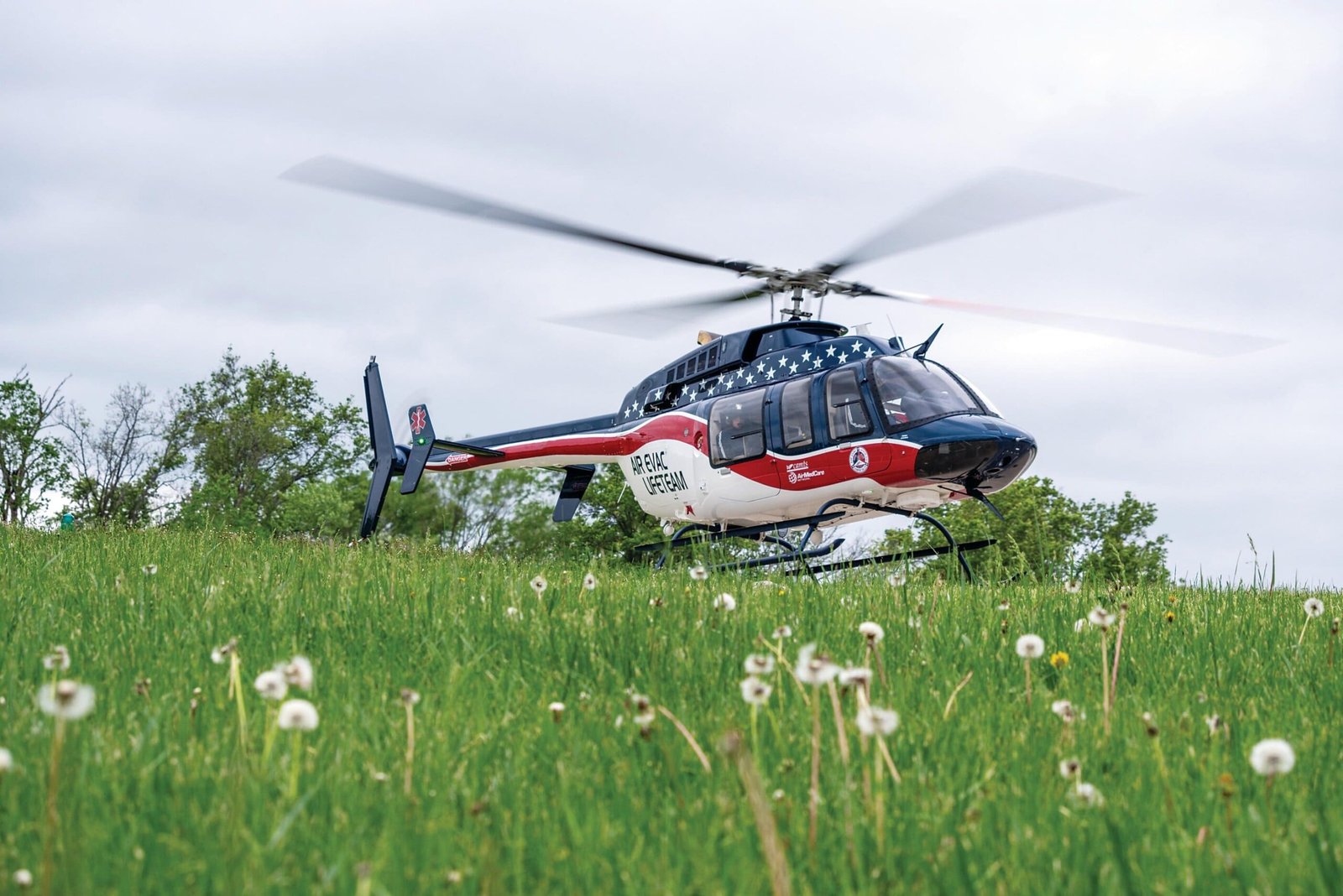
If you’re a seasoned pilot with military experience, or a background in offshore, tourism or utility flying, the job market has abundant opportunities for your extraordinary skillset.
So, why should you choose a new career in helicopter air ambulance (HAA)?
It boils down to service, purpose, and satisfaction.
HAA is more than a profession; it’s a calling. It’s a chance to find fulfillment in your work — to save lives every day, and make a real difference in the world around you.
“You’re not only doing what you love to do,” said Mike LaMee, chief operating officer of Med-Trans, a HAA operator in Denton, Texas, and part of the Global Medical Response family.
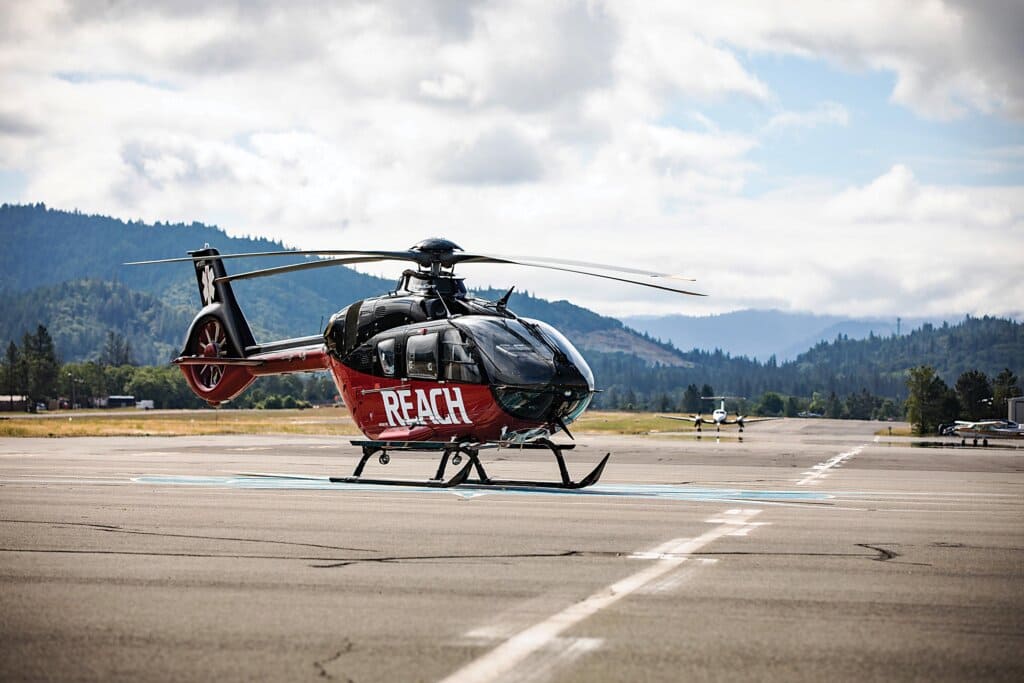
“You get to fly with meaning. I can’t think of a more noble or more rewarding profession than what we do in the HAA industry.”
This is a truth LaMee discovered personally, after 20 years in the U.S. Army as a Sikorsky UH-60 Black Hawk pilot with medevac experience.
When he retired, LaMee transitioned directly to a second career in HAA and loved it immediately.
“I spent a career getting deployed around the world,” he said. “The ability to come home, take that skillset I learned in the military, apply it, and put it to use in my own country was important.”
This kind of story is increasingly common. Experienced pilots are choosing new careers in HAA because they believe deeply in the mission. They love the technical challenge, the opportunity to make a direct impact close to home, and the chance to work as part of healthcare team.
“Some people view us as just a transportation organization, but that couldn’t be further from the truth,” said LaMee. “We’re a healthcare company. We take healthcare to the side of the road, to a small clinic in rural America, and we get individuals to the next level of care.”
All the basic piloting skills from military flying transfer wonderfully to HAA — and every air ambulance pilot must be proficient — but the environment here is less regimented. Each pilot is part of a healthcare team that includes nurses and paramedics working collaboratively.
“The pilot will always have operational control — the authority to initiate, conduct, and terminate the flight,” said LaMee. “That can never be compromised; but we still work very closely as the team of three in that crew dynamic, and our decisions are made collectively.”
At Global Medical Response, every flight crew works with a “51% rule,” meaning anyone can choose to stop a flight if they feel uncomfortable. The desire to serve never overrules the need to return home safely.
“It’s better to be on the ground wishing you were in the air than in the air wishing you were on the ground,” LaMee noted. “We’ve got to rely on solid decision-making.”
HAA is also deeply rewarding. In most communities, pilots are local heroes; if they wear flight suits to gas stations or the supermarket, they invariably receive words of thanks and encouragement. In many cases, they get to meet patients whose lives they helped save.
Still, there are challenges and adjustments to be made. The less-regimented working environment means there is no rank structure, which can be jarring for military pilots.
The work is also inherently unpredictable; a tourism or utility pilot who is accustomed to canned routes and conventional flight schedules will need to develop a more nimble mindset.
“Our phone’s going to ring, and we’ve got minutes to make sure that we’re making the right decisions, but in a very compressed amount of time,” said LaMee.
“That’s why experience is so important. People get hung up on the number of flight hours a pilot has, but what kind of hours are those?
“We use the adage: You can have 5,000 hours, or you can have one hour 5,000 times — where you’ve done the same thing over and over and there isn’t a lot of diversity. We’re 24/7, 365 in this industry, and none of it is scheduled flying.”
It’s important to be candid about these challenges, but HAA experts are quick to note they should not discourage pilot candidates. The benefits of working in this industry are manifold.
HAA pilots typically work seven days on, seven days off, meaning they have extended downtime on alternating weeks throughout the year. Work-life balance is strong, and the opportunity to grow and advance is considerable.
If you want a compelling case study, look no further than LaMee’s own career.
After joining HAA as a line pilot, he graduated to instructor pilot, check airman, regional manager, director of safety, director of training and standardization and director of operations, before his current role as COO at Med-Trans.
“There’s a tremendous amount of opportunity for personal and professional growth,” he said. “Inside of GMR, there’s every opportunity you can imagine; we have 34,000 employees.”
For the right kind of experienced pilot, HAA presents an unprecedented opportunity to build meaningful new careers with competitive wages, excellent quality of life, and much more than a paycheck.
“If you want to find a profession that’s about a purpose, I challenge you to find one greater,” said LaMee. “You never work a day in your life
if you love what you do.”
