


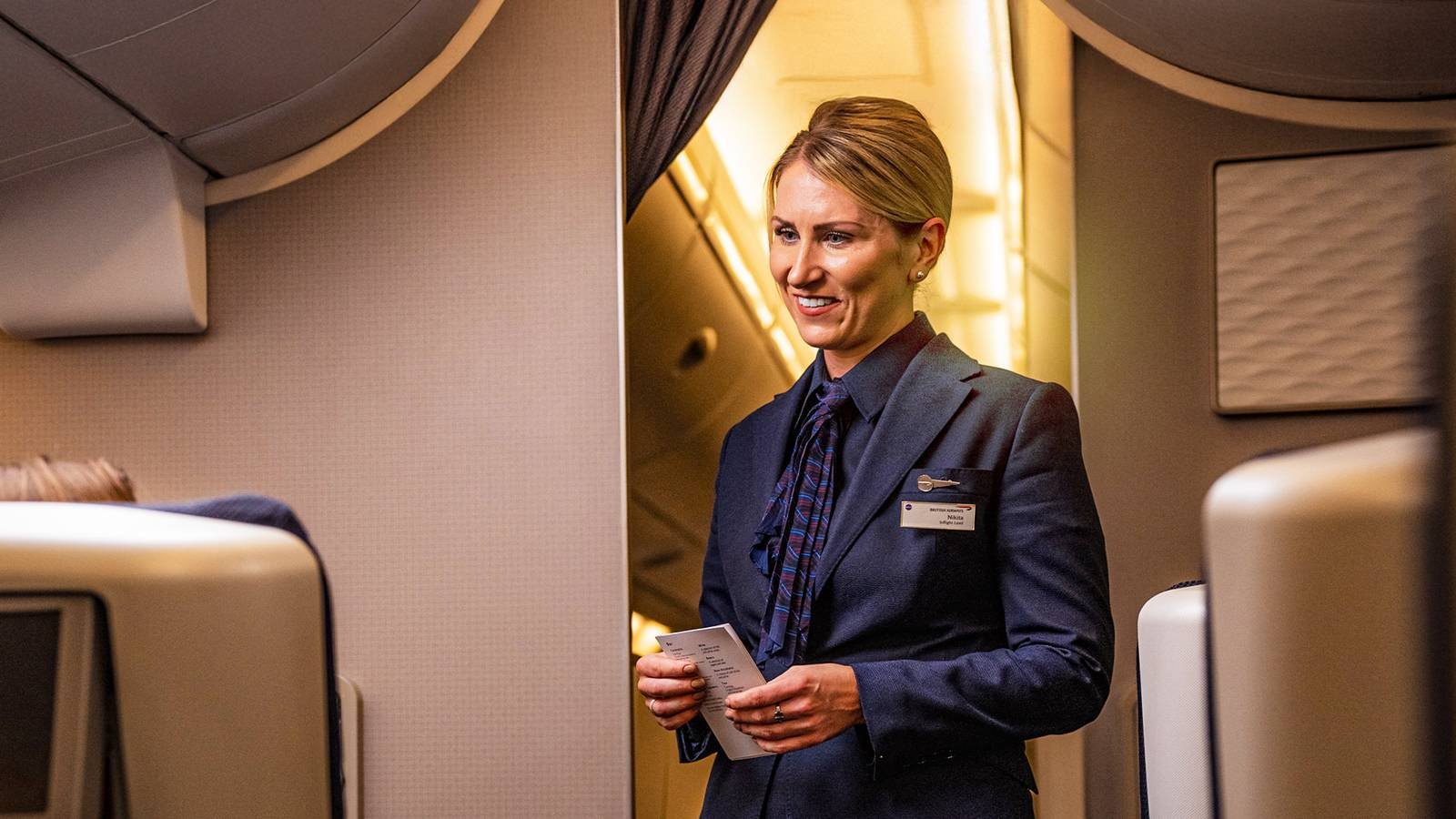
One of the first points of interaction between a passenger and the airline they opt to fly with could be at the point of boarding, especially if flying from an outstation, where the airline might rely on third-party ground staff for all the pre-boarding processes within the airport terminal. With that being said, a cabin crew member greeting you as you board the aircraft can be much more than just a greeting, as the crew members could be silently assessing you.
They mentally note aspects such as your demeanor and your outfit, as well as your physique and (if applicable) who you are traveling with. They are not making judgments, but rather allocating travelers in terms of passenger needs and possible resources. Some passengers might be suitable to provide assistance to the crew in case of an emergency, while some passengers might need additional assistance from the crew. Alternatively, in some cases, a passenger might also be deemed a risk.
Passenger Physique Is Noted
The crew members greeting passengers can determine a passenger’s physique to then mentally note if this passenger can assist if required. This could be in the event of an emergency caused by a fellow passenger getting disruptive or physically attacking passengers or crew members. By making this determination, the crew members can easily identify which passengers to turn to if they require help restraining an unruly passenger.
It is important to note that these are only for extreme scenarios when the crew feels the need for further assistance. This is particularly important these days. After all, data from the Federal Aviation Administration indicates a data trend of growing numbers of incidents recorded wherein a flight is disrupted, often even resulting in diversions, due to passengers being disruptive and unruly.
However, the initial determination could also be for the crew to identify if a particular passenger requires additional assistance from the crew, rather than assistance that the passenger can provide. For instance, a passenger who might be traveling with a walking stick or have a cast on their arm because of a fracture might need additional assistance from the cabin crew, and this determination allows the crew to allocate time, considerations, and resources as required.
General Passenger Health

This can be harder to determine, but if there are obvious signs, the crew still make a note of it. This is because, upon boarding an aircraft, ultimately, passenger safety is the priority for crew members, and the more information they have, the more prepared they can be if any emergencies arise.
Catch what other flight trackers miss
Emergency squawks, holds, NOTAMs — live signals, no signup.
Open tracker
Catch what other flight trackers miss
Emergency squawks, holds, NOTAMs — live signals, no signup.
Open tracker
A passenger who might not appear to be well might be asked if they are alright and up for travel. But a step further, if a particular passenger appears to be exhibiting signs of exhaustion or any other abnormal symptoms, the airline does have the legal right to offload a passenger citing health concerns. Depending on the airport facilities and the situation, the passenger in question could simply undergo a check with the airport medical team and receive a fit-to-fly certificate.
However, sometimes, a passenger might be stopped from flying altogether. This is because, as stated above, flight safety is the priority for crew members, and a passenger who might not be healthy could find themselves in need of time-critical medical assistance in-flight, which might not be readily available. Therefore, for the safety of the passenger in question, they might be stopped from boarding.
Operationally speaking, such situations can also cause delays due to medical diversions, which can impact other passengers on a flight, while for the airline, any flight disruption can prove expensive. Therefore, as a preventative measure, it is easier to offload a single passenger and reallocate them to a future flight (if they are fit to fly), rather than risk the passenger’s life and flight disruption by carrying them onboard.
How Do Flight Attendants Deal With Diversions?
Just another part of the job.
It’s Best Not To Show Up Drunk

While it is a common habit for many passengers in various parts of the world to consume alcohol at the airport before a flight (irrespective of the time of day), this is something crew members are constantly on the lookout for. As stated above, the number of unruly passengers and associated disruptions to flights recorded has been growing. Although it is not always the root cause, alcohol consumption can be linked to unruly passengers becoming disruptive in several cases.
Crew members can control the alcohol a passenger consumes on board a flight, but it is beyond their control if passengers consume excess quantities at the airport or from a prior flight. Due to the threat of alcohol-fueled passenger disruptions, and the subsequent risk it poses to flight safety, crew members always make note of any passengers who might appear to have the demeanor of being intoxicated at the time of boarding.
This would help the crew to identify which passengers to observe and not serve more alcohol to. However, if the passenger is already displaying unruly behavior or is deemed to be too drunk at the time of boarding, the airline can refuse the passenger from boarding the flight.
As in the case of medical emergencies, the airline also has to consider the flight safety and comfort of other passengers and crew onboard. The risk of an incident on board, or the flight having to make a diversion, is more time-consuming and expensive than offloading intoxicated passengers.
What You Wear

Perhaps a lesser-known fact is that many airlines do dictate a passenger dress code within their contract of carriage, and any passenger who purchases a ticket is automatically agreeing to the dress code. For the most part, it is to ensure all passengers appear respectable, but also to prevent passengers from wearing inappropriate clothing or outfits with offensive words or slogans on them.
With that being said, generally, passengers are encouraged to wear clothes that are comfortable, especially on long-haul flights. Apart from passenger comfort, this is also to ensure passenger movements are not restricted by their outfits, which can be a hazard during time-critical phases such as an emergency evacuation. This also extends to passenger footwear. Crew members especially make a mental note of passengers who might be boarding with high-heeled footwear.
Passengers must also wear comfortable footwear, which would allow them to navigate the cabin in case of an emergency evacuation. The crew will also ask passengers to remove their heels in case of such evacuations. This is because the sharp ends of the heels can damage the evacuation slide, which can render an entire exit inoperable, which is not ideal in such situations.
The Ins & Outs Of Airline Dress Codes
Passenger appearance is dictated in a legal contract that could result in refusal to board.
The Crew Also Notices Your Companion(s)

While the crew members are greeting you at the boarding gate, they also keep track of passengers who might be traveling with another passenger or as a group. This is especially true if you are traveling with elderly passengers or infant passengers. As with any of the above cases, this is more for the sake of crew members being prepared and knowing which passengers might need extra assistance or where to allocate crew resources.
Safety is always a priority, and in the event of an emergency, by noting the above information, the crew members will know which passengers require, say, infant life jackets, or perhaps need additional support navigating their elderly companion around the cabin. A lot of the above-mentioned scenarios and factors are based on emergency scenarios and evacuation.
This is because the regulation states that any aircraft must be completely evacuated within 90 seconds, using only half the number of exits available. On the aircraft design side, this regulation dictates important factors such as total seat capacity, cabin layout, and even seat designs. Simultaneously, a lot of the aforementioned factors and crew decisions are purely to ensure passengers are able to comply with this very important regulation.
What Passengers Carry

One of the things crew members observe when they first encounter a passenger is their carry-on luggage. Perhaps a common sight is passengers with large cabin bags being asked to gate-check their luggage. Sometimes, this could be done simply because of a lack of space in the overhead bins, because the flight is full, especially on board flights operated by narrowbody aircraft.
However, in some cases, passengers might be asked to gate-check their carry-on bags because it is identified as oversized. But apart from noticing the passenger’s luggage, the crew also observes how the passenger reacts to the crew or ground staff instructions during this interaction. Is the passenger being compliant with the instructions, or are they not? Are they responding and conversing calmly, or are they getting agitated or frustrated?
This observation, paired with the passenger’s demeanor, can help the crew determine if they are a passenger they should keep an eye on because they could turn unruly in flight. Alternatively, they might recognize the passenger as someone who will comply with crew instructions and will not be an issue if an emergency situation were to arise.
It is important to always keep in mind that crew members are primarily present on board the aircraft to ensure passenger and flight safety. They are trained to notice everything and respond depending on various situations. Therefore, always be kind and friendly to the crew members, and always follow crew instructions. Regardless of the airline or the aircraft a passenger is traveling on, a friendly crew member can always elevate the passenger experience.
Catch what other flight trackers miss
Emergency squawks, holds, NOTAMs — unique signals, live, no signup.
Open tracker
Catch what other flight trackers miss
Emergency squawks, holds, NOTAMs — unique signals, live, no signup.
Open tracker
