


Initial test article returns to flight after three-month lay-up, while developer reveals fresh commercial momentum and regulatory progress.
Brazilian electric vertical take-off and landing (eVTOL) developer Eve has its engineering prototype back in the air following a three-month lay-up to prepare the aircraft for critical transition flights expected later this year.
Taking place on 18 July, the return to flight was the prototype’s 60th sortie so far, with more to follow in the coming days, says Eve chief executive Johann Bordais.
In fact, if all goes to plan, by the end of the Farnborough air show Eve will have for the first time flown the uncrewed aircraft with its pusher-propeller operating, which kicks in at around 25kt (46km/h).
“By the end of this week we’ll be turning on the pusher and then we will progressively increase the envelope,” says Bordais.
This phase of testing will see the prototype accelerated up to 50kt, as it pushes toward the 90kt threshold for transition flights and the switching off of the electric lift motors.
During the lay-up period, Eve has updated the aircraft’s flight-control software and reinforced the fuselage to cope with the expected additional vibration from the pusher propeller.
But the prototype remains without the blade-folding mechanism for the lift propellers that will be fitted to the Eve 100 production aircraft. The company is “still analysing” the final design of that system, he says.
Later this year, the company will begin building the first of six conforming prototypes of the Eve 100 as it pushes towards a certification target in late 2028. These will arrive roughly one every 45 days.
Bordais says he is “very happy” with the programme’s momentum since he took on the chief executive role three years ago.
“We are making steady progress and we are delivering what we said we would,” he says.
Eve will build the first conforming prototypes at Embraer’s main assembly facility in Sao Jose dos Campos. However, full-rate production will take place at a new site in nearby Taubate that should come on stream by 2028.
In the initial ramp-up phase, the plant – currently an Embraer-owned warehouse – will be capable of producing up to 120 Eve 100s each year, says chief commercial officer Megha Batia.
However, using a “modular approach”, this will be progressively increased in 120-unit increments until the facility reaches its 480-per-year maximum. “Then we’ll have to look at a second facility,” says Bordais.
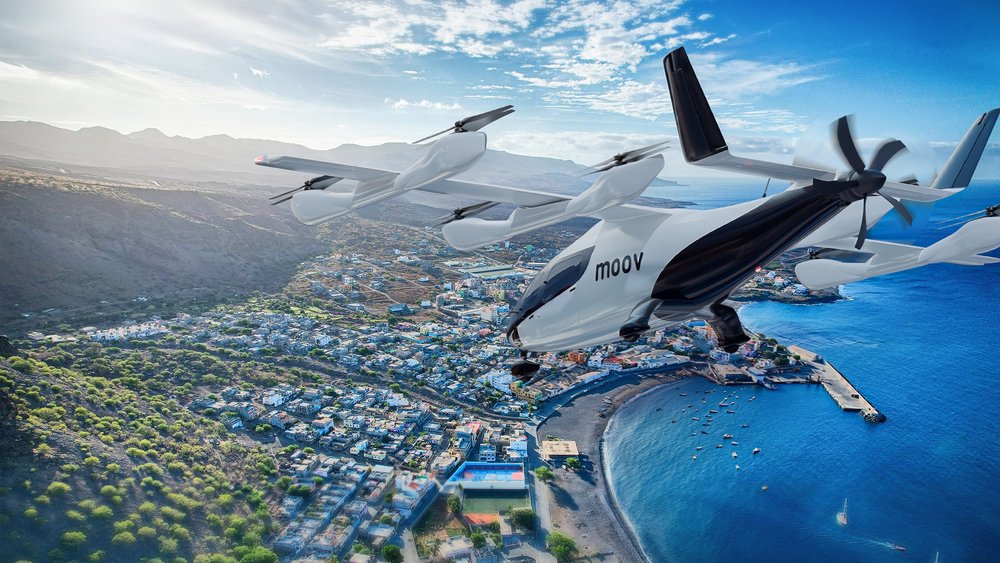
So far, Eve has amassed around 2,700 commitments for the eVTOL, which it added to ahead of Farnborough, signing letters of intent with operator Moov and lessor Shearwater global capital for up to 30 and 16 aircraft, respectively.
However, Bhatia concedes that of the 2,700-aircraft total, just 12 are firm, deposit-backed orders: 10 from Brazilian launch customer Revo and two from Japan’s AirX, both part of larger 50-unit deals.
But, she says, as the programme demonstrates increased levels of maturity, interest is only growing in firming up conditional orders.
“We are now starting to build tangible momentum so it is the right time to begin converting those orders,” she says.
Eve expects to gain certification for the Eve 100 from Brazil’s ANAC regulator, plus validation from the US Federal Aviation Administration, in 2028. European Union Aviation Safety Agency approval is then likely to follow around 12-18 months later, with its application to the regulator filed last week, says Bordais.
Additionally, ANAC has now published its proposed noise certification criteria for the Eve 100, an important milestone towards the overall goal.
Open for consultation until 8 August, the criteria lean heavily on the FAA’s existing Part 36 noise regulations, specifically those related to tiltrotor operations.
Subscribe to gain access to all news
Already have a subscription? Log in.
Choose your subscription
Considering a corporate subscription? Contact us to find out more.
