


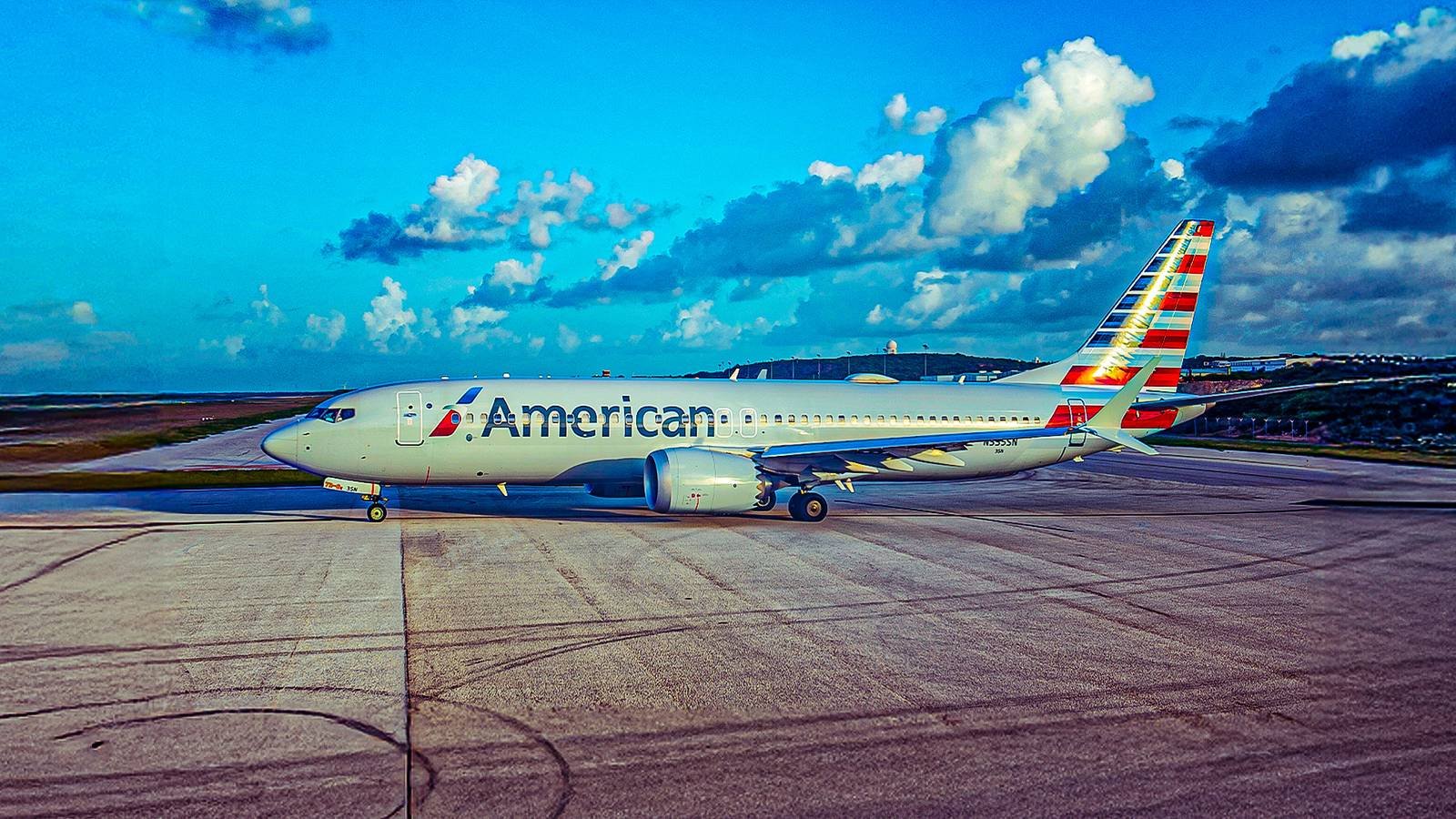
Just like its US ‘big three’ legacy rivals (Delta Air Lines and United Airlines), American Airlines offers mainline and regional flights out of a wide range of hub airports located all around the US. These come in all different shapes and sizes, but one of the most important, not least on account of its proximity to American Airlines’ corporate HQ, is  Dallas/Fort Worth International Airport (DFW), located in the northeast of the state of Texas.
As well as being an important destination in its own right when it comes to point-to-point traffic, DFW also serves a considerable quantity of transit passengers. However, on account of its size, as well as its busy nature, connecting from one flight to another can be a rushed affair. With this in mind, American Airlines has redesigned its hub structure at Dallas/Fort Worth International Airport, with this strategy having already started to show results.
A Better Spread Of Capacity

As reported by View From The Wing, the headline development from these alterations has been a 50% reduction in passengers missing their connections at DFW. This, in turn, reduces the workload for airport staff who would otherwise have to spend time rebooking these guests and trying to remove their bags from the onward flight that they’ve missed. As such, passengers at DFW are said to have reacted well to the less-rushed system.
The backbone of AA’s redesigned DFW hub, View From The Wing explains, is an overhauled schedule that has seen the airline retime certain flights so that it has more arrival and departure waves. Indeed, as opposed to the previous system, which had nine busy peaks of arrivals and departures, the new schedule features 13 smaller peaks across the day. According to View From The Wing, Jim Moses, AA’s SVP of DFW Hub Operations, said:
“Now we have 13 rush hours that are flattened out. Early results show that this flatter schedule is better for our customers, team members, bags, and connections.”
The Advantage Of Digital Improvements

American’s improvements at its DFW hub are a reflection of the millions of dollars that it has poured into improving its customer experience in recent years. This has also been evidenced of late by a wide range of digital improvements, which have resulted in AA’s app becoming a more useful travel companion.
Regarding the improved transit experience at DFW, American Airlines is building a tool into its app that will, as it puts it, “remove the guesswork” for passengers rushing to make tight connections (although there should, of course, now be fewer of these in general with the new schedule). On this front, AA says that its “airport wayfinding maps (…) offer clear guidance to the next gate and include a general walk time estimate from gate to gate.”
This feature, the carrier continues, is set to “make connections feel more manageable, even on tight schedules.” Of course, passengers will be able to reap the benefits of this upgrade at any AA hub, but, at DFW, the guidance tool combined with the more favorable scheduling will make for an even easier transit experience.

US-First eGates: American Airlines To Automate Boarding At DFW Hub
Passengers will soon self-scan their boarding passes to enter the jetbridge.
AA’s DFW Operations In A Nutshell

A closer look at present scheduling data made available by Cirium, an aviation analytics company, gives us a tangible sense of the sheer size and scale of American Airlines’ network and operations at Dallas/Fort Worth International Airport. According to the site, American Airlines will account for some 26,761 of DFW’s 31,608 scheduled departures this May, representing a proportion of 85%. This figure is also 1.1 higher than in May 2025.
Of these, 16,870 are mainline services, with the remaining 9,891 operated by Envoy Air (6,182), PSA Airlines (1,859), and SkyWest Airlines (1,850) under the American Eagle brand. American’s top widebody at DFW is the Boeing 777-200ER, with 271 flights, although this figure is dwarfed by the top narrowbody (the 737-800 with 6,530 flights). Its top destinations have 190 May flights apiece: Charlotte, Los Angeles, Orlando, and San Diego.
