



The Paraguayan Air Force is expected to receive 15 retired AIDC AT-3 Tzu Chung advanced jet trainers from Taiwan, restoring a capability lost more than two decades ago when the country withdrew its last Embraer AT-26 Xavantes.
The agreement calls for the aircraft to begin arriving disassembled in Paraguay around mid-2027, according to Pucará Defensa, citing Paraguayan Air Force sources. Four AT-3s are expected to be operational by the end of that year, with all 15 assembled by 2028.
The transfer has not yet been formally announced by the Paraguayan or Taiwanese governments. Paraguay had previously confirmed negotiations with Taiwan for jet aircraft but did not disclose the type or number involved.
Taiwan offered aircraft made available by the retirement of the AT-3 from its own training system. The Republic of China Air Force has replaced the type with the newer AIDC T-5 Brave Eagle.
Follow Air Data News: WhatsApp | Instagram | LinkedIn | Twitter | Facebook
The AT-3 was developed in Taiwan with assistance from Northrop during the late 1970s and made its first flight in 1980. The two-seat aircraft entered service in 1984 as an advanced trainer to replace the Lockheed T-33.
Powered by two Honeywell TFE731 turbofan engines, the AT-3 can reach approximately 485 kt (898 km/h) at low altitude and Mach 0.85 at higher altitudes. Its service ceiling is around 48,000 ft (14,630 m).
The aircraft was also designed for light combat missions. It can carry up to approximately 6,000 lb (2,720 kg) of external stores on underwing and fuselage stations, including bombs, rockets and short-range air-to-air missiles.
Taiwan produced 60 AT-3 trainers and two XA-3 single-seat attack prototypes. The operational aircraft underwent upgrades and mid-life work during their Taiwanese service, although the basic design is now more than four decades old.
Why Paraguay wants jets again
The planned acquisition comes shortly after Paraguay completed another major fleet renewal. The country received the last of six new Embraer A-29 Super Tucanos this month.
The turboprop is better suited to many of the missions regularly performed by the Paraguayan Air Force, including surveillance, interception of slow-moving aircraft associated with illegal trafficking, advanced training and light attack.
The AT-3 does not replace the A-29 in these roles. Its principal distinction is its performance as a jet aircraft, giving Paraguay a platform for higher-speed interception and jet training that has been absent from the force for more than 20 years.
Paraguay retired its last AT-26 Xavantes, the local designation for the Embraer EMB-326GB, in 2003. Since then, the air force has relied entirely on turboprop aircraft for training and combat missions.
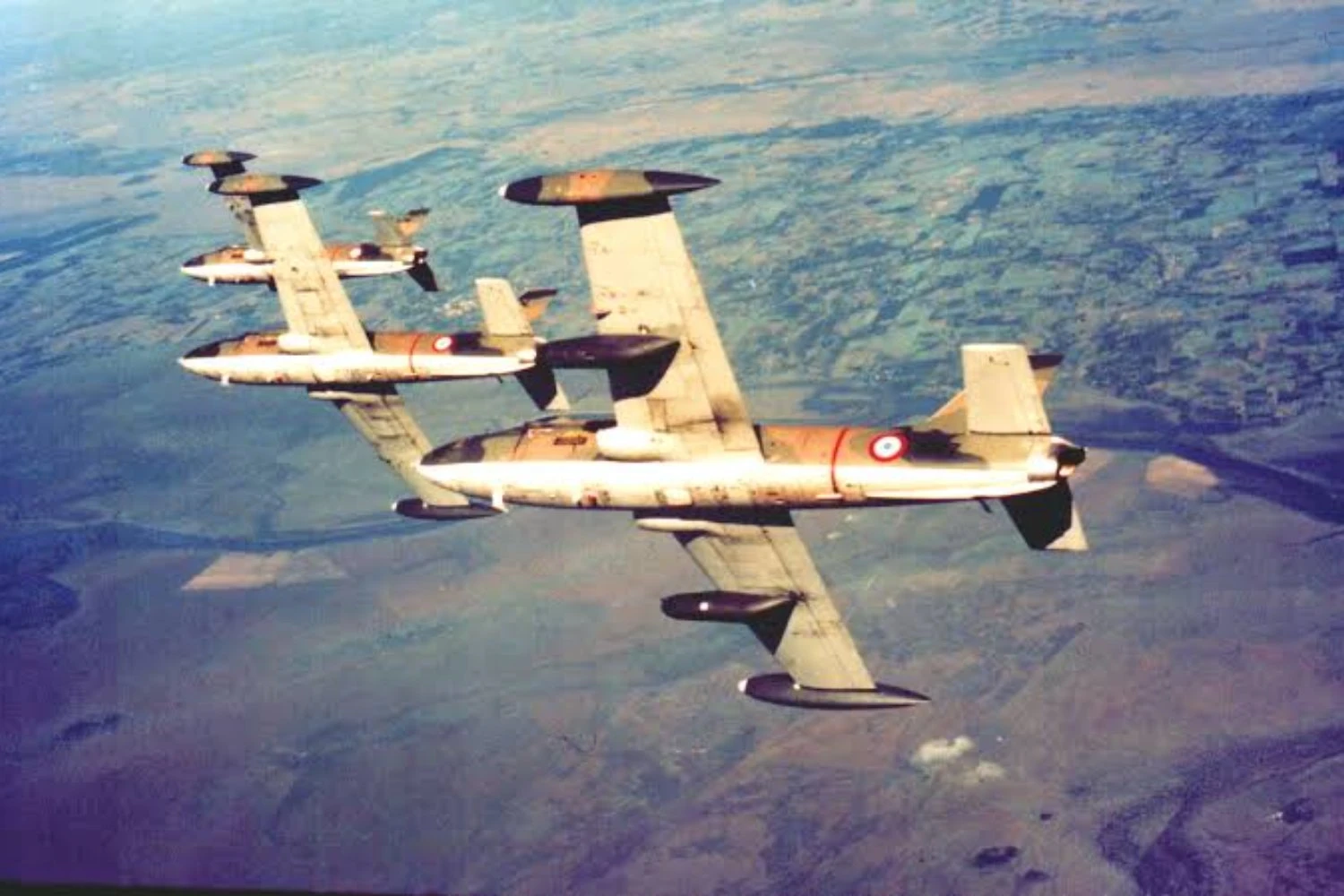
The Paraguayan Air Force had examined other options to recover jet operations. The Argentine IA-63 Pampa was considered, while discussions with Taiwan also included retired Northrop F-5E/F Tiger II fighters.
According to Pucará Defensa, the F-5 option was rejected because of operating costs, limited remaining service life and the infrastructure that Paraguay would need to introduce the supersonic fighter.
The AT-3 offers a less ambitious alternative using aircraft Taiwan no longer requires. The Paraguayan aircraft are expected to receive modifications before entering service, including new VHF radios.
The jets are initially expected to reactivate the Paraguayan Air Force’s 1st Fighter Squadron. Plans also call for the reopening of an air base at Mariscal Estigarribia in the Chaco region, where a new combat group could eventually operate AT-3s alongside Tucanos and A-29 Super Tucanos.
