


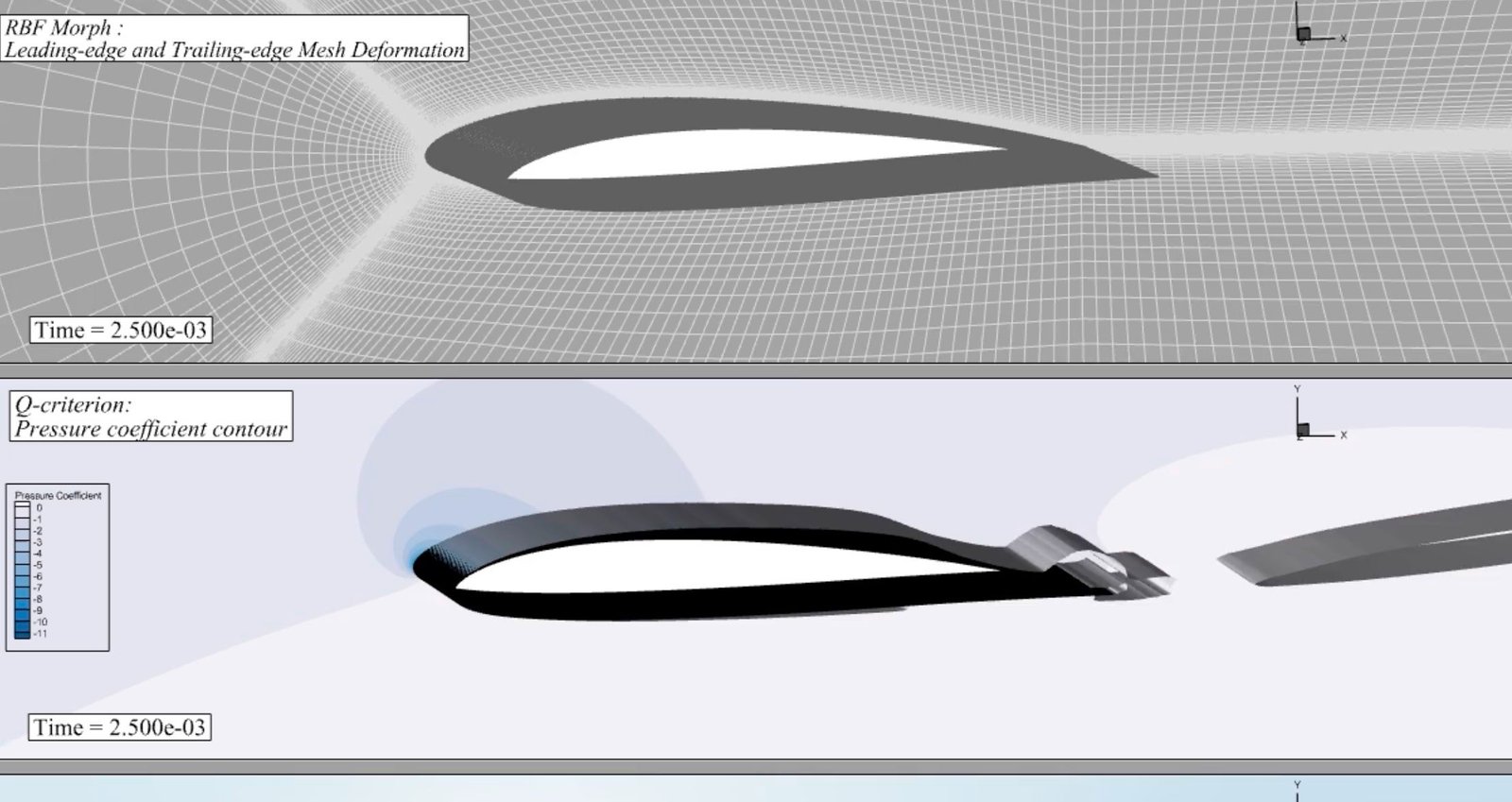
A researcher at Kingston University is developing a morphing wing for civil aircraft that could deliver double-digit aerodynamic efficiency gains across representative flight conditions.
The project, led by PhD student Muram Abbadi at Kingston University in the UK combines computational fluid dynamics simulation with wind tunnel testing. It draws on the wing-warping principle pioneered by the Wright brothers, applying smooth, continuous shape change rather than the discrete control surfaces used on conventional civil airframes.
Computational fluid dynamics (CFD) simulations conducted as part of the research indicate the morphing wing can achieve up to a 15% reduction in drag and an average 12% increase in lift, with corresponding reductions in fuel consumption and emissions.
Abbadi is working with Italy-based simulation technology company RBF Morph, whose dynamic meshing capabilities are being applied to model the wing’s continuous geometric deformation.
The collaboration developed after Abbadi identified the company through wider reading and a training session on Ansys simulation software, which she is using to run the numerical simulations underpinning the project.
“Drawing on the Wright brothers’ wing-warping principle of smooth, continuous shape change, it explores controlled camber variations across representative flight conditions to optimise aerodynamic performance and support significant reductions in fuel consumption and emissions,” said Abbadi.
RBF Morph supplied a trial licence to support the research. Marco Evangelos Biancolini, founder of RBF Morph, said, “I’m extremely pleased – this milestone reflects years of dedicated work in aeronautical research.
“We’ve contributed to the optimization of winglets and propellers, and we firmly believe that morphing wing methods represent one of the most promising technologies in this industrial sector.
“We’re proud not only to provide our technology, but also to bring the full depth of our expertise and experience in the aeronautical field.”
Abbadi has been sponsored throughout her doctorate by UK-based aviation company Air Charter Service through the Mountfitchet Scholarship. She previously graduated from Kingston University with a master’s in aerospace engineering in 2019.
The next phase of the project will move from simulation into physical wind tunnel testing of the wing, which Abbadi expects to undertake over the coming months.
