


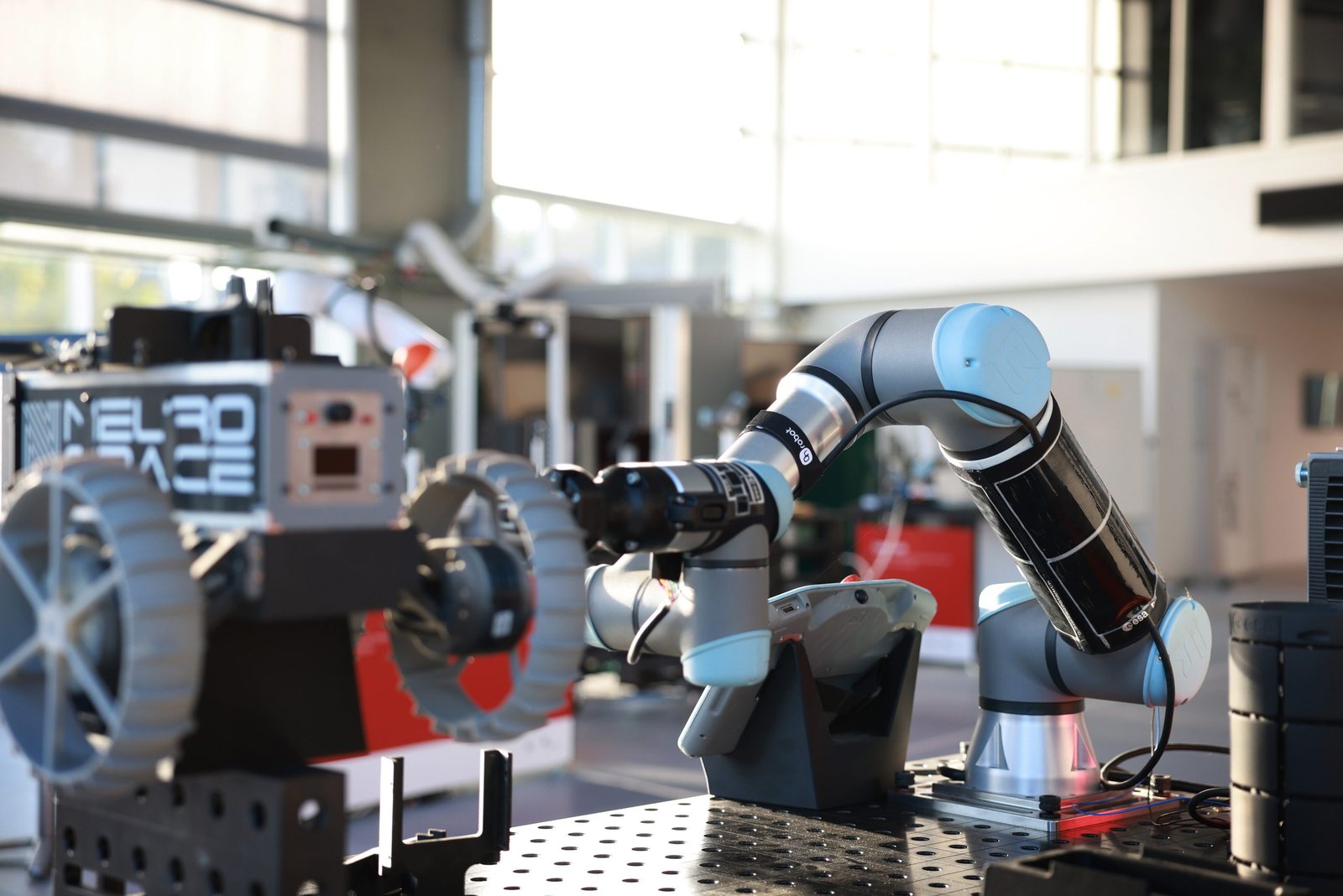
The European Space Agency has appointed a pan-European consortium led by Danish Technological Institute, a Denmark-based research and technology organization, to develop a protective covering for robotic arms used in space. Called Smart Skin for Exploration Cobots, the €1.65 million project will run for 24 months from 2026 to 2028 and aims to produce two functional solutions tested under space-like conditions. The covering is intended for robots operating on upcoming lunar missions, future Martian missions, and in-orbit operations, where abrasive dust, intense solar radiation, and temperatures ranging from -150°C to +120°C create severe operating constraints.
Christian Dalsgaard, Senior Consultant at DTI, said the work is tied to the broader role robots may play in future exploration. “The potential for robots in space exploration is extensive. They can help with everything from resource extraction on the Moon to on-orbit satellite servicing and active debris removal. But this requires the robots to be extremely robust and capable of operating autonomously – or safely in collaboration with humans.”
Smart Skin for Exploration Cobots centers on a 3D printed scaffold mounted on a robotic arm and designed to be adaptable to different arm configurations. This structure will support four integrated functions: a thermal and dust-protective layer, flexible power and data cabling, sensors that can detect and prevent collisions, and features intended to enhance human-machine interaction. DTI selected 3D printing because it provides the design freedom needed for the scaffold, but the project will push the process beyond established applications through new approaches to design and material selection.
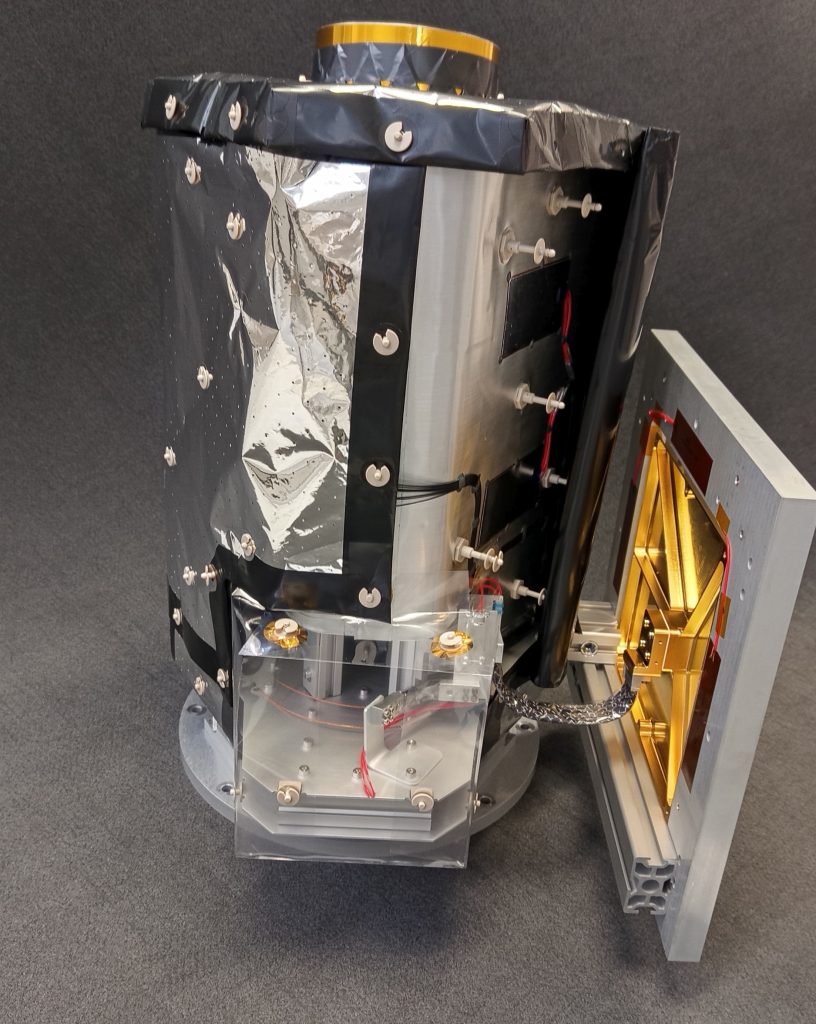
Multi-Layer Insulation (MLI) has long been used on spacecraft to provide thermal protection for full structures or smaller instruments. Those applications are static. Developing a comparable insulation system for moving robotic arms is more difficult because the covering must preserve thermal performance, resist dust penetration, and allow repeated motion while carrying embedded functions. “Applying an advanced protection system could lead to building robotic arms from commercially available components. This can create a cost-effective way of providing new solutions for customers in many space domains – from deep space missions, through in-orbit servicing to Moon colonisation. At Admatis, we are committed to any development that gives Europe a competitive advantage, and this project is fully in line with our strategy,” says Tamás Bárczy, CEO at Admatis, a Hungary-based space technology company developing the project’s thermal protection system.
Work on the project follows a previously successful pilot phase and brings together organizations with robotics, materials, thermal protection, and space systems expertise. PIAP Space, a Polish company developing robotic systems for space applications, and Redwire Space Europe, the Luxembourg-based European arm of space infrastructure company Redwire, are providing robotic arms and technical expertise. These are the same arms currently being developed for ESA’s upcoming lunar missions, which means the smart skin will be designed from the outset for the specific systems it is intended to protect. DTI is coordinating the project and contributing specialists in robotics, functional materials science, and industrial 3D printing.
“We see strong potential for the technology eventually to find applications in companies where robots are exposed to extreme conditions. Think of metal foundries, where dirt and extreme heat challenge equipment performance. The technology we are developing could potentially extend the service life of critical equipment and reduce maintenance costs,” explains Dalsgaard.
Space additive manufacturing faces qualification constraints
Space additive manufacturing work increasingly depends on proving that printed parts can survive the conditions they would face beyond Earth. University of Glasgow’s NextSpace Testrig lab was built to test 3D printed metals, polymers, and ceramics under combined environmental and mechanical stress. Its vacuum chamber cycles between -150°C and +250°C while applying loads of up to 20 kilonewtons, addressing a specific risk for in-orbit manufacturing: parts with microscopic flaws could crack or shatter, adding fragments to the orbital debris environment.
For ESA’s smart skin project, the relevant constraint is similar. Space hardware has to remain functional under thermal cycling, vacuum conditions, and mechanical load before it can be trusted on missions.

3D Printing Industry is inviting speakers for its 2026 Additive Manufacturing Applications (AMA) series, covering Energy, Healthcare, Automotive and Mobility, Aerospace, Space and Defense, and Software. Each online event focuses on real production deployments, qualification, and supply chain integration. Practitioners interested in contributing can complete the call for speakers form here.
To stay up to date with the latest 3D printing news, don’t forget to subscribe to the 3D Printing Industry newsletter or follow us on LinkedIn.
Explore the full Future of 3D Printing and Executive Survey series from 3D Printing Industry, featuring perspectives from CEOs, engineers, and industry leaders on the industrialization of additive manufacturing, 3D printing industry trends 2026, qualification, supply chains, and additive manufacturing industry analysis.
Featured image shows robotic arm test platform in laboratory environment. Image via Danish Technological Institute.
