


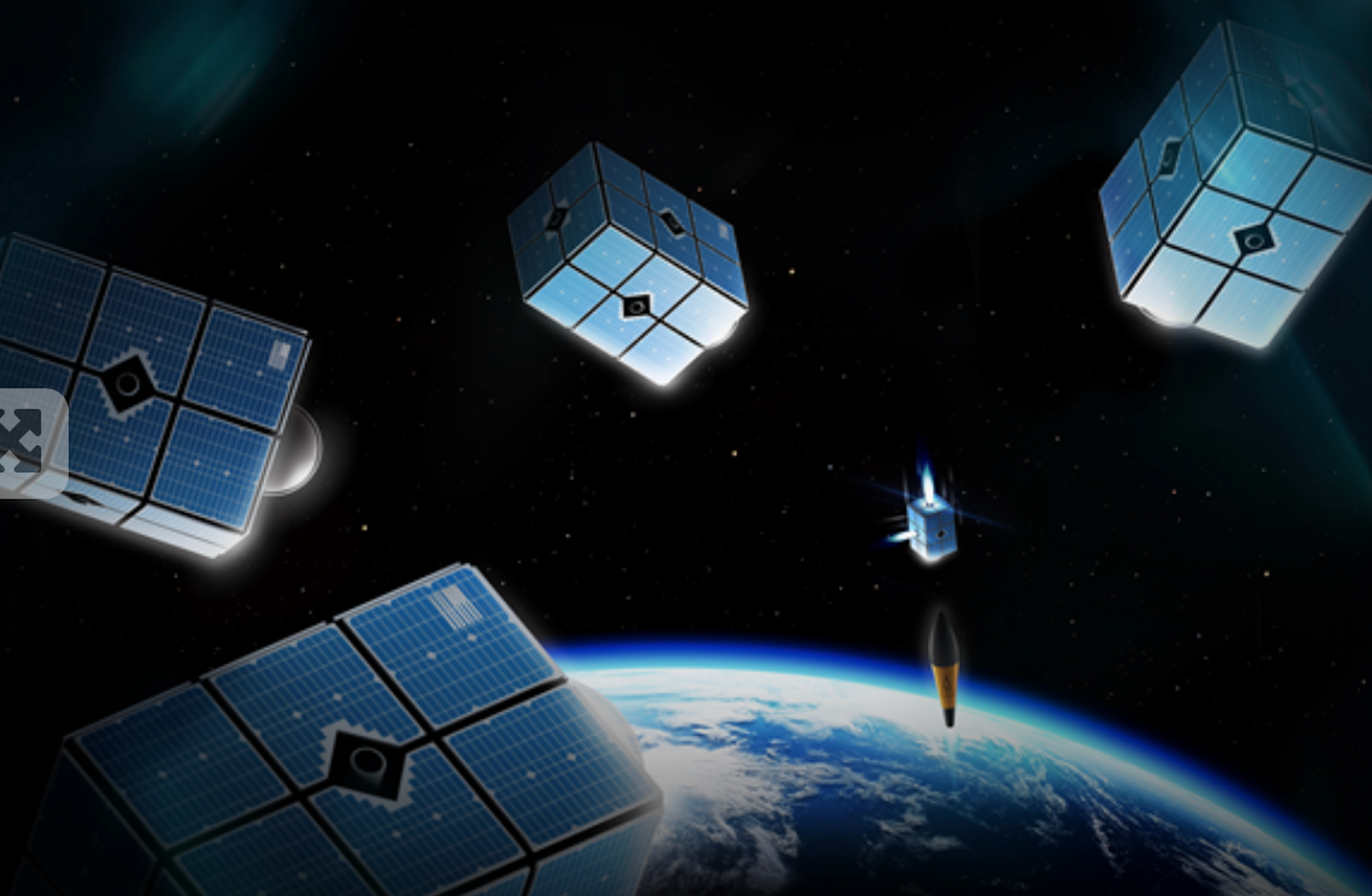
WASHINGTON — The U.S. Space Force has awarded agreements worth up to $3.2 billion to a group of 12 companies to develop prototypes for space-based interceptors.
The awards, announced April 24 by the Space Systems Command, cover 20 agreements made in late 2025 and early 2026 using Other Transaction Authority contracts, a flexible acquisition tool designed to fund multiple competing designs rather than select a single prime contractor early in the process.
The companies selected include a mix of established defense contractors and newer, venture-funded space and technology firms, reflecting the Pentagon’s push to broaden the industrial base and tap commercial innovation.
Agreements were signed with Anduril Industries, Booz Allen Hamilton, General Dynamics Mission Systems, GITAI USA, Lockheed Martin, Northrop Grumman, Quindar, Raytheon, Sci-Tec, SpaceX, True Anomaly and Turion Space.
The companies were selected following an open solicitation issued in September 2025.
Space-based interceptors are satellites designed to destroy missiles in the early, or boost, phase of flight before they can release warheads or decoys.
Golden Dome is a proposed U.S. missile defense architecture aimed at protecting the homeland from ballistic, hypersonic and cruise missile threats by linking ground-, air- and space-based sensors and interceptors into a single network. One of its most ambitious elements is the potential deployment of interceptors in orbit, a concept that has drawn interest for its ability to engage threats early but also faces significant technical and cost challenges.
“Adversary capabilities are advancing rapidly, and our acquisition strategies must move even faster to counter the growing speed and maneuverability of modern missile threats,” said Col. Bryon McClain, program executive officer for space combat power. He said the Space Force will demonstrate “an initial capability” in 2028.
Vendors are not only tasked with proving the technology, but also demonstrating that systems can be produced and deployed at costs low enough to support large-scale operations.
Questions about ‘affordability’
Gen. Michael Guetlein, who leads the Golden Dome program office, has repeatedly emphasized that affordability will determine whether the procurement of space-based interceptors moves forward.
At a recent House Armed Services strategic forces subcommittee hearing, Guetlein pointed to what he described as the central challenge in missile defense: the economics. Interceptors can cost millions of dollars each, while the missiles or drones they are designed to defeat are often far cheaper, creating a cost imbalance that adversaries can exploit.
For a system intended to shield the entire U.S. homeland, a defense that cannot afford to intercept a large volume of incoming threats risks being overwhelmed.
Guetlein said it remains an open question whether space-based interceptors will be part of the final architecture, despite their inclusion in President Donald Trump’s executive order.
“Because we are so focused on affordability, if we cannot do it affordably, we will not go into production,” he said.
Boost-phase intercept, which requires striking a missile shortly after launch, presents particular technical challenges, said Guetlein, “as it requires much shorter decision timelines.” He added that while the technology appears feasible, the question is whether it can be delivered at scale and at a price point that makes it viable.
If not, the Pentagon could rely on other layers of missile defense, including interceptors deployed from ground-based silos or naval platforms.
“If boost phase intercept from space is not affordable and scalable, we will not produce it because we have other options to get after it,” he said.
