


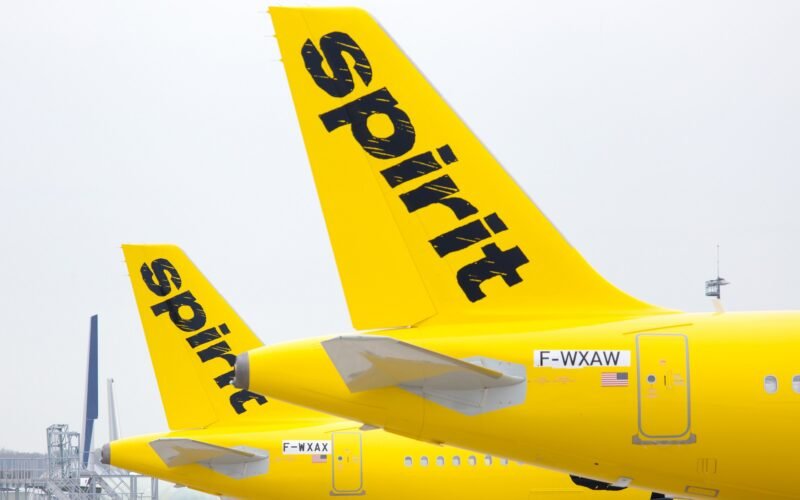
Spirit Airlines has officially ceased operations, cancelling all flights and beginning an immediate “orderly wind-down,” impacting thousands of passengers and employees across the United States.
According to the airline’s announcement early May 2, all services have been suspended and customer support has been discontinued. The carrier confirmed that no flights were operating at the time of the shutdown, and travelers were advised not to go to the airport.
The closure follows months of financial strain, including rising fuel costs, failed merger attempts, and unsuccessful efforts to secure additional funding. Spirit had been seeking a financial lifeline, including a proposed $500 million federal bailout, but negotiations collapsed shortly before the shutdown.
In a statement, CEO Dave Davis said the airline could not secure the liquidity required to continue operations, citing a sharp increase in oil prices and broader financial pressures. The company had been attempting to emerge from bankruptcy, but worsening conditions ultimately forced the decision to wind down.
Related: Spirit Airlines Shutdown Fears Rise Ahead of Deadline
The shutdown affects thousands of flights and approximately 17,000 employees. Passengers with bookings will receive automatic refunds for tickets purchased directly, while those who booked through third parties must seek reimbursement via their travel providers. However, additional travel-related expenses such as hotel stays may not be covered unless protected by insurance.
Spirit Airlines operated a single-type Airbus narrowbody fleet prior to its May 2026 shutdown, totaling roughly 110 to 125 aircraft. The fleet consisted entirely of Airbus A320 family jets, including A320-200 and A321-200 models, along with newer and more fuel-efficient A320neo and A321neo variants. Despite having a relatively young and efficient fleet, Spirit had already begun downsizing from a peak of more than 200 aircraft as part of its restructuring efforts before ultimately ceasing operations.
U.S. authorities and other airlines are moving quickly to mitigate disruption. Major carriers, including United Airlines, Delta Air Lines, JetBlue Airways, and Southwest Airlines, are offering capped “rescue fares” and additional capacity on routes previously served by Spirit. Government officials have also encouraged affected passengers to pursue credit card chargebacks where applicable.
Spirit’s collapse marks a significant shift in the U.S. aviation market. Once a pioneer of the ultra-low-cost model, the airline played a major role in driving down fares and expanding access to air travel over the past three decades. At its peak, it was among the most profitable U.S. carriers and operated an extensive domestic and international network.
The shutdown underscores the vulnerability of low-cost airlines to fuel price volatility, high debt levels, and competitive pressure. Its exit is expected to reshape pricing dynamics and capacity across key U.S. markets in the near term.
Related News: Spirit Airlines Shutdown Fears Rise Ahead of Deadline, Spirit $500 Million Bailout Plan Sparks Fears of Government Control
Sources: AirGuide Business airguide.info, bing.com
