


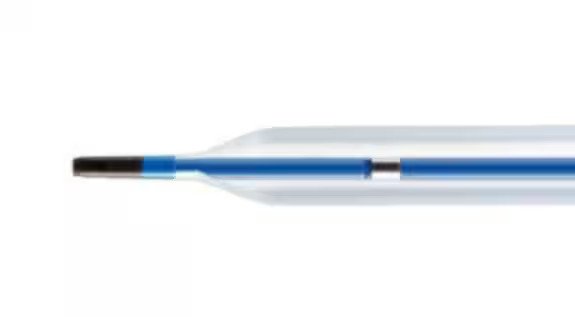
TE Connectivity has introduced an automated 3D printing process for producing catheter shafts, replacing a manual assembly step used across the industry.
It was developed by the Advanced Technology Group in TE’s Medical business at the PROPELUS Prototype Center in Galway, Ireland. The step it replaces exists because a catheter shaft is not uniform along its length. Different sections carry different stiffness, so the device can be pushed from outside the body while still tracking through vessels at the far end, and that means several polymer jacket sections have to go onto a single shaft.
Typically, fitting them has been a manual assembly step. The new process applies the polymer directly onto the shaft during production, and the finished shafts match conventionally built ones on mechanical properties, materials, and aesthetics.
“This process, along with complementary disruptive processes in development, will result in a paradigm shift in catheter manufacturing for our customers. It has the potential to significantly reduce product costs, simplify supply chains and have a positive environmental impact,” said Medical Engineering Fellow Bernard McDermott.
How PROPELUS Speeds Development
Getting there took the kind of setup PROPELUS was built for. The center runs three service lines, covering interventional catheters, engineered metal components, and electrical cable assemblies, with dedicated engineers who work alongside customer design teams and enough stock of common catheter and cable materials to carry several concepts at once.
Its scope runs from design through prototyping into contract manufacturing, which is why a process developed there arrives already pointed at production.
What that production buys first is speed. Design changes turn around faster, which shortens the time between a customer asking for a different stiffness profile and receiving a shaft they can test. Lower unit cost is named only as a possibility.
Applying polymer directly instead of fitting pre-made sections may also allow catheter constructions and device architectures that are impractical to build conventionally, though no examples have been given.
Galway is one of four TE medical manufacturing sites, alongside San Rafael in Costa Rica, Plymouth in Minnesota, and Suzhou in China. A process proven where it was developed still has to travel, and the ambitions attached to it on cost, supply chains, and environmental impact only begin to register once it does.
When Manual Steps Become Bottlenecks
In medical device manufacturing, upgrading the workflow around a manual step tends to hit a ceiling. The step itself is usually where the constraint sits. Czech orthotics and prosthetics manufacturer Invent Medical hit a similar wall. The company spent years upgrading its workflow with CAD-CAM, milling, and 3D scanning, but fabrication still ran through plaster molds, thermoformed plastic, and manual adjustments. The output stayed the same.
After testing over 25 printing technologies, Invent moved entirely to a digital scan-to-print workflow in 2017 and now produces tens of thousands of custom devices per year across more than 40 countries.
Invent’s experience shows how eliminating the final manual fabrication step can change more than production speed. Once manual fabrication is removed, the benefit often extends to designs that were previously difficult or impossible to manufacture.
That provides a useful frame for TE’s approach, where automating catheter shaft jacketing could expand manufacturing possibilities alongside faster development cycles, if those capabilities are borne out in practice.
3D Printing Industry is inviting speakers for its 2026 Additive Manufacturing Applications (AMA) series, covering Energy, Healthcare, Automotive and Mobility, Aerospace, Space and Defense, and Software. Each online event focuses on real production deployments, qualification, and supply chain integration. Practitioners interested in contributing can complete the call for speakers form here.
To stay up to date with the latest 3D printing news, don’t forget to subscribe to the 3D Printing Industry newsletter or follow us on LinkedIn.
Explore the full Future of 3D Printing and Executive Survey series from 3D Printing Industry, featuring perspectives from CEOs, engineers, and industry leaders on the industrialization of additive manufacturing, 3D printing industry trends 2026, qualification, supply chains, and additive manufacturing industry analysis.
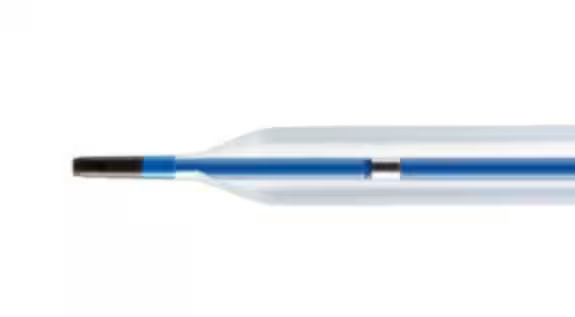
Featured image shows intreventional catheter solution. Image via TE Connectivty.
