


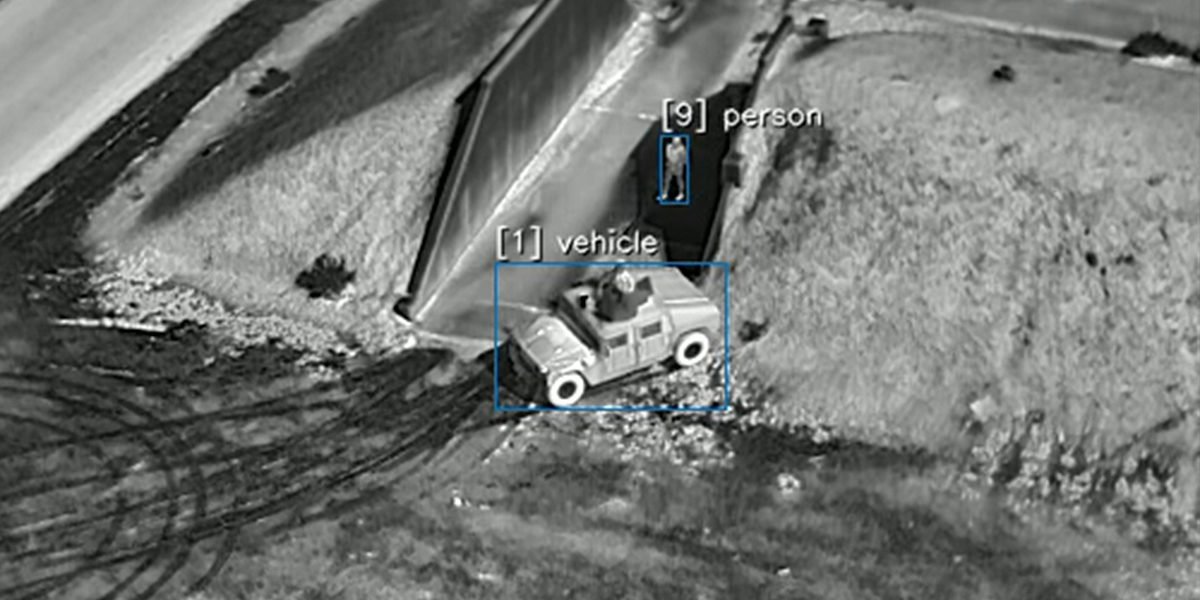
Prism A-ISR combines AI detection, multispectral imaging and edge processing for airborne surveillance and defense applications
Teledyne FLIR OEM has launched Prism A-ISR, a new software module designed to provide AI-enabled air-to-ground detection and tracking for uncrewed aircraft systems (UAS) and other airborne intelligence, surveillance and reconnaissance (ISR) platforms.
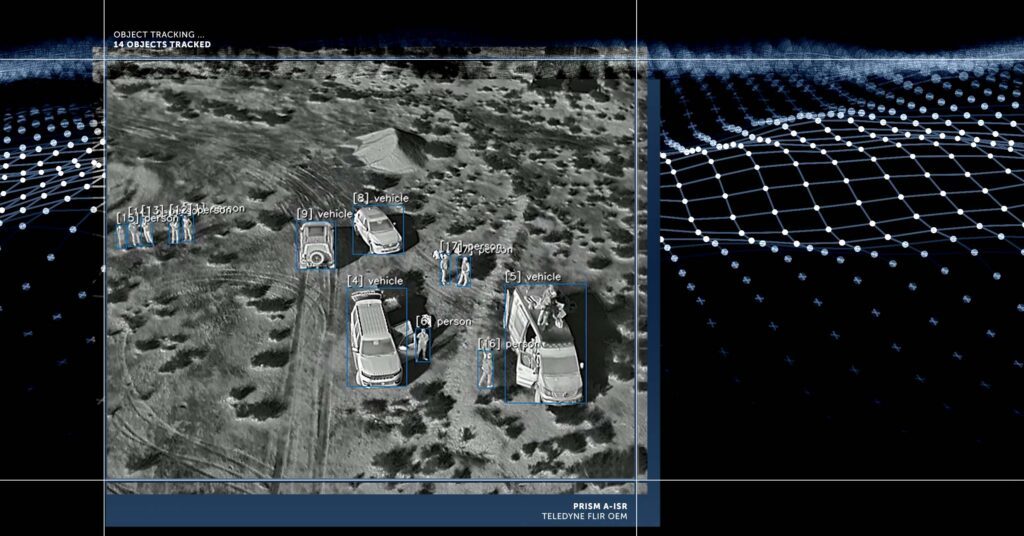
The company announced the software on October 6. Prism A-ISR uses artificial intelligence to detect, classify and track multiple objects on the ground in real time. It can process data from midwave infrared (MWIR), longwave infrared (LWIR) and visible electro-optical (EO) sensors.
The software performs much of that processing at the edge, allowing airborne systems to analyze sensor data without relying on remote computing resources.
Improving Airborne Detection and Tracking
Prism A-ISR includes image processing tools designed to improve detection in difficult conditions. Teledyne FLIR says its patented denoise and super-resolution technology can improve signal quality while reducing bandwidth requirements.
Electronic stabilization and dehaze algorithms also aim to improve image quality and extend detection range.
“By combining our patented image processing, AI perception models, and edge-processing expertise, Prism A-ISR improves long-range situational awareness in cluttered and degraded visual environments while reducing false alarms and integration risk,” said Jared Faraudo, Vice President of Product Management, Teledyne FLIR OEM. “The software supports multi-target detection and tracking for mission applications requiring persistent surveillance, force protection, defense autonomy, and actionable mission intelligence.”
The technology targets applications where aircraft must identify and follow multiple ground objects over time. These could include persistent surveillance, force protection and other defense missions.
Teledyne FLIR also offers its AIMMGen synthetic model-training service for adapting the software to new target classes. According to the company, developers can use the service to create updated mission models in days rather than weeks.
That capability could allow system developers to tailor detection models for different missions without lengthy retraining cycles.
Designed for Integration With Airborne Systems
Prism A-ISR runs on NVIDIA and Qualcomm embedded AI platforms commonly used in defense systems. It also works with several Teledyne FLIR camera modules and select third-party infrared and EO cameras.
Compatible Teledyne FLIR products include the NDAA-compliant Boson+ and Neutrino thermal camera families.
The software joins other products in the company’s Prism portfolio. These include Prism C-UAS for counter-drone applications, Prism Ground ISR and Prism SKR.
Together, the software products provide perception and image-processing capabilities for systems including UAS, ground surveillance platforms and automatic target recognition applications.
With Prism A-ISR, Teledyne FLIR is extending that software approach to airborne platforms that need to detect and track objects on the ground. The combination of AI models, edge processing and multispectral sensor support reflects the growing role of onboard computing in UAS-based ISR systems.
Teledyne FLIR will demonstrate Prism A-ISR at the Association of the United States Army (AUSA) Annual Meeting in Washington, D.C., October 12–14, 2026.
Read more:

Miriam McNabb is the Editor-in-Chief of DRONELIFE and CEO of JobForDrones, a professional drone services marketplace, and a fascinated observer of the emerging drone industry and the regulatory environment for drones. Miriam has penned over 3,000 articles focused on the commercial drone space and is an international speaker and recognized figure in the industry. Miriam has a degree from the University of Chicago and over 20 years of experience in high tech sales and marketing for new technologies.
For drone industry consulting or writing, Email Miriam.
TWITTER:@spaldingbarker
Subscribe to DroneLife here.
