


As demand for premium travel continues to surge, airlines are investing heavily in their most important cabin: business class. Airlines are not only adding more seats, but are redefining the entire onboard experience with better seats and increased service quality. These developments reflect a broader industry shift, where airlines are prioritizing premium-heavy configurations and maximizing revenue from high-yield passengers rather than increasing overall seat density. Among the most prominent players in this space are United Airlines,  Delta Air Lines, and
  Qatar Airways.
While all three airlines offer industry-leading business class experiences, their latest products for 2026 highlight striking differences in design philosophy, passenger experience, and positioning. From United’s new Polaris Studio “business plus” concept to Delta’s refined all-suite consistency and Qatar’s continually evolving Qsuite, each airline is taking a distinct approach to winning over high-value travelers. In this article, we take a closer look at how these three flagship products compare and what sets them apart in an increasingly competitive premium cabin market.
United Polaris Studio

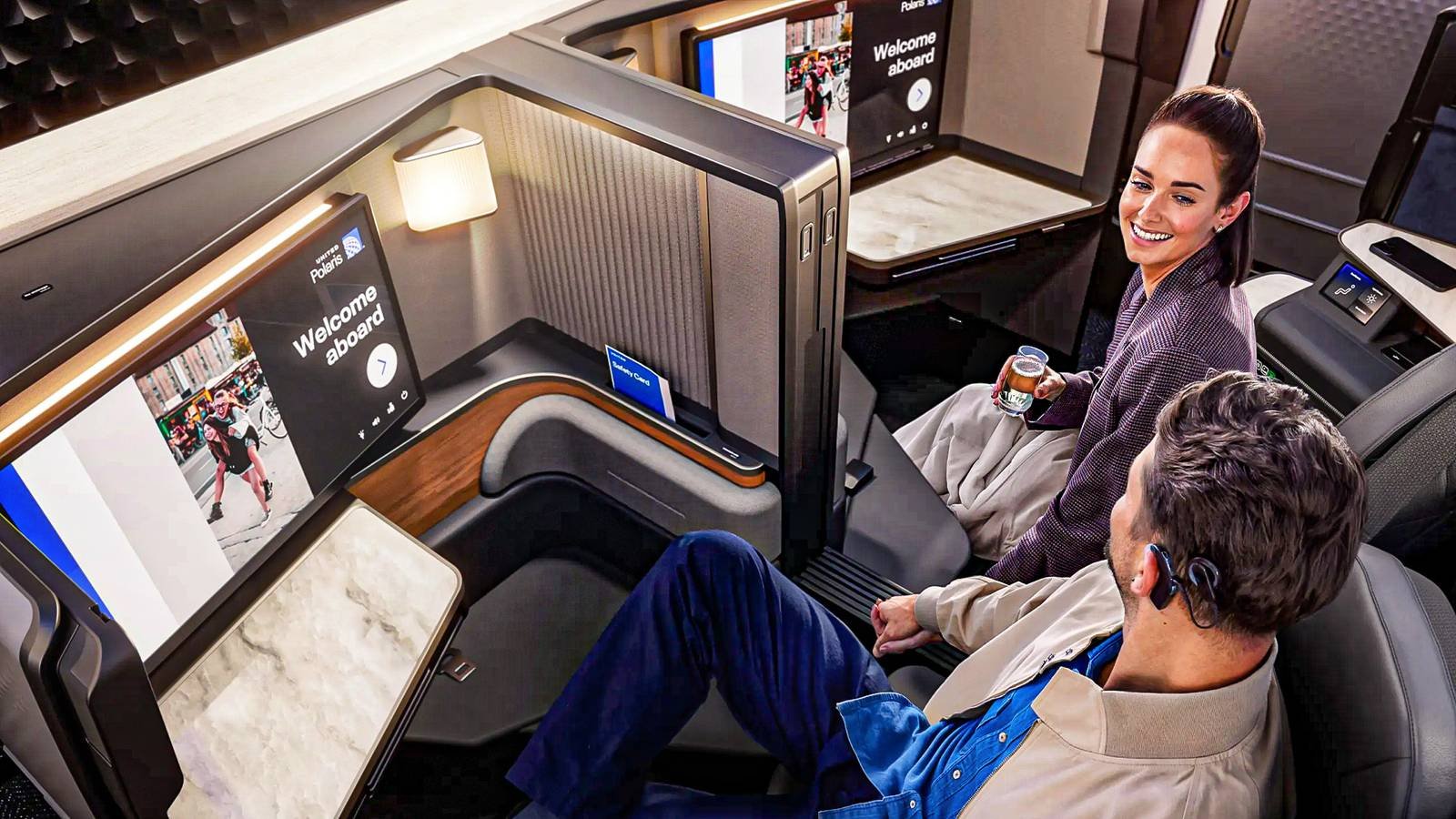
Part of United’s Elevated Aircraft Interiors program and subsequent “Polaris 2.0”, the Chicago-based carrier will introduce a new Polaris Studio seat at the front of the Polaris Cabin. While all new Polaris seats will feature privacy sliding doors and larger in-flight entertainment screens, the airline’s new flagship “business plus” product, the Polaris Studio, will be around 25% larger than the regular seats.
The Polaris Studio seat, which is based on the Adient Ascent platform, will also feature a massive 27-inch (68.6 cm), 4K OLED IFE screen, the largest screen of any US airline. Unsurprisingly, all of these seats are full lie-flat seats with direct aisle access and will be installed in the first two rows of the business-class cabin. In addition to a better seat, passengers traveling in the Polaris Studio will receive an enhanced soft product, including upgraded amenity kits and exclusive dining options.
Overall, the elevated interior program is a full transformation for the entire aircraft, providing “refined finishes and a fresher, brighter and warmer feel throughout.” This includes not only the Polaris cabin but also the economy and premium plus cabins, which will also receive upgrades to improve passenger comfort. Furthermore, the 787s featuring the elevated cabin will be among the most premium-heavy in the industry.
With a total of 99 premium seats, including 56 regular Polaris seats and eight Polaris Studios in a 1-21 configuration, around 45% of the aircraft’s seats are in premium cabins. Unsurprisingly, the carrier will deploy these aircraft in its premium-heavy markets, with the first aircraft in the new configuration operating from San Francisco (SFO) to Singapore (SIN) and London Heathrow (LHR). The “Elevated Interior” will eventually also be retrofitted to the airline’s Boeing 777 fleet; however, as of writing, it is unclear whether this will include the United Polaris Studio product.

Tough Luck: United Airlines Grounds New Premium Boeing 787-9 After 1st Long-Haul Flight
The aircraft is equipped with the carrier’s new elevated interior.
Delta One Suites

Other than United, Delta Air Lines does not have a special “business plus” product, and instead features its flagship Delta One Suite product across the entire business class cabin. This business class product is widely considered one of the best in the industry, and was named by Skytrax as the best business class product in North America at last year’s World Airline Awards. Passengers traveling on Delta One can expect a competitive product conforming to industry standards, with all comforts and amenities needed to arrive well rested after a long flight.
Today, the Delta One Suite is available on the airline’s Airbus A350 and A330-900neo fleet, as well as on the airline’s Boeing 767-400ER fleet, albeit without a privacy door due to the aircraft’s narrower fuselage. The 767-300s, which are set to be retired by 2030, do not feature the Delta One product, and neither does Delta’s A330 fleet. However, for this latter, this is set to change as Delta is planning a full retrofit for the sub-fleet, which includes the introduction of a new-generation Delta One Suite product. This new iteration of the product is primarily designed for the long-awaited Airbus A350-1000, expected to join the fleet early next year. According to the airline, this new seat is a result of “ten years of customer insights and two years of intentional design.”
Delta’s next-generation Delta One Suite product is developed in partnership with Thompson Aero Seating, with the seats being installed in a reverse-herringbone 1-2-1 configuration. The new suite will include an even longer and more comfortable flat bed of 6.5 feet (1.98 meters), more storage space, as well as a larger and improved IFE screen. All suites will have industry-standard direct aisle access, with the adjacent seats in the middle having a sliding window that can be opened when traveling with a companion. Furthermore, the seat will also have modern features such as Bluetooth connectivity, in-suite mood lighting and wireless charging, among other things. According to Mauricio Parise, vice president of Brand Experience:
“Every time a customer boards a Delta flight, the experience and surroundings should feel familiar — creating a sense of home and comfort when you’re away.”
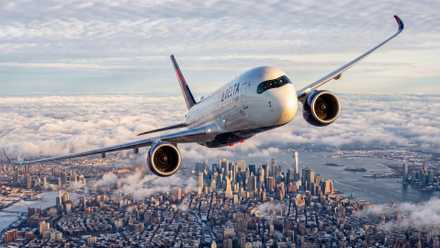
Delta’s New “Suite Spot”: A350-1000 Debut Signals Premium Power Play
Delta’s A350-1000 launch signals a broader push to standardize and elevate premium flying.
Qatar Qsuite

Another highly regarded business class product is Qatar Airways’ Qsuite, which is often considered to be the best in the world and has also been recognized as such at the Skytrax World Airline Awards 2025. The product features fully enclosed private suites with sliding doors, direct aisle access, as well as lie-flat beds, and is available on the majority of the airline’s Boeing 777s and Airbus A350s. Besides the Qsuite being an amazing hard product, the airline also provides an excellent soft product and passenger experience, resulting in the cabin’s world-famous reputation.
Unique about the cabin is that, while in an industry-standard 1-2-1 layout, some seats are rear-facing. Combined, two forward-facing and two rear-facing seats in the center of the cabin can be combined into a quad configuration, basically creating a “private room”. Furthermore, the adjacent seats in the center can also be turned into double beds for couples.
While the original Qsuite was a great success, Qatar Airways is facing increasing competition for the product as more and more airlines are introducing more luxurious business class suites. That’s why the Doha-based airline is now introducing the Next Generation Qsuite, an upgraded Qsuite intended to once again accelerate the product to a certain first spot in the global rankings. This new seat offers higher privacy walls, 4K OLED movable screens, and wider lie-flat beds.
Additionally, it features redesigned, more spacious quad and companion suites with enhanced storage, personalized ambient lighting, and Starlink Wi-Fi. The new suite was intended to be introduced as the airline’s new flagship product onboard the Boeing 777X, but as the delivery of this aircraft has been continuously delayed, the cabin will now first be introduced on the A350-1000.

The New Qatar Airways Qsuite Coming This Year
The new suite offers exceptional comfort.
This Is Why Airlines Are Doubling Down On Premium Cabins

In recent years, airlines have been investing heavily in premium cabins, including business class and premium economy. These investments are driven by a continuous increase in demand for premium travel among leisure travelers after the pandemic. For airlines, these cabin classes generate significantly higher profit margins compared to economy class using the same aircraft, as premium cabins result in higher revenue per square foot (meter).
Of course, business class is not the only premium cabin that airlines offer. While some airlines do still offer a first-class product, this cabin class is becoming increasingly rare. An important driver for this is the continued improvement in both the hard and soft products of business-class cabins, closing the gap between the two cabin classes, making it increasingly difficult for airlines to justify the higher prices in most markets. In 2024, American Airlines was the last U.S. airline to discontinue its international first-class product due to decreasing sales.
Instead, airlines have been installing premium economy cabins to bridge between business class and economy class, a cabin class in which airlines have increasingly decreased service and comfort. This “middle of the market” product provides passengers with extra legroom, wider seats, enhanced dining options, increased privacy and other premium amenities, which improve the long-haul travel experience compared to regular economy class. For airlines, the cabin offers a high-yield product that meets passenger demand for comfort at a lower price than business class. It is a product designed to attract both leisure travelers seeking more comfort and price-conscious business travelers.
Over this past decade, widebody aircraft featuring premium economy cabins have more than doubled, with the cabin class now installed on around 45% of aircraft. Most premium economy cabins are available in North America and Europe, with North America even having 90% of widebodies featuring a premium economy cabin.  American Airlines announced its premium economy product back in 2015, followed by Delta Air Lines in 2016, and United Airlines in 2018.
