


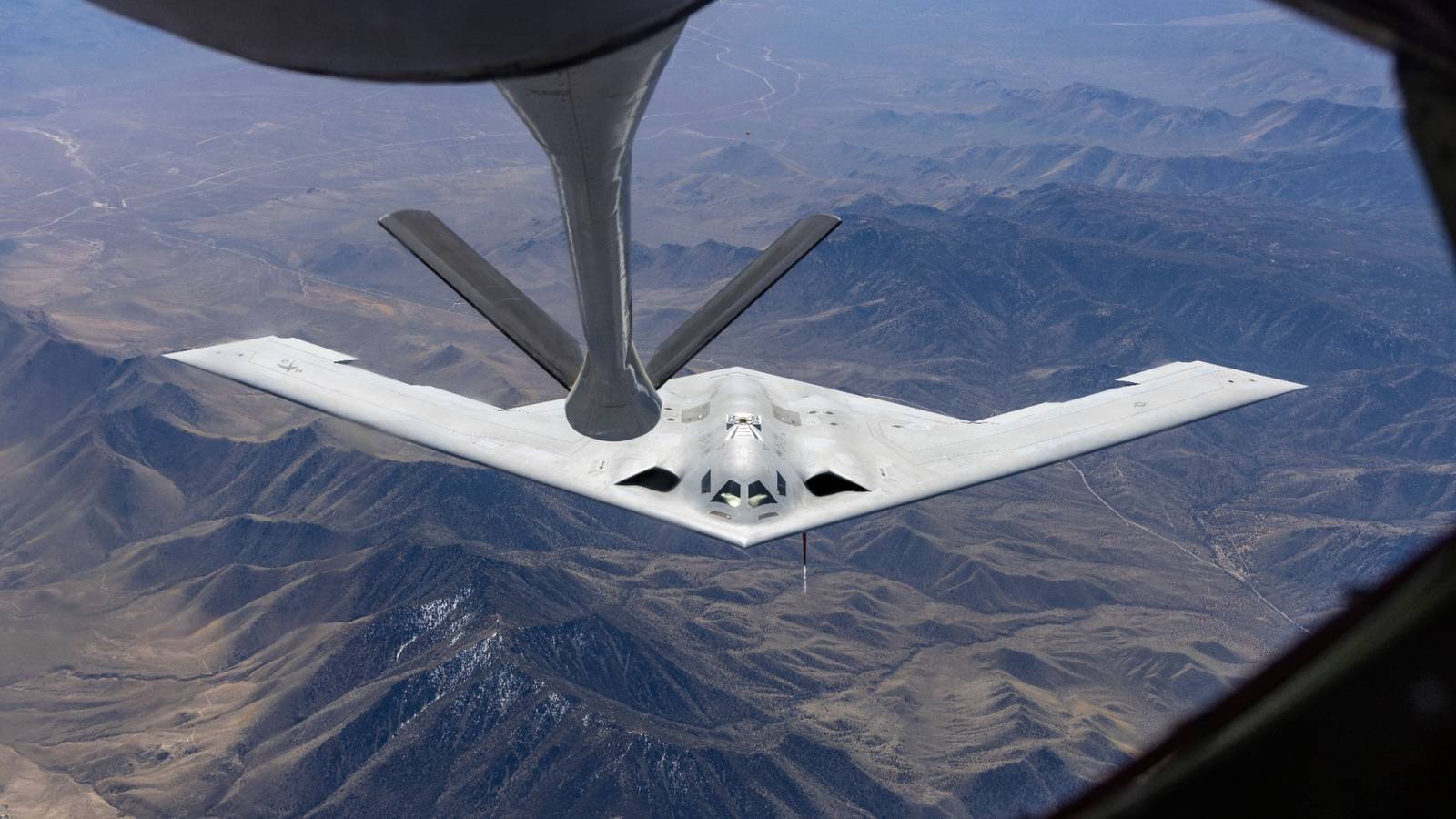
A new image released by US-based military aircraft manufacturer, Northrop Grumman, a view from above its upcoming B-21 Raider aircraft, shows some interesting details as to how the aircraft varies from the current B-2 Spirit aircraft. The B-21 is currently undergoing testing and development, with the type expected to enter active military service sometime in 2027.
While some information about the sixth-generation jet has been made available, due to the nature of the aircraft and the future stealth missions it will be performing, it is expected that several of its other features and perhaps upgrades from the B-2 will be kept under wraps to have operational advantages during its future missions.
Successful Completion Of Mid-Air Refueling
The upcoming Northrop Grumman B-21 Raider jet, currently under development, successfully completed its first aerial refueling this week. The announcement of this achievement, as reported by TWZ, also includes the first image released by the manufacturer of the view of the B-21 from above, and even sideways. These images provide certain information on how the B-21 would differ when compared to its predecessor, the B-2 Spirit.
One of the key advantages of the B-21, marketed by its manufacturer, is that it is the most efficient bomber aircraft to be built, and the aircraft’s additional operational range, compared to the B-2, will provide the aircraft with more operational flexibility and perform missions further away from an aerial tanker than its predecessor could. From the images released, one of the key aspects is that the B-21 appears to be a twin-engine aircraft, which naturally makes it more efficient compared to the four-engine B-2 Spirit Bomber.
The jet also appears to have smaller flight deck windows, which aid the jet in operating at higher altitudes, therefore positively affecting its efficiency and stealth capabilities. The aircraft’s top and side profiles also show that the B-21 is smaller than the B-2, which further improves the efficiency and range of the aircraft. TWZ reports the following quote from Northrop Grumman,
“As the most fuel-efficient bomber ever built, the B-21 consumes a fraction of the fuel used by fourth- and fifth-generation aircraft.”
Opting For Flexibility And Efficiency Over Payload

Due to the intricate physics involved in designing an aircraft, there is always a give and take, wherein enhancing one aspect of the design will compromise another aspect. With the B-21, the same can be said. With the aircraft equipped with fewer number of engines than the B-2, which are more efficient, the jet’s fuel burn reduces, and efficiency improves.
Combine this with other factors, such as the aircraft’s ability to fly at a higher altitude or being smaller, and therefore presumably lighter, all of which contribute to the aircraft’s improved efficiency, along with enhanced operational range and flexibility. This does, however, result in the aircraft having a lower weapons payload capacity compared to its predecessor, the B-2.
Data published by the National Security Journal indicates that because the B-21 is smaller in overall size and has a smaller wingspan compared to its predecessor, the upcoming jet will only have a payload capacity of 30,000 lbs, compared to the B-2’s 40,000 lbs capacity. That being said, the aircraft being smaller, with a lower payload, does also result in the aircraft having a smaller radar cross-section, which is an advantage for a stealth aircraft.

The Striking Differences Between The B-2 Spirit & B-21 Raider
How does the successor of the first stealth bomber compare?
Biomimicry At Its Best In Aviation

The B-21 (and the B-2 for that matter), is an excellent example of biomimicry within the aviation industry. For context, the term “Biomimicry” is the practice wherein humans utilize and adapt designs and processes from nature to find a viable solution to a human problem. Within the context of the Aviation industry, the B-2 and the B-21 provide an excellent example.
Noticeable from the B-2’s side profile, it becomes evident that the aircraft looks like a bird. In this case, the B-2 (and now the B-21) has been designed based on the Peregrine falcon to achieve the high levels of aerodynamics the aircraft requires to operate its missions in the intended manner. The design also makes the aircraft stealthy, which is important for a military stealth jet.
Beyond military, examples of biomimicry can be found within commercial aviation as well. A key example would be the iconic Airbus Beluga aircraft. This was an extra-sized aircraft developed by Airbus, based on the shape of a Beluga whale. The aircraft’s unique shape ensures the aircraft still remains aerodynamic, but the space afforded by the shape provides the aircraft with larger volume and space for specialized cargo.
