


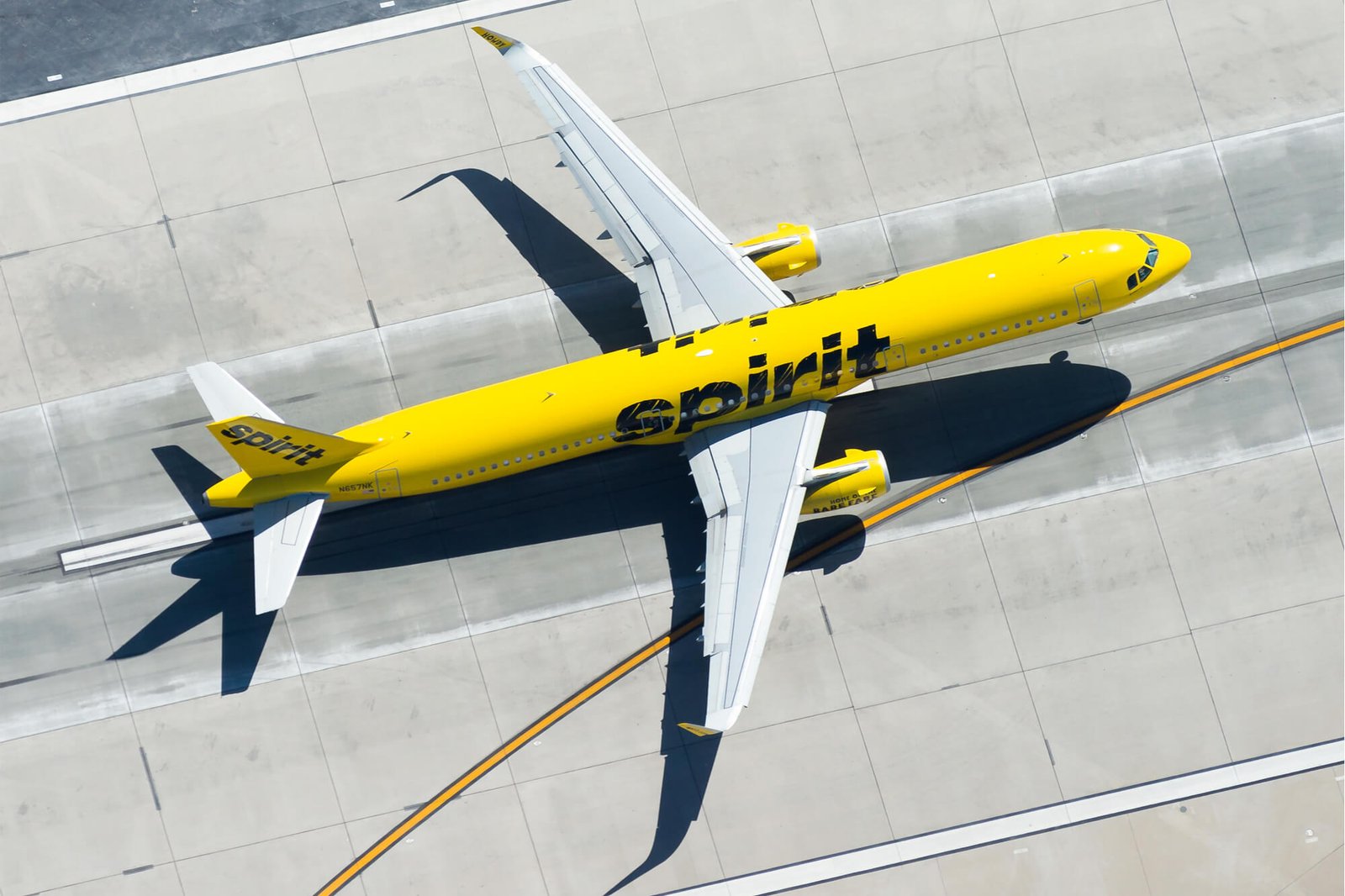
US lawmakers clashed at a congressional hearing on June 24, 2026, that examined airline competition in the United States, with the collapse of Spirit Airlines shaping a broader debate about mergers, fares, regulation and the future of low-cost carriers.
The hearing, titled “The 30,000 Foot View: Competition and Regulation in the US Airline Industry,” was held by the House Judiciary Subcommittee on the Administrative State, Regulatory Reform, and Antitrust.
The hearing examined the structure of the US airline market, government regulation and recent mergers and acquisitions in the industry.
Witnesses included Chris Sununu, President and CEO of Airlines for America; Kristian Stout, Director of Innovation Policy at the International Center for Law and Economics; Timothy Ravich, Senior Counsel at Tressler LLP; and Nancy Rose, a former Deputy Assistant Attorney General for Economic Analysis at the US Department of Justice Antitrust Division.
Much of the debate centered on Spirit Airlines, which ceased operations on May 2, 2026, after years of heavy losses and two bankruptcy filings.
Rep. Jamie Raskin, the ranking Democrat on the House Judiciary Committee, said Spirit had been “one of the strongest forces in the economy, holding down ticket prices for consumers.”
Rep. Becca Balint also criticized the state of airline competition, saying: “Tickets cost more. More flights are canceled. And everything from seat selection to carry ons are now ‘perks’ you pay a fee for.”
Spirit’s collapse has become a flashpoint in the larger fight over airline antitrust policy in Washington. The Republican side argues that blocking JetBlue Airways’ proposed acquisition of Spirit helped eliminate a struggling low-fare competitor. Democrats argue that approving the deal would have killed Spirit even sooner.
Rose, who defended the DOJ’s successful challenge to the JetBlue-Spirit merger, told lawmakers: “Antitrust did not kill Spirit Airlines.”
She said Spirit’s collapse was “deeply regrettable” but argued that antitrust enforcement helped keep the airline in business.
“Effective antitrust enforcement kept Spirit flying for at least two years longer than it would have if JetBlue had been allowed to complete its immediate wind-down of operations,” Rose said in written testimony.
Rose said Spirit’s collapse affects all travelers because its low fares helped keep prices down across the routes it served.
“Spirit’s disappearance matters to everyone who flies,” Rose said, adding that the carrier’s low-cost model “consistently put pressure on other airlines to lower prices and innovate.”
She pointed to the federal court ruling that blocked the JetBlue-Spirit merger, noting that the court described Spirit as a “uniquely disruptive competitor.”
JetBlue had planned to acquire Spirit in a $3.8 billion deal that would have created a larger fifth competitor to American Airlines, Delta Air Lines, United Airlines and Southwest Airlines.
But the deal was blocked in January 2024 after a federal judge sided with the DOJ and found that the merger would harm cost-conscious travelers who relied on Spirit’s lower fares.
Stout took the opposite view, arguing that the Spirit case exposed flaws in how regulators and courts evaluate airline mergers.
“The government won the case, but consumers lost the carrier,” Stout said in written testimony.
He said it would be “too simplistic” to claim that the DOJ caused Spirit’s collapse, noting that the airline faced multiple problems, including engine issues, fuel costs, competition from basic economy fares and around $2 billion in losses after 2020.
But Stout argued that regulators treated Spirit as a healthy long-term competitor, even though the airline’s finances were growing more dire and its future was uncertain.
“The lesson is not that the merger necessarily should have been approved,” Stout said. “Rather, it is that the doctrinal framework applied to the case was too static to evaluate a visibly fragile firm operating in a capital-intensive network industry.”
Sununu, representing Airlines for America, told lawmakers that the US airline market remains highly competitive and that deregulation has delivered major benefits for consumers.
“Robust competition in the US airline industry has generated unprecedented levels of affordability and accessibility,” Sununu said in written testimony.
He argued that consumers have more choices than ever and airline fares remain low in real terms, as carriers have invested heavily in aircraft, technology, airports and employees.
Sununu said real airfares, including ancillary fees, reached an all-time low in 2025 when excluding the pandemic years of 2020 and 2021.
He also said lower-cost carriers have taken significant market share from the largest network airlines since deregulation. According to Sununu’s testimony, global network carriers carried 89% of US domestic origin-and-destination passengers in 1979. By 2025, that share had fallen to 54%.
Sununu said the federal government already has broad authority to prevent unfair, deceptive or anticompetitive practices and argued that regulators should rely as much as possible on competitive market forces.
“Deregulation has clearly been a success for consumers,” Sununu said.
Ravich told lawmakers that the JetBlue-Spirit case showed the difficulty of judging the effectiveness of competition in modern aviation.
He said one view emphasized Spirit’s role as an ultra-low-cost carrier that pushed fares lower, while another emphasized the possibility that a combined JetBlue-Spirit could have competed more firmly against the largest US airlines.
The hearing also touched on airport access, gates, slots, pricing practices and the role of government regulation in shaping competition.
