


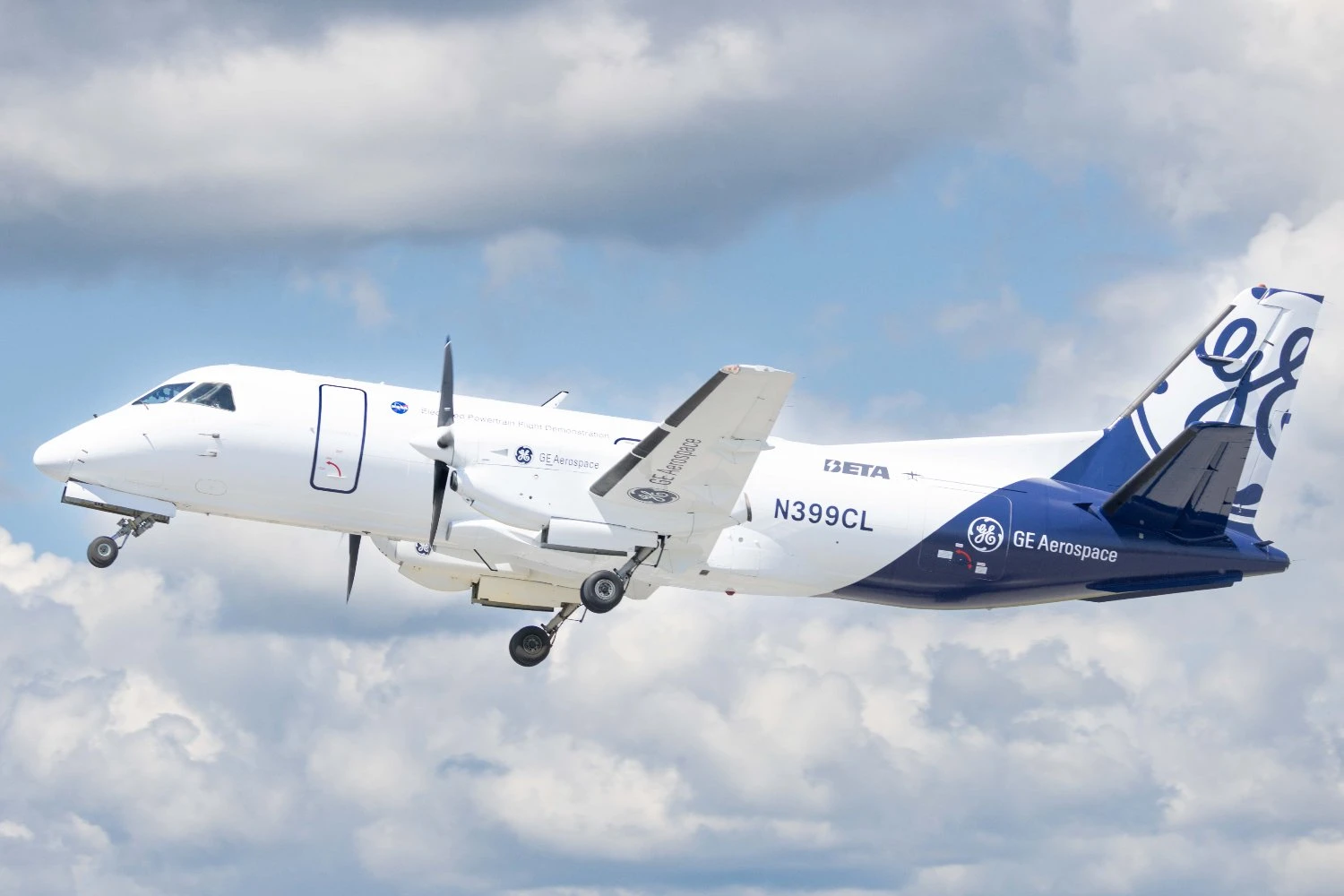
GE Aerospace and BETA Technologies have tested an electrically assisted takeoff aboard a modified Saab 340B. The demonstration took place in October at Plattsburgh, New York, and was announced on November 4, 2026.
The aircraft, registered N399CL, combines a conventional turboprop engine with electric motors powered by batteries. During the test, both sources supplied power for takeoff, one of the most demanding phases of flight.
GE described the demonstration as the first hybrid-electric-assisted takeoff by an aircraft designed to operate at commercial aviation altitudes. Hybrid-electric aircraft have flown before, however, and this Saab 340B had already completed flights using its experimental propulsion system.
The test showed that battery power could supplement the turbine during takeoff. GE did not disclose how much additional power the electrical system supplied, how much fuel it saved or a measured reduction in noise.
Follow Air Data News: WhatsApp | Instagram | LinkedIn | Twitter | Facebook
The company plans further flights to evaluate the system under different operating conditions.
How the hybrid propulsion system works
The Saab 340B retains a conventional GE CT7 turboprop engine on its left wing. The right nacelle houses a modified CT7 integrated with electric motors and generators.
The turbine and electrical system can work together, rather than requiring the aircraft to rely entirely on batteries. During takeoff, stored electrical energy supplements the turbine’s output. During other phases of flight, the system can generate electricity to recharge the batteries.
The test aircraft also carries power converters, control equipment and cooling systems for the experimental propulsion arrangement.
BAE Systems supplied the battery system, while Aurora Flight Sciences, a Boeing subsidiary, developed the modified nacelle. BETA Technologies has worked with GE on flight testing and aircraft operations.
Engineers are studying whether electrical assistance could let a turbine operate more efficiently during some phases of flight. The results depend on battery weight, electrical losses and the aircraft’s operating profile.
Project began with NASA research
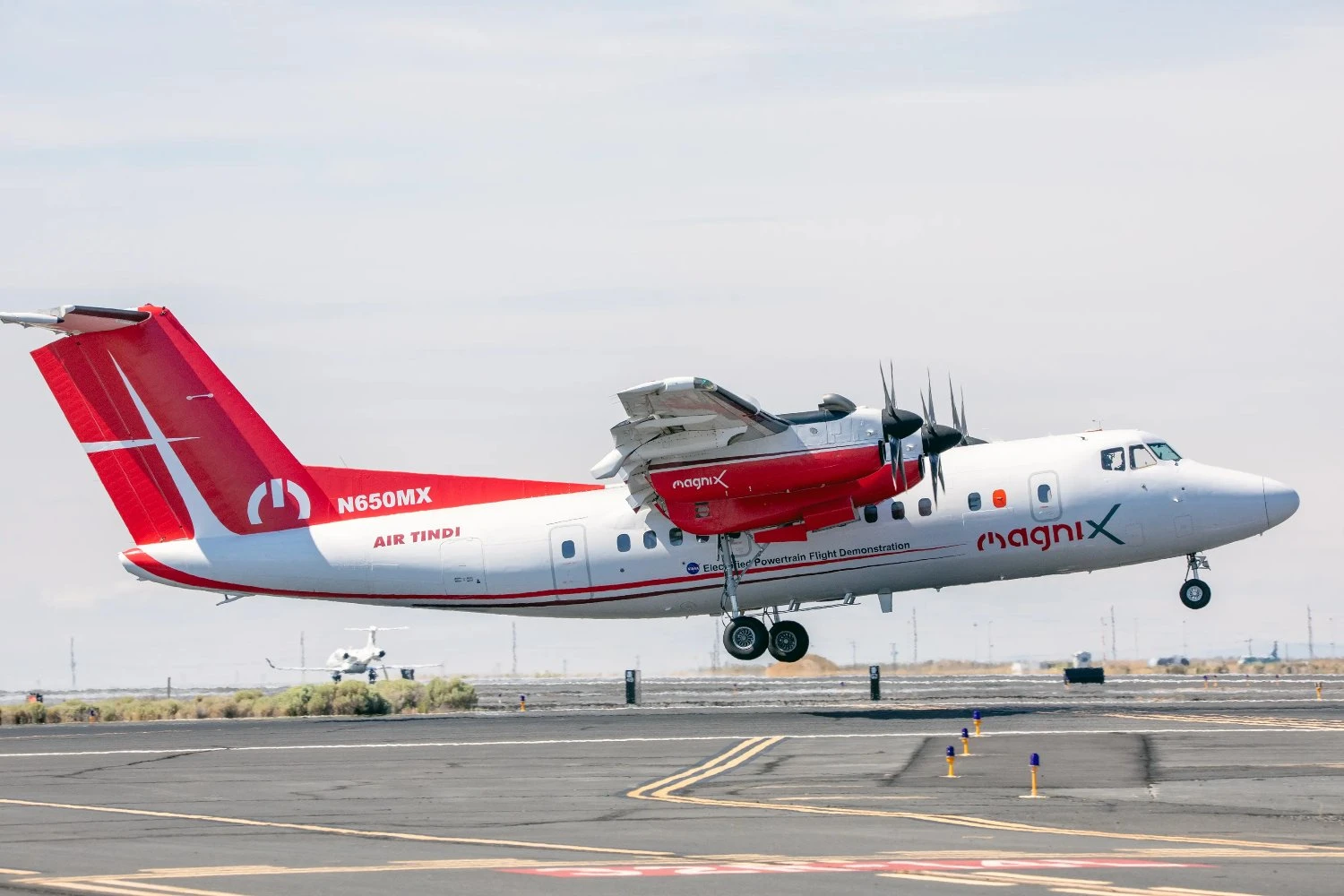
The flying laboratory originated in NASA’s Electrified Powertrain Flight Demonstration (EPFD) program, launched in 2021 to investigate fuel consumption and emissions reductions in commercial aviation.
NASA selected GE Aerospace and its partners to develop and test hybrid-electric propulsion on a regional turboprop. NASA and industry participants originally planned to invest a combined $260 million over five years.
The Saab 340B’s twin-engine configuration allowed engineers to retain a conventional powerplant on one wing and modify the other side for the hybrid system.
Before flight testing, GE carried out ground experiments, including work at NASA facilities that reproduced high-altitude operating conditions.
The objective was not to develop a hybrid Saab 340B for airline service. The aircraft instead allows researchers to gather data on propulsion technologies that might be adapted for larger commercial airplanes.
NASA formally concluded EPFD in August 2026, but GE and BETA Technologies continued flight testing.
High-altitude flights and an Atlantic crossing
In May, the modified Saab 340B flew above 30,000 feet (9,144 meters) using hybrid-electric propulsion. The flight allowed engineers to evaluate the equipment at altitudes relevant to commercial aircraft.
In July, the aircraft crossed the Atlantic to attend the Farnborough International Airshow in the United Kingdom. The journey also provided flight-test opportunities outside its regular operating area.
Earlier tests covered climb, cruise and electrical energy management. The October demonstration added assisted takeoff, when high power is required.
GE also reported quieter operation during the assisted takeoff but released no noise measurements in decibels. It has not published fuel-consumption improvements or the batteries’ usable capacity.
Those missing figures matter: the flights establish that the system operates in the air, but do not yet establish whether its weight and complexity can be justified in airline service.
Could hybrid technology reach future airliners
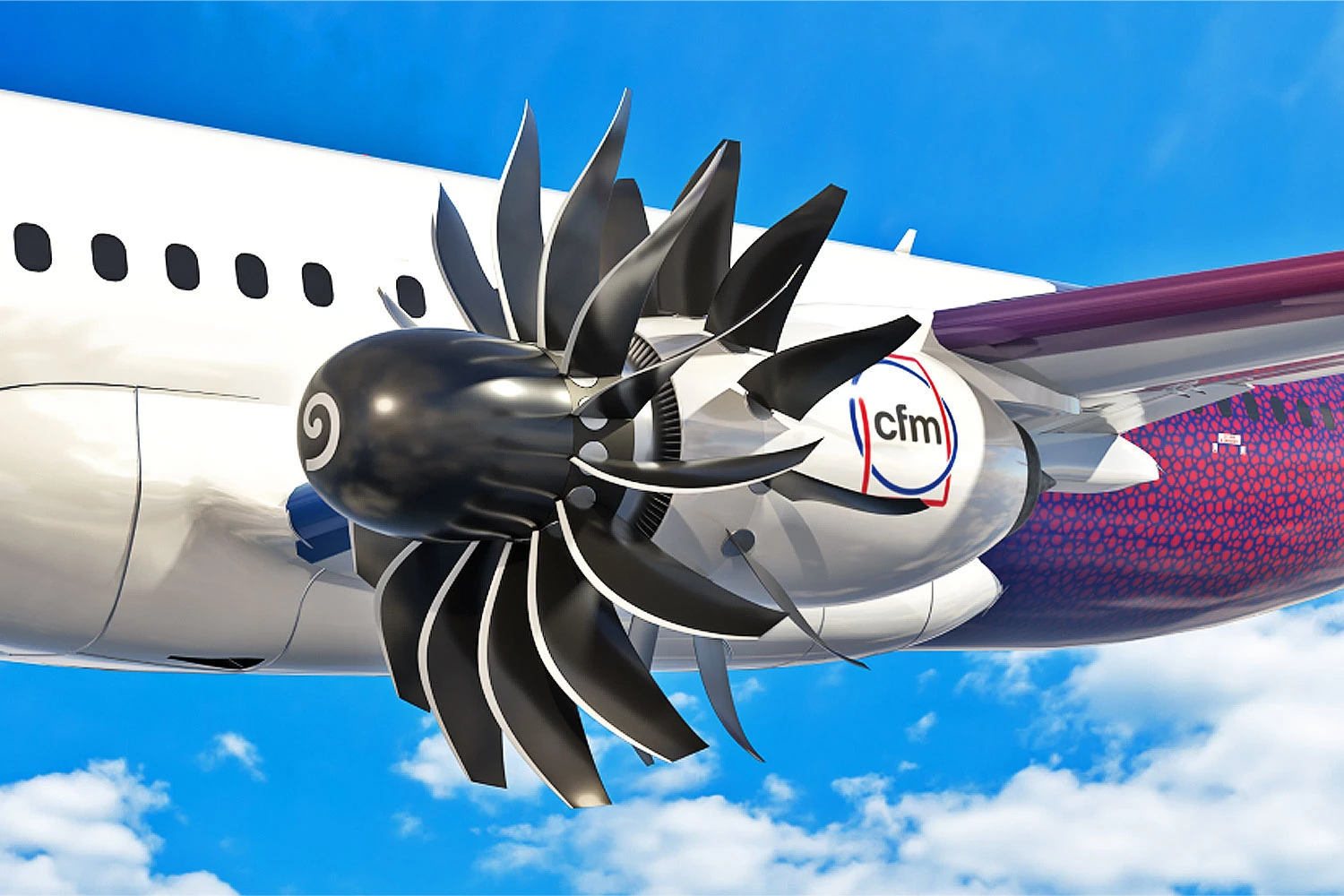
GE Aerospace is studying hybrid-electric propulsion technologies for possible use in the CFM RISE program, developed with Safran Aircraft Engines. The research also includes an open-fan engine architecture.
RISE targets a reduction of more than 20% in fuel consumption and carbon dioxide emissions compared with today’s most efficient engines. That is a program target, not a result measured on the hybrid Saab 340B.
Battery weight remains a major obstacle for larger aircraft. Batteries store much less energy per unit of mass than aviation fuel, making fully electric propulsion particularly difficult for medium- and long-range flights.
Hybrid propulsion retains fuel-powered turbines and uses electrical assistance when needed. Its commercial value depends on whether the fuel savings exceed the penalties of additional mass and complexity.
GE has not announced a production engine derived directly from the Saab 340B demonstrator or a certification and entry-into-service schedule for a hybrid-electric commercial propulsion system.
