


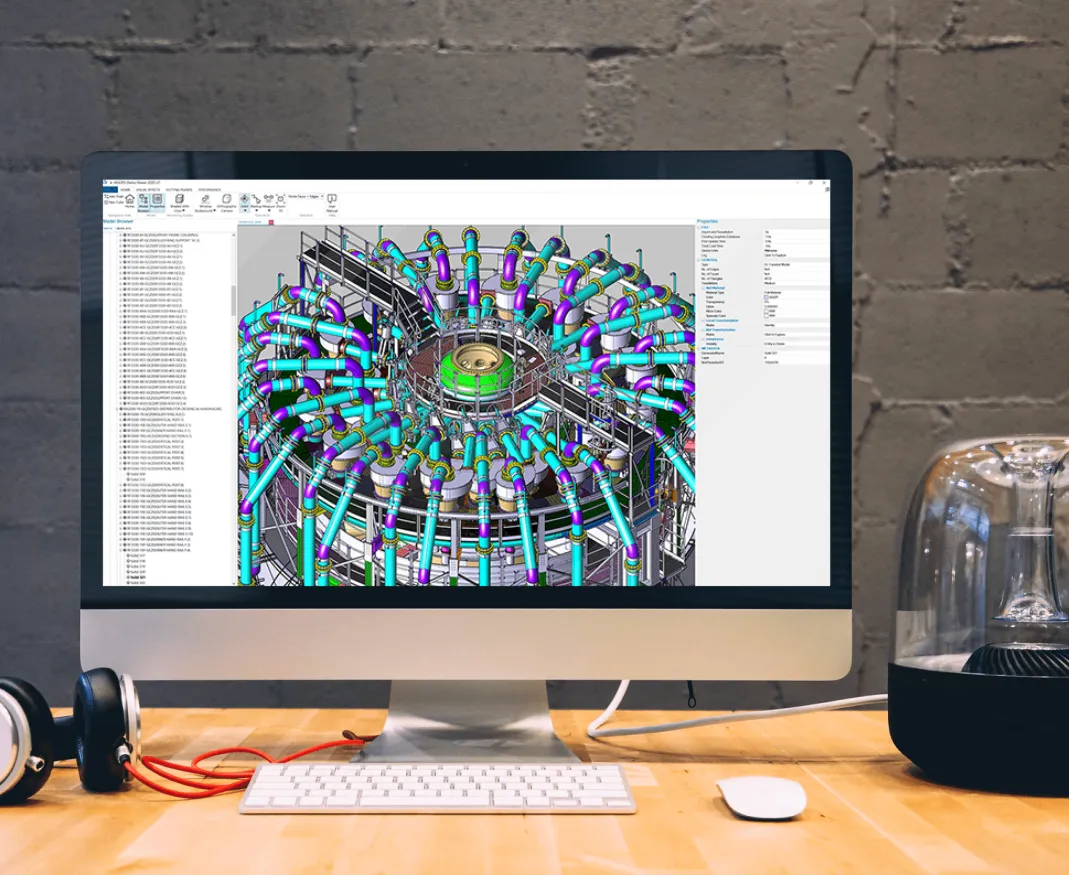
Introduced as a technology preview in late 2025, Tech Soft 3D has officially launched HOOPS AI framework purpose-built to integrate CAD data into machine learning (ML) pipelines.
The product is now generally available, building on a successful beta program with over 30 companies. The launch addresses a problem that has long complicated work for engineers in manufacturing and related fields. CAD datasets are notoriously difficult to feed into modern ML systems in any reliable way, and HOOPS AI takes that on directly by handling data preparation and model experimentation.
Speaking about the launch, Gavin Bridgeman, CTO, Tech Soft 3D said, “The official launch of HOOPS AI marks an important step in Tech Soft 3D leading the effort to bring AI to engineering data.”
New features, faster development cycles
The full release adds two capabilities that were absent from the preview. Linux support arrives alongside existing Windows compatibility, which is significant given that most ML infrastructure runs on Linux.
Alongside it comes CAD embeddings, a feature that automatically captures semantic relationships within CAD data without requiring human labeling. Rather than being told what to look for, the system identifies patterns on its own, allowing models to recognize similar parts and understand design context.
Teams can run hundreds or thousands of model variations simultaneously, which opens the door to tasks like part classification, metadata enrichment, manufacturing feature detection, similarity search, duplicate detection, and design reuse and optimization across large design libraries.
The ability to iterate at that scale is intended to compress development timelines, with Tech Soft 3D stating that smaller teams can cut cycles from months to weeks.
On the roadmap, Python access is set to expand with a specific focus on product manufacturing information (PMI). The company also intends to support training on private organizational data, a notable gap in the current version which has so far only been demonstrated on public datasets.
According to Tech Soft 3D, the longer-term goal is to capture the expert engineering knowledge embedded in CAD models and make it accessible across teams.
The CAD-ML problem
Machine learning models require standardized, predictable input structures, yet CAD files are inherently non-linear and context-dependent. HOOPS AI acts as the technical translation layer between these two ecosystems, standardizing complex geometry into machine-readable formats.
This allows developers to eliminate the data-ingestion bottleneck that previously prevented the automated analysis of large-scale engineering datasets.
The challenge HOOPS AI is addressing is one the industry has been circling for a long time. Gian Paolo Bassi, Senior Vice President at Dassault Systèmes acknowledged that even within one of the major CAD platforms, AI capabilities remain fragmented, describing a collection of narrowly focused tools that handle specific tasks without coherent orchestration across workflows.
Separately, Dassault has been working toward extracting embedded engineering knowledge from geometry and historic design decisions, a goal that remains in development. That both goals remain works in progress at a company of Dassault’s scale underlines how structurally hard the CAD-to-ML problem is, and why a purpose-built framework targeting it specifically is a meaningful development.
3D Printing Industry is inviting speakers for its 2026 Additive Manufacturing Applications (AMA) series, covering Energy, Healthcare, Automotive and Mobility, Aerospace, Space and Defense, and Software. Each online event focuses on real production deployments, qualification, and supply chain integration. Practitioners interested in contributing can complete the call for speakers form here.
To stay up to date with the latest 3D printing news, don’t forget to subscribe to the 3D Printing Industry newsletter or follow us on LinkedIn.
Explore the full Future of 3D Printing and Executive Survey series from 3D Printing Industry, featuring perspectives from CEOs, engineers, and industry leaders on the industrialization of additive manufacturing, 3D printing industry trends 2026, qualification, supply chains, and additive manufacturing industry analysis.
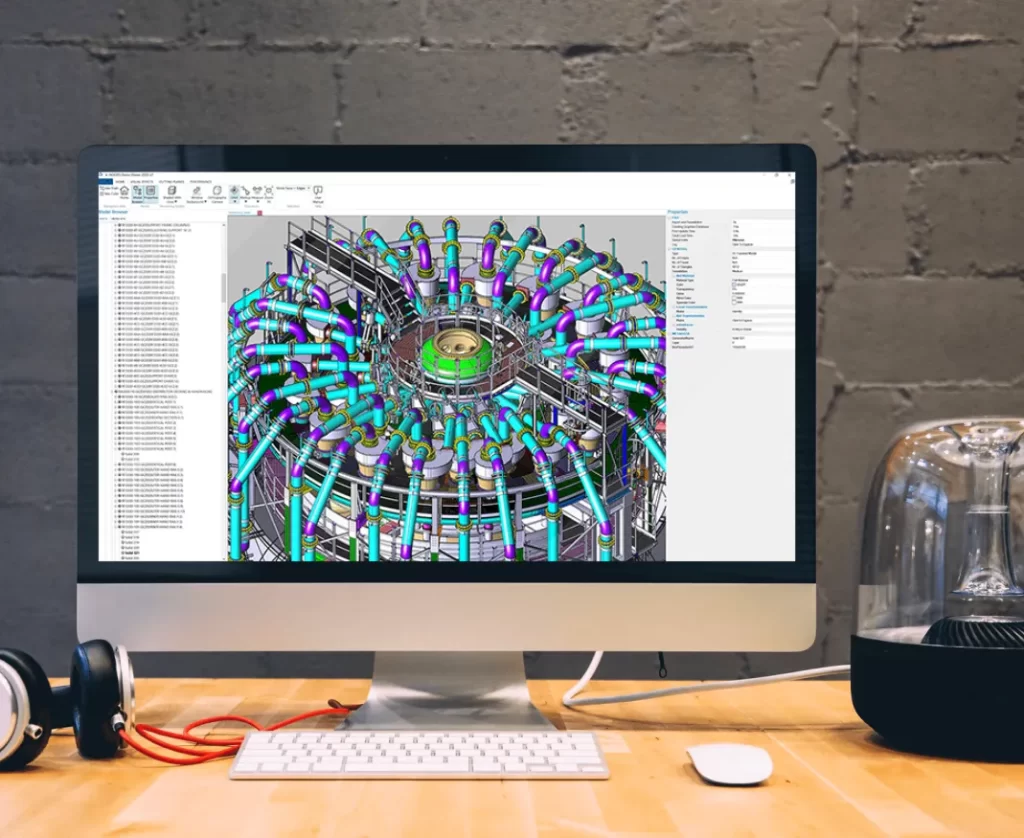
Featured image shows 3D geometry processed by HOOPS AI framework. Image via Tech Soft 3D.
