


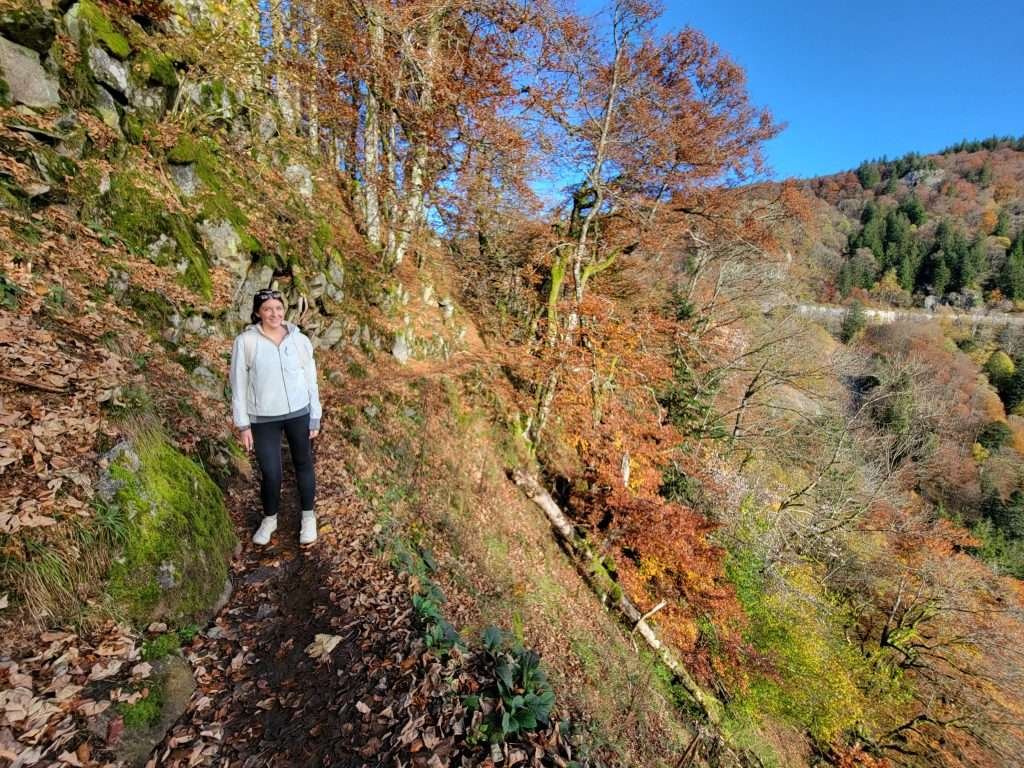
Drones are increasingly showing up at the intersection of spatial analysis, regional planning and site selection. One of the leaders driving that integration is Julia Pilarski, Project Manager of Real Estate & GIS at the Detroit Regional Partnership (DRP).
Julia Pilarski is the Project Manager of Real Estate & GIS at the Detroit Regional Partnership (DRP) and an FAA Part 107 Certified Drone Pilot. At the intersection of technology, economic development, and spatial strategy, Julia leads industrial site identification across an 11-county region while overseeing the Verified Industrial Properties (VIP) portal, GIS integrations, and drone aerial operations. In addition to teaching herself web design to build better digital tools for site selectors, Julia actively cultivates Detroit’s future tech pipeline through her work with the VIP x CODE313 Drone Pilot Program, empowering youth with hands-on drone skills and STEAM career pathways.
Julia sat down with The Drone Girl to discuss how aerial imagery transforms site selection, how Detroit is building an urban drone corridor and how self-taught skills shape high-level regional strategy.
Do you know an awesome Drone Girl I should profile? Contact me here.

The Drone Girl: Going across the broader tech landscape, what’s the number one thing you think people aren’t talking about enough in the drone industry?
Julia Pilarski: People aren’t talking enough about how many opportunities there are in the drone industry, and how many other industries it touches. Within the drone space, that’s well understood, but outside that space that same conversation isn’t happening, so people don’t understand the many applications.
My background is in GIS, and we’re seeing heavy integration there, but drones are also showing up in real estate, agriculture, defense, utilities, and logistics. We talk constantly about how to integrate AI into our work; drones are starting to demand that same conversation across industries. And workforce and training to meet that demand deserve more attention, too.
TDG: In your work with site selection, how does having an aerial drone perspective change the story you tell about a site’s readiness compared to traditional 2D maps or spreadsheets?
Julia: Aerial imagery takes the story to another level because it allows people to visualize a site. That became especially important during COVID, when we could no longer bring as many people from out of market, whether domestically or internationally, to tour sites in person.
TDG: Ah, yes, that era was a blessing and a course…but for a lot of tech it really was a blessing. I’m guessing people wanting to see properties they couldn’t physically tour!
Julia When someone is considering a large investment, they want more than data points on a map or an Excel spreadsheet. They want to see the property and envision what could actually happen there. Being able to provide drone video, overlay the property data on aerial imagery, or place a 3D rendering on a site gives people that additional layer of visualization. Now, instead of waiting until someone can visit the market in person, we can give a site selector sitting in another state or another country a much better sense of the property ahead of time. That has become an important part of staying competitive in economic development.
TDG: What is the biggest technical or operational challenge when translating raw drone footage into actionable GIS data for those large sites?
Julia: Our program’s current needs are centered around turning raw drone footage into actionable industrial real estate data. Capturing and editing the imagery in a way that keeps both the site and the data accurate and easy to understand is where most of that challenge has lived.
TDG: What sorts of properties are you mostly working on?
Julia: A lot of the properties we work with are large, so we can’t always get a single, complete shot of the site, which adds another layer of complexity in capturing the right footage to work with. From there, editing isn’t just about stitching that footage together so property boundaries, utility locations, and other data are represented correctly. It’s also about presenting the site in a way that lets someone easily visualize the property and the data without getting lost on where things are located.
TDG: Is there anything unique about Detroit’s embrace of drones that you wish other city governments knew?
Julia: What makes Detroit and the state of Michigan unique is that we’re treating drones and advanced air mobility as a critical economic development opportunity, not just emerging technology.
TDG: Yes, I wrote about how much money Michigan was pouring into drones earlier this year!
Julia: Governor Whitmer signed an executive directive establishing the Michigan Advanced Air Mobility Initiative, which taps the state’s manufacturing, engineering and logistics strengths to accelerate how drone technology gets built, tested, commercialized and scaled. Detroit and the surrounding region are central to that effort, since the area’s existing supply chain and manufacturing base give companies a real head start when they’re building and scaling this technology here.
TDG: Indeed. In fact, last year, I referred to Detroit as “From Motor City to Drone City” on my website.
Julia: Detroit also has the Advanced Aerial Innovation Region, an actual urban corridor to test drone technology in a real city environment. Michigan and Detroit are dedicating funding, physical space and building the infrastructure and ecosystem to be leaders in the drone industry.
TDG: I love that pro-innovation stance! Now, tell me more about the VIP x CODE313 Drone Pilot Program.
Julia: I love this partnership! CODE313 is doing incredible work with students in Detroit, and this program lets us plug directly into that. Their scholars are flying real missions for us, capturing aerial footage of industrial areas and assets that we use in our marketing—so it’s not practice, it’s real client work.
What I think people don’t always realize is how much these students are learning beyond just flying and getting their Part 107. Through CODE313’s curriculum, they’re studying aerodynamics, flight geometry, GIS and learning applicable software so they’re walking away with a real technical skill set, not just a pilot’s license. For us, it means high-quality aerial content, and for them, it’s hands-on experience with real industry applications.
TDG: What has been the most rewarding moment for you in watching local students engage with it?
Julia: Seeing a high school student earn their Part 107 license is impressive on its own, but what happens next is what really sticks with me. They start building a real portfolio, they get to work directly with a client instead of a hypothetical assignment, and that kind of experience can open doors most people their age don’t get access to yet.
Watching that technical skill turn into a real output, and then into an actual opportunity or job, is what highlights the immense value of investing in students this early.
TDG: Drones are often an entry point into broader careers in software, logistics and spatial analysis. What unique opportunities do you see for Detroit youth when they get early access to FAA certification pathways?
Julia: There is a huge opportunity for Detroit youth because drones are so interconnected with other industries, and Michigan is continuing to grow its presence in the drone industry.
Someone might start by getting their Part 107 license and flying drones, and then use these skills with GIS, LiDAR, IT, software, manufacturing, real estate, logistics or supply chain. The Part 107 process itself is also valuable because it gives people a foundational knowledge base that can be applied to drones across industries. It is a really great entry point because students can combine drone skills with whatever other interests they have and explore where they want to take their careers.


TDG: You’ve accomplished so much by learning skills on the fly. What do you think more people should know about the self-taught ethos?
Julia: For me, continuing self-education helps me be a good problem solver, independent thinker, adaptable, and satisfies my curiosity and interests.
Technology changes so quickly that you cannot possibly learn everything you’ll ever need through a traditional education. You need to know how to find information, understand it, apply it, and figure out how to solve the problem in front of you. That ability to keep teaching yourself can be incredibly important—and I personally think it is also fun!
TDG: How has taking that hands-on, self-taught approach shaped how you solve complex strategy problems at the Detroit Regional Partnership?
Julia: Taking a self-taught approach has helped me become more comfortable wearing a lot of different hats and figuring things out as I go. There is something really rewarding about learning a new skill, applying it, and then actually seeing the final product.
When we were developing the Verified Industrial Properties program, for example, we had to think creatively about how to build a website or how to get drone imagery of sites with a limited budget. That environment pushes you to ask, “What can we do ourselves? How can we use the resources we already have?” That hands-on approach has shaped how I approach problems because I am willing to learn something new, experiment with it, and figure out how it can solve a problem.
TDG: Your work sits at the crossroads of real estate, GIS, aviation, and economic strategy, which are fields where women are historically underrepresented. What has your experience been navigating these spaces?
Julia: I have been fortunate to have really supportive mentors throughout my career. I think mentorship is an incredibly valuable resource for women navigating fields that have been historically underrepresented. Before I got into this work, I didn’t necessarily know much about economic development or real estate. Having people who could help me understand those fields, open doors for me, and encourage me to try new things made a huge difference.
My mentors and leaders also pushed me to pursue things like getting my Part 107 license, creating the VIP website, trying my hand at video editing, or learning new GIS applications. I have been given the space to test my skills and pursue things that interest me. I am really grateful that I have been in an organization with leaders and mentors that have allowed me to chase those interests while still contributing to the needs of the organization.
TDG: What advice do you have for other women looking to build a career like yours?
Julia: I would start with finding good mentors and, if possible, finding an organization that genuinely supports your growth. Look for a place that is willing to invest in your training and upskilling and gives you opportunities to explore the skills you are interested in. Technology is always changing, so being in an environment that encourages you to keep learning is incredibly valuable.
I would also emphasize the importance of being self-taught, being willing to problem-solve, and staying flexible. Do not be afraid to explore a skill just because it is outside your formal education or current job description. Sharing your interests and passions with the opportunities in front of you is a great way to move forward in your career. It is also incredibly valuable to seek out stories from other women who are doing this work. Seeing other women successfully navigate these fields can open your eyes to opportunities you may not have considered.
TDG: What excites you most about the future of low-altitude aviation, GIS mapping, and site innovation in your region?
Julia: What excites me most is how all of these things are beginning to mesh together. Not that long ago, low-altitude aviation, GIS, and site readiness could feel like very separate areas. Now we are seeing how they can work together to enhance site readiness, economic development, and the way communities operate.
I am also excited by the fact that we do not fully know where all of this is going to go. It is difficult to envision what low-altitude aviation could look like at scale, but we are already seeing incredible use cases, including applications in areas like medical supply chains. I do not think we will suddenly wake up one day and have mass low-altitude aviation; I expect it will be a gradual integration into society. But that unknown is exciting to me because there are so many possibilities for how we can use technology to enhance our lives and our communities.
Follow Julia Pilarski on LinkedIn or learn more about the Detroit Regional Partnership at its website.
Do you know an awesome drone girl I should profile? Contact me here.
Related
Discover more from The Drone Girl
Subscribe to get the latest posts sent to your email.
