


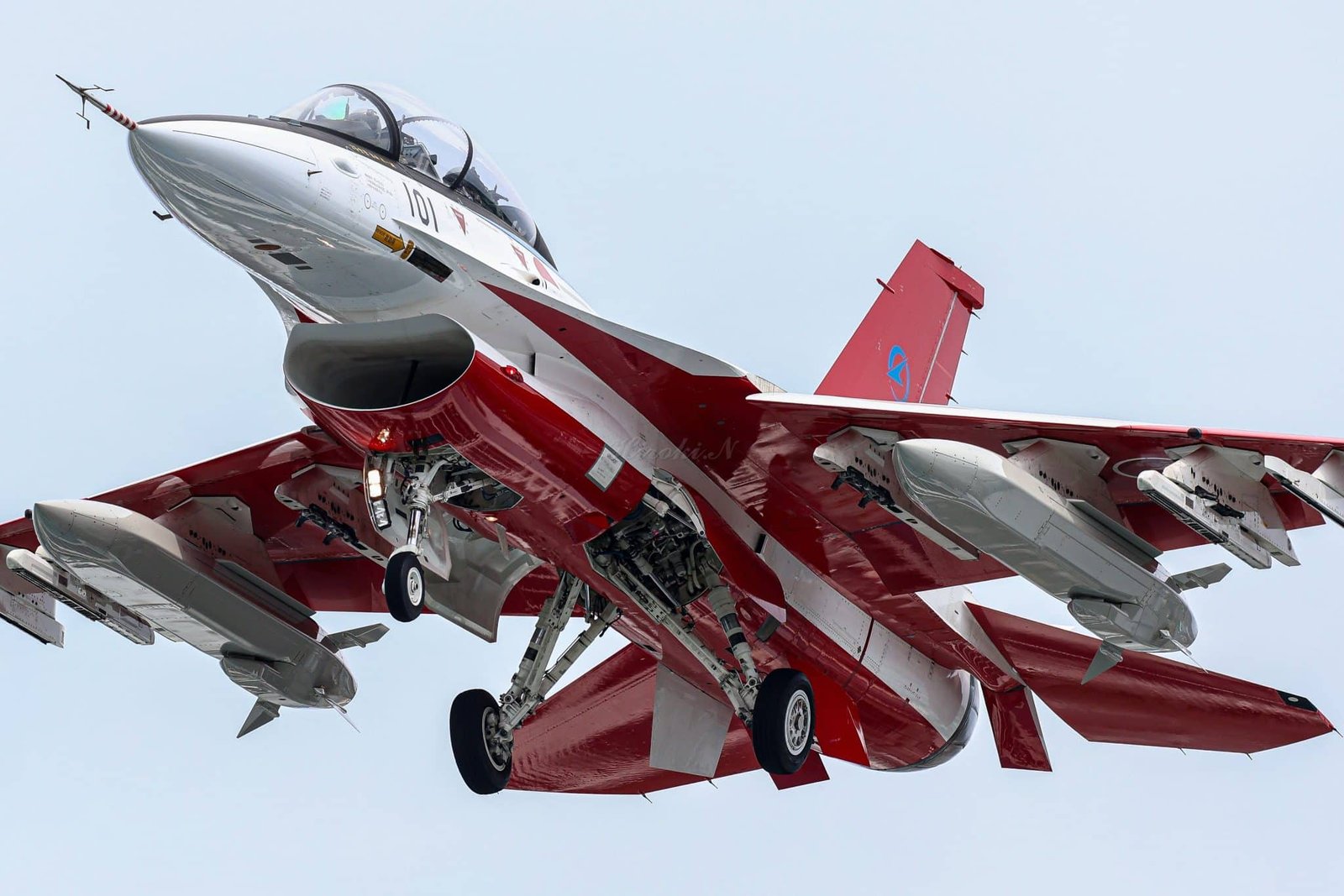
Japan’s JASDF has begun flight testing the air-launched variant of the Upgraded Type 12 anti-ship missile on an F-2 fighter, boasting a 1,000 km stand-off range.
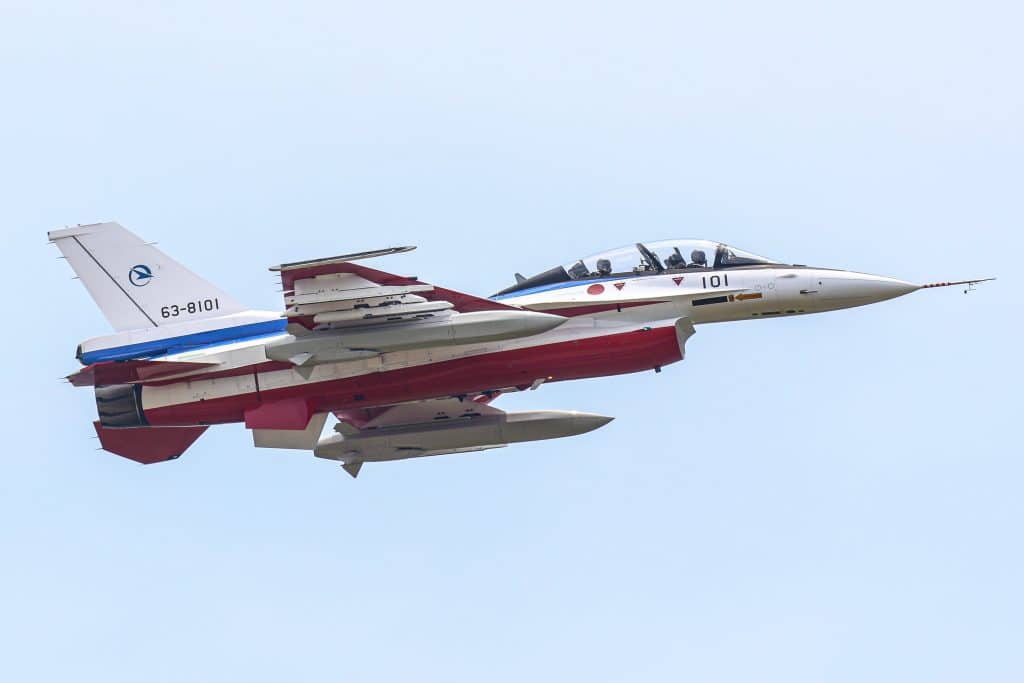
On July 30, 2026, a Japan Air Self-Defense Force (JASDF) F-2 fighter aircraft was observed for the first time conducting a flight test while carrying a new air-to-surface anti-ship missile at Gifu Air Base in Gifu Prefecture, central Japan. Naval News obtained pictures of the event from local spotter @306Z33.
The aircraft belongs to the Air Development and Test Wing, a specialized JASDF unit responsible for testing new weapons and aircraft systems. The missile carried by the F-2 is a next-generation anti-ship weapon known as the Upgraded Type 12 Surface-to-Ship Missile (Air-Launched Variant: ALV).
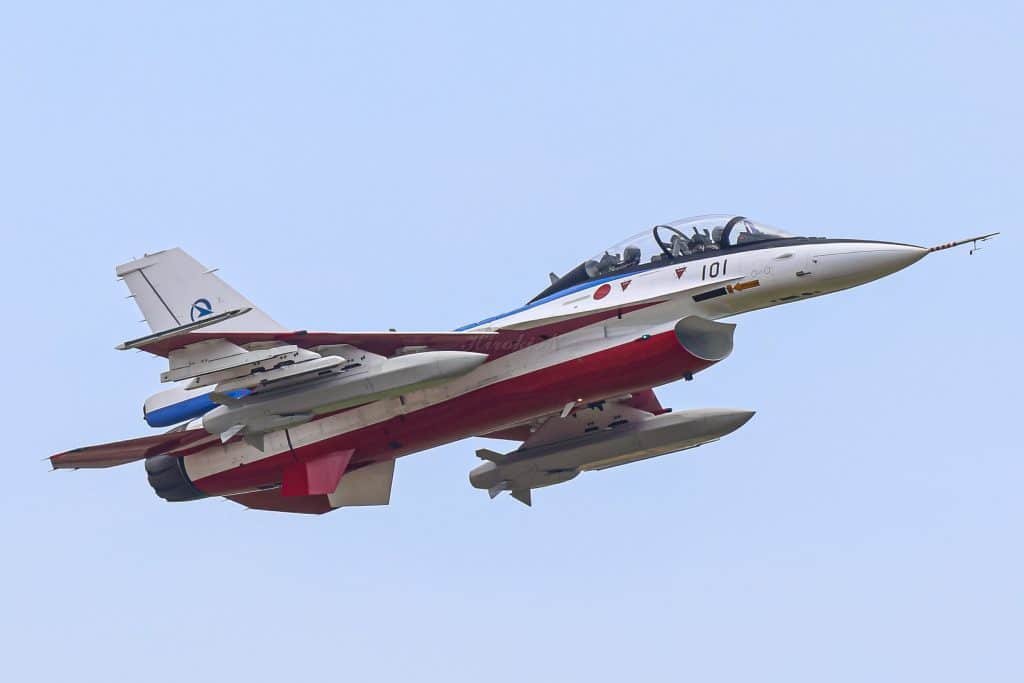
Development of the missile began in fiscal year 2022. It is derived from the land-launched Type 25 Surface-to-Ship Missile, whose development commenced in fiscal year 2021 and which began entering operational service in 2026. During development, the land-based weapon was referred to as the Upgraded Type 12 Surface-to-Ship Missile (Ground-Launched Variant).
The missile features a low-observable design intended to reduce the likelihood of detection by enemy radar. It is also equipped with a satellite-based Up-to-Date Command (UTDC) capability, enabling the launch aircraft to transmit updated instructions, including changes to the designated target, after launch. This capability is expected to improve the missile’s effectiveness against moving warships.
Its most notable feature, however, is its range. The Type 80 Air-to-Ship Missile, or ASM-1, previously operated by the JASDF, was estimated to have a range of approximately 50 kilometers, while the Type 93 Air-to-Ship Missile, or ASM-2, was believed to have a range of roughly 200 kilometers. By contrast, the Upgraded Type 12 SSM (ALV) is reportedly capable of reaching targets at distances of up to 1,000 kilometers.
This extended range is believed to have been achieved through a combination of increased fuel capacity, large wings and an engine capable of operating effectively at high altitude.
To accommodate the new missile, the JASDF is implementing capability-enhancement modifications to its F-2 fleet. The service plans to begin deploying upgraded F-2 aircraft and the Upgraded Type 12 SSM (ALV) at Hyakuri Air Base in Ibaraki Prefecture in fiscal year 2027.
The missile will become a central component of Japan’s stand-off defense capabilities. This concept is intended to deter an adversary from launching an invasion of Japan by deploying long-range missiles capable of striking targets from beyond the effective reach of hostile air-defense systems. It forms part of Japan’s broader effort to respond to China’s continuing expansion of its naval capabilities.
To employ such long-range missiles effectively, however, the Japan Self-Defense Forces (JSDF) will need to continuously detect and track hostile warships operating thousands of kilometers away and provide sufficiently accurate targeting data to ensure successful engagement.
Japan is therefore rapidly developing a constellation of low-Earth orbit satellites. It is also developing tactical unmanned aircraft designed to penetrate an adversary’s threat envelope and collect intelligence, as well as a target-observation missile based on the Upgraded Type 12 SSM and equipped with intelligence-gathering sensors. Only when these reconnaissance, surveillance and targeting capabilities are fully established will the Upgraded Type 12 SSM be able to demonstrate its full operational potential.
