


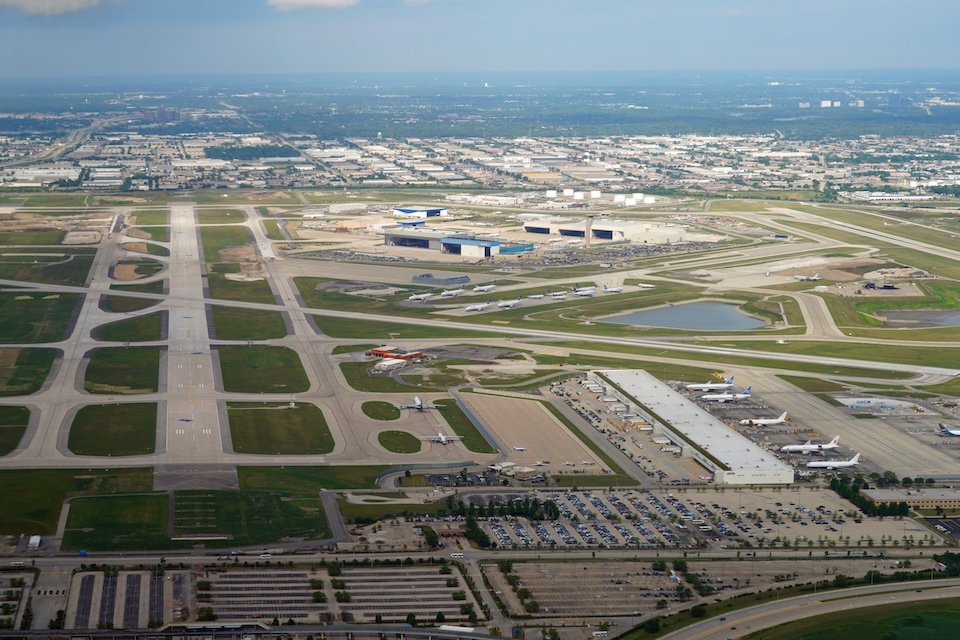
US-based freight forwarders have hit out at the Federal Aviation Administration’s (FAA) decision to cut flights at Chicago O’Hare International as part of efforts to reduce congestion.
The FAA two weeks ago limited the number of daily flights to 2,708 during the summer to avoid worsening flight delays at the airport.
The limit was imposed when it was found that airlines – mainly United and American – had planned to increase flight numbers by 14.9% year on year to 3,080 daily operations this summer, despite delays being experienced by more than 40% of flights last year.
The airport is one of the country’s busiest cargo hubs, ranking number six in 2024.
The Airforwarders Association (AfA) has said the FAA decision to cut hundreds of daily flights at Chicago O’Hare International Airport (ORD) reflected long-standing failures to invest in aviation infrastructure and air traffic control.
The AfA warned that cutting flights will constrain air cargo capacity, increase delays, and add further pressure to already strained supply chains, particularly for time-sensitive shipments.
“This is not a surprise. It is the consequence of years of underinvestment in airport infrastructure and a failure to adequately staff the air traffic control system,” said Brandon Fried, executive director of the Airforwarders Association.
“When demand outpaces what the system can safely handle, the result is disruption, reduced capacity, and higher costs that ripple across the supply chain.”
In its statement on the reasons behind last summer’s delays, the FAA pointed out that there were a lot of construction projects being carried out around the airport.
Many of these projects are continuing this year.
“Reducing the schedule at ORD for Summer 2026 is a strategic decision to mitigate expected performance issues,” the FAA said.
“Proactively adjusting the daily scheduled operations will enhance on-time performance and minimise delays, thereby improving the overall efficiency and reliability of airport operations during this period of continued extensive construction.”
The flight cuts have been met with dismay by airlines, United in particular. The carrier feels that it will bear the brunt of the cuts.
United Airlines feels the FAA’s proposal to cap the number of daily flights would cause “widespread and unnecessary flight cancellations” – along with providing rival American Airlines a more favourable competitive position at the critical Midwest hub.
The FAA believes that significant progress on airfield construction through the Summer 2026 season will reduce the likelihood of the need for the scheduling limit beyond the end of the season.
The AfA also reiterated its call for an immediate resolution to the ongoing Department of Homeland Security (DHS) shutdown, warning that the situation is approaching a critical point for aviation security.
More than 780 Transportation Security Administration officers have resigned during the shutdown and funding for the twice-monthly payroll is expected to end in early May.
“While aviation security remains robust, the longer-term impact of workforce disruption is real,” said Fried.
“We urgently need a resolution that restores stability, including a sustainable, long-term approach to pay for Transportation Security Administration personnel.”
