


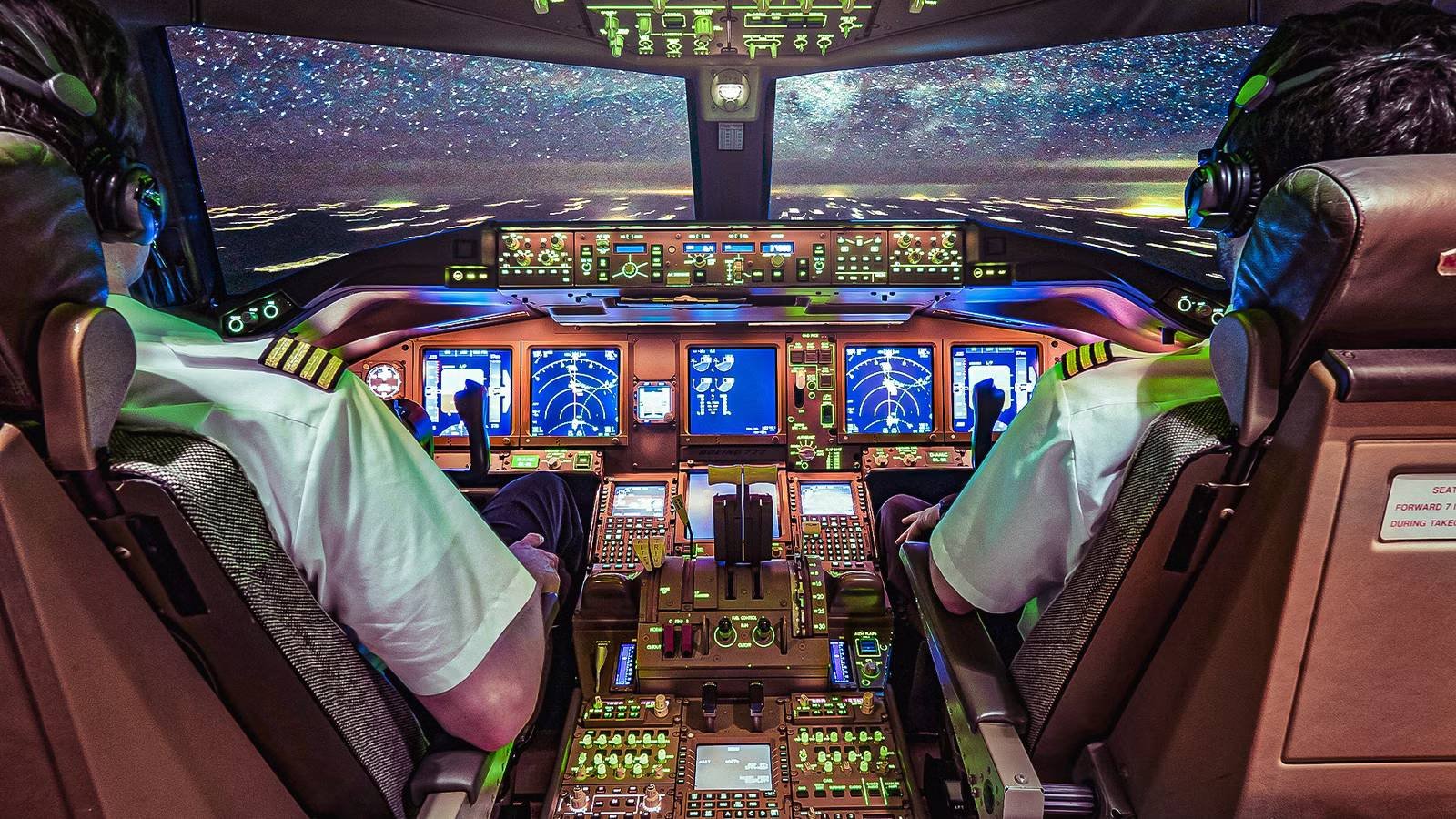
Most airline passengers will never notice the numbers being entered into an aircraft’s transponder, nor will they hear discussions between pilots and air traffic controllers about radar identification codes. However, among the thousands of flights crossing the skies every day, one particular code appears more often than many travelers would expect: squawk code 7600.
Although it is sometimes associated with dramatic aviation incidents, squawk code 7600 does not necessarily indicate that an aircraft is in immediate danger. Instead, it is a standardized signal used worldwide to tell air traffic control that a flight has experienced a communications failure, allowing controllers and pilots to continue operating safely even when radio contact has been lost.
What Is A Squawk Code?
A squawk code is a four-digit number entered into an aircraft’s transponder, a device that responds to radar interrogations and helps air traffic controllers identify aircraft on their screens. The codes use octal numbering, meaning each digit can only be between zero and seven, creating a total of 4,096 possible combinations.
Most squawk codes are assigned by air traffic control and are used simply to identify a particular aircraft. However, a small number of codes are reserved internationally for special situations. The three emergency-related codes that every pilot memorizes are outlined in the table below.
Squawk code | Reason |
|---|---|
7500 | Unlawful interference (hijacking) |
7600 | Communications failure |
7700 | General emergency |
When a pilot selects 7600 on the transponder, the aircraft immediately becomes recognizable to controllers as one that has lost the ability to communicate normally by radio. The FAA instructs pilots experiencing a loss of two-way radio capability to set the transponder to code 7600 so that air traffic services can recognize the problem and respond appropriately. Air traffic controllers are trained to anticipate this action and begin communications-failure procedures when they see the code appear on their displays.
What Squawk Code 7700 Actually Means
How often is it used by commercial airline pilots?
Why Aircraft Use Squawk Code 7600

United Airlines, Simple Flying
Modern aviation relies heavily on radio communication, and pilots use it to receive clearances, route changes, weather information, altitude assignments, and traffic instructions through continuous contact with controllers. If that communication link is lost, both pilots and controllers need an immediate way to understand what has happened. This is where squawk code 7600 becomes essential, as a radio failure does not automatically mean that an aircraft has suffered a major systems malfunction.
In many cases, the issue may involve a faulty microphone, a damaged headset, an antenna problem, a failed radio unit, or even a misunderstanding about which frequency should be in use. Regardless of the cause, air traffic controllers need to know that the aircraft can no longer communicate normally. By selecting squawk code 7600, pilots effectively replace a spoken message with a digital one, and the code instantly informs controllers that the flight is experiencing communications difficulties.
Air traffic control can then begin alternative procedures, which may include attempting contact on emergency frequencies, relaying messages through other aircraft, or preparing visual signals if the aircraft is approaching a tower-controlled airport. The transponder code allows the entire air traffic system to recognize the problem within seconds, even when no voice communication is possible.
What Happens After A Communications Failure

Shutterstock, Simple Flying
One of the biggest misconceptions among passengers is that losing radio communication creates immediate chaos, but in reality, aviation regulations contain detailed procedures designed specifically for these situations. Pilots operating under instrument flight rules already know what route, altitude, and destination they are expected to follow if communications are lost, while air traffic controllers likewise understand the procedures pilots are required to use.
This shared understanding allows both sides to continue making predictable decisions even without direct conversation. Once an aircraft begins squawking code 7600, air traffic controllers will typically try several methods to re-establish contact. They may call the aircraft on its current frequency, attempt contact on emergency frequency 121.5 MHz, use nearby aircraft to relay messages, or communicate through company dispatch channels.
If communication cannot be restored, controllers will protect the aircraft’s expected route by keeping other traffic clear of its path. At airports with an air traffic control tower, visual light-gun signals remain available as a backup communication method – green, red, and flashing lights can provide landing clearances and other instructions if necessary. While this system is rarely used in airline operations today, it remains part of aviation’s layered safety structure.

“15 Loud Bangs:” United 777 To Munich Makes Emergency Landing In Houston After Engine Fire
A series of bangs echoed through the cabin after an engine fire shortly after takeoff.
Why Squawk 7600 Is More Common Than Many Passengers Think

To the average traveler, the appearance of squawk code 7600 may seem alarming because it is grouped alongside other emergency-related codes. However, communications failures occur far more frequently than hijackings or serious in-flight emergencies. The reason is simple: radio systems are electronic equipment, and electronic equipment occasionally experiences faults.
For example, an aircraft may lose a single radio while retaining another, a microphone may fail while the receiver continues working, or a frequency may be incorrectly selected, creating the appearance of a communications failure even though the aircraft itself is operating normally. In some cases, the problem does not originate on the aircraft at all, and ground-based communication systems can experience outages or disruptions.

Temporary coverage gaps, especially in remote regions or over oceans, can also create situations where normal radio contact becomes difficult. Importantly, a flight squawking code 7600 often continues to its destination without passengers ever realizing anything unusual has occurred. The cabin environment may remain completely normal while pilots work through established checklists and air traffic controllers make accommodations behind the scenes. The event can be operationally significant without being dangerous.
You also hear about these incidents more often today due to the availability of flight-tracking sites. As a result, events that would once have gone unnoticed by the public now receive attention almost immediately, creating the impression that something extraordinary is happening when it may simply be a routine communications issue being handled according to standard procedures. Simple Flying’s Flight Tracker allows users to find flights by squawk code with the Filter function, as shown above.
Catch what other flight trackers miss
Emergency squawks, holds, NOTAMs — live signals, no signup.
Open tracker
Catch what other flight trackers miss
Emergency squawks, holds, NOTAMs — live signals, no signup.
Open tracker
Recent Real-World Examples Of Squawk Code 7600

Several incidents involving US airlines over the past few years demonstrate how regularly communications failures occur and how effectively they are managed. In June 2026, flight-tracking data recorded a  United Airlines Boeing 737 MAX operating as flight 583 between
  San Francisco International Airport (SFO) and
  Orlando International Airport (MCO) transmitting squawk code 7600.
The code indicated a loss of communications, prompting attention from aviation enthusiasts monitoring ADS-B data. As is typical in many such cases, the aircraft continued operating safely while established communications-failure procedures were followed. Another example emerged in late 2025 when a United Airlines Boeing 777 operating between  Los Angeles International Airport (LAX) and Honolulu Daniel K. Inouye International Airport (HNL) was recorded as squawking code 7600 during the flight.
The aircraft subsequently completed its journey, illustrating how communications issues frequently remain operational events rather than emergencies that place passengers at risk. It is also worth noting that communications-related issues do not always result in a prolonged loss of contact. Indeed, in 2025, United temporarily disabled Starlink Wi-Fi systems on part of its Embraer E175 regional fleet after pilots reported radio interference affecting cockpit communications.
Although these reports did not necessarily result in every aircraft squawking code 7600, they highlighted how airlines closely monitor anything that could affect communications with air traffic control and take precautionary action long before safety is compromised. Shorter-duration events involving squawk code 7600 have also been documented among both passenger and cargo aircraft alike.
In many cases, aircraft briefly transmit the code before communications are restored and normal operations resume. Such failures are uncommon in the context of any individual flight. However, the frequency with which these events appear on tracking networks reinforces the reality that radio failures occur often enough across the thousands of daily airline operations that they are considered a routine contingency within modern aviation.
How The FAA Plans To Modernize Air Traffic Control Without Shutting Down A Single Flight
Air traffic control across the US has been in need of an overhaul for several years.
The Safety Value Of A Simple Four-Digit Code

The enduring importance of squawk code 7600 reflects a broader principle within aviation safety – redundancy. Aircraft carry multiple radios, pilots train for communications-failure scenarios, air traffic controllers practice lost-contact procedures, and transponders provide a separate means of conveying critical information when voice communication disappears.
Even the process of changing transponder codes is carefully managed, and the FAA specifically advises pilots to avoid accidentally passing through codes in the 7600 and 7700 ranges while dialing new assignments because these codes immediately trigger special alerts within air traffic systems. That guidance underscores how seriously these signals are treated and how quickly controllers respond when they appear.
For passengers, the sight of squawk code 7600 may appear dramatic, but within the aviation world, it is primarily a tool of communication rather than a sign of catastrophe. The code serves as a reminder that modern air travel is built around multiple layers of protection, ensuring that even when radios fall silent, aircraft and controllers still have reliable ways to keep flights moving safely through the skies.
