


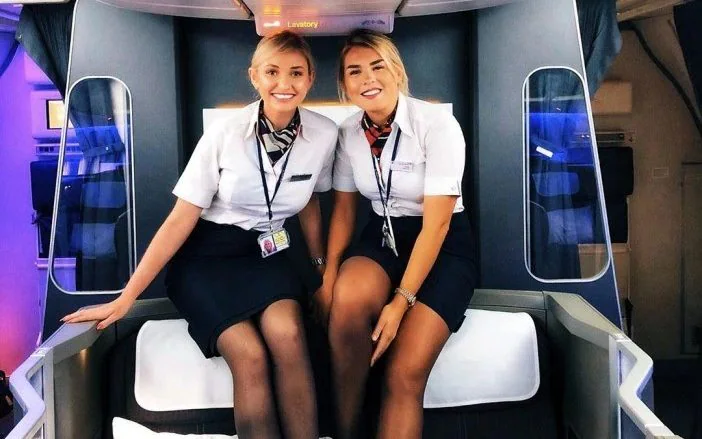
LONDON – Travelers flying with British Airways (BA) now face strict new rules regarding their onboard behavior, as the airline has officially moved to ban the photography, filming, and livestreaming of its cabin crew and staff without their express consent.
The policy change, which was recently added to the airline’s General Conditions of Carriage, marks a significant crackdown on unauthorized recording in the cabin. Under the updated Section 11.a, titled “Unacceptable Behavior,” the airline now explicitly states:
“If, while you are on board the aircraft, we reasonably believe that you have filmed, live-streamed or photographed our crew or other colleagues without their consent, we may take any measures we think reasonable to prevent you continuing your behaviour.”
Strict Penalties for Violators
The amendment turns what was once a matter of crew instruction into a contractual obligation for passengers. Those who refuse to comply or persist in recording staff could face severe consequences, including:
- Forced removal from the aircraft upon landing.
- Cancellation of any remaining sectors on their ticket without a refund.
- A ban from future travel with the airline.
- Referral to local law enforcement if the situation is deemed serious enough.
The Rise of Wearable Tech and High-Speed Wi-Fi
Industry experts suggest the timing of this update is no coincidence. British Airways is currently in the process of rolling out high-speed Starlink Wi-Fi across its fleet. This increased bandwidth makes it significantly easier for passengers to livestream onboard disputes or interactions in real-time, potentially exposing crew members to viral scrutiny without context.
Furthermore, the ban specifically targets modern recording hardware. While smartphones are the primary concern, the new rules explicitly cover:
- Smart glasses (such as Meta Ray-Bans).
- GoPro-style cameras and body-mounted equipment.
- Discreet wearable recording devices that may not be immediately obvious to staff.
Privacy vs. Accountability
The move has sparked a debate within the travel community. While many argue that airline employees deserve a private and safe workplace free from harassment, some passengers worry the policy could be used to suppress documentation of poor service or airline misconduct.
“While I can understand wanting to protect crew, I think the one situation where it might not be favorable for the passenger is if an incident arises… it can give them grounds for retaliation,” noted one traveler in a discussion on One Mile at a Time.
British Airways maintains that the aircraft cabin is private property, distinguishing it from public spaces like streets or airport terminals where photography laws are more relaxed. Passengers are still permitted to take photos of their own meals, the window view, or themselves, provided that no crew members or other passengers are captured without permission.
Similar policies have already been adopted by other international carriers, such as KLM and Virgin Australia, signaling a broader industry trend toward protecting crew privacy in the digital age.
