


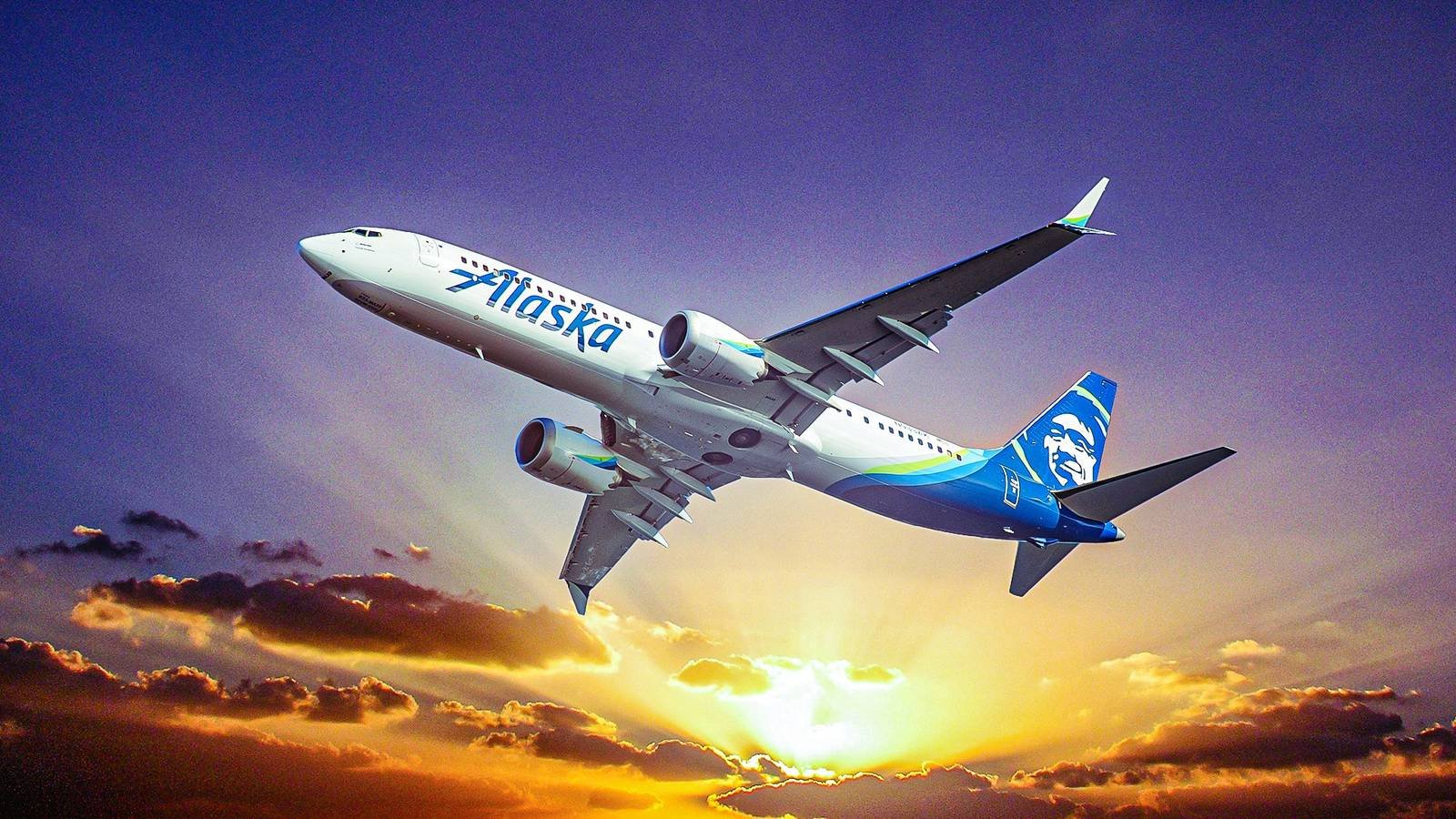
Alaska Airlines will launch two new nonstop routes to Honolulu International Airport (HNL) in less than two months’ time, connecting Hawaii with the secondary cities of Boise, Idaho, and Spokane, Washington. Both services will be operated by Boeing 737 MAX 8 aircraft, with scheduled flight times of approximately seven hours. Boise will receive daily flights beginning December 17, while Spokane will follow on December 19 with weekly service.
The additions will restore nonstop links that were last operated more than a decade ago by Allegiant Air. They also demonstrate the importance of Alaska’s growing Boeing 737 MAX 8 fleet, which allows the carrier to operate lengthy routes that might not support larger aircraft. The two new services will rank among the airline’s longest MAX 8 operations, joining flights to destinations across the United States, Central America and Europe.
Alaska Airlines Restores Nonstop Hawaii Flights From Boise And Spokane

The first new service will connect Boise Air Terminal/Gowen field (BOI) with Honolulu daily from December 17 through March 21, 2027, covering 2,831 miles (4,556 km). Two days later, Alaska will launch weekly Saturday flights between Spokane International Airport (GEG) and Honolulu, covering 2,877 miles (4,630 km), with operations continuing through April 17. Both routes will operate during the peak winter travel season and offer onward connections to Hawaii’s neighboring islands.
Route | Launch Date | Frequency | Distance | Maximum Block Time |
|---|---|---|---|---|
Boise – Honolulu | December 17 | Daily | 2,831 miles (4,556 km) | 7h 00m |
Spokane – Honolulu | December 19 | Weekly (Saturday) | 2,877 miles (4,630 km) | 7h 03m |
Both markets already generate considerable traffic to Hawaii, despite lacking nonstop flights. In the 12 months ending June 2026, approximately 44,000 round-trip passengers traveled between Spokane and Honolulu, and a further 42,000 between Boise and Honolulu. Interestingly, Alaska is offering daily service from Boise versus weekly for Spokane, despite similar underlying passenger volumes. The difference may reflect expected yields, seasonality and connecting opportunities, with the airline previously highlighting the potential of Boise and Spokane as underserved Hawaii markets.
Announcing the routes earlier this year, Alaska Airlines vice president of network planning Kirsten Amrine emphasized their importance to the combined Alaska–Hawaiian network:
“We’re excited to expand access to and from Hawaii with new nonstop Boise and Spokane service, giving guests in two growing markets an easier way to reach the Hawaiian Islands. These routes, along with additional service between Honolulu and Las Vegas, reflect strong demand for Hawaii travel and our commitment to providing more convenient options for both visitors and Hawaii residents traveling throughout our network.”
The two cities previously enjoyed nonstop Honolulu flights operated by Allegiant, which introduced both routes in February 2013 using 223-seat Boeing 757-200s. However, the airline suspended the services later that year amid weaker seasonal demand, eventually abandoning its wider Hawaii experiment as it phased out the 757 fleet. Allegiant’s final Hawaii flight operated in October 2017, ending an operation undermined by high costs and disappointing demand on several routes. Alaska’s smaller, more efficient MAX 8s and extensive connecting network will likely offer a more sustainable approach.
The New Routes Rank Among Alaska’s Longest MAX 8 Flights

The MAX 8 is particularly well suited to Alaska’s longest narrowbody routes. Boeing advertises a range of 3,500 nautical miles, equivalent to 4,028 miles (6,482 km). The MAX 8 also carries fewer passengers, with Alaska’s principal configuration seating 161 travelers compared with 178 on the MAX 9. This combination of greater range and lower capacity provides flexibility when launching long-distance routes from smaller markets.
Alaska’s longest MAX 8 service connects Seattle with Reykjavík’s Keflavik International Airport (KEF) in Iceland, covering approximately 3,609 miles (5,808 km). The transatlantic route launched in May 2026 at the same time as the carrier was launching its new Boeing 787-9 services to Europe, demonstrating the aircraft’s capabilities on flights approaching eight hours.
Rank | Route | Distance | Published Flight Time |
|---|---|---|---|
1 | Seattle – Reykjavík | 3,609 miles (5,808 km) | 7h 35m |
2 | Anchorage – New York JFK | 3,375 miles (5,432 km) | 7h 14m |
3 | Anchorage – Boston | 3,371 miles (5,425 km) | 7h 15m |
4 | Seattle – Liberia, Costa Rica | 3,321 miles (5,345 km) | 7h 07m |
5 | Honolulu – Salt Lake City | 2,988 miles (4,809 km) | 6h 24m |
6 | Spokane –Honolulu | 2,877 miles (4,630 km) | 7h 03m |
7 | Boise –Honolulu | 2,831 miles (4,556 km) | 6h 47m |
8 | Los Angeles – San José, Costa Rica | 2,721 miles (4,379 km) | 5h 53m |
9 | Seattle – Miami | 2,719 miles (4,376 km) | 5h 57m |
10 | Seattle – Lihue | 2,698 miles (4,342 km) | 6h 16m |
Other lengthy services include Anchorage International Airport (ANC) to  New York JFK Airport (JFK) and
 Boston Logan International Airport (BOS), as well as
 Seattle-Tacoma International Airport (SEA) to Liberia in Costa Rica. The new Spokane and Boise routes will rank sixth and seventh among Alaska’s longest MAX 8 services, highlighting the diversity of the airline’s long-distance narrowbody network.
Loading map…
Drag to explore
For passengers, these flights mean spending six to eight hours aboard a single-aisle aircraft, which might not be to everyone’s tastes. But the tradeoff is having a quicker nonstop flight direct to Hawaii, versus the likely alternative of a connection on to a Hawaiian Airlines widebody in Seattle. Alaska has also expanded its premium seating across the Boeing 737 fleet, reflecting growing competition for travelers seeking additional comfort, especially on longer flights like this.
Alaska Airlines’ Growing Boeing 737 MAX Fleet Supports Further Expansion

Alaska Airlines has been steadily expanding its MAX fleet as it replaces older Boeing 737s and pursues new routes. It currently operates 100 MAX aircraft, comprising 20 MAX 8s and 80 MAX 9s, with another 168 MAX-family aircraft on firm order. The three variants serve different purposes: the MAX 8 provides the greatest range, the MAX 9 combines range with greater capacity, and the MAX 10 will accommodate even more passengers. Alaska’s investment in additional MAX 8 operations demonstrates the importance of the smallest variant to its network strategy.
Aircraft Type | Advertised Range | Seats | In Operation | On Order |
|---|---|---|---|---|
Boeing 737 MAX 8 | 3,500 nm (4,028 miles; 6,482 km) | 161 | 20 | 5 |
Boeing 737 MAX 9 | 3,300 nm (3,798 miles; 6,112 km) | 178 | 80 | |
Boeing 737 MAX 10 | 3,100 nm (3,568 miles; 5,742 km) | 190* | 163 | |
Total | — | — | 100 | 168 |
*MAX 10 seating is a planned configuration and will vary, including on aircraft featuring Aurora suites.
The carrier’s largest-ever aircraft order, announced in January 2026, included 105 additional MAX 10s and options for another 35. In a particularly timely development, the FAA certified the MAX 10 yesterday, clearing the way for deliveries after years of delays. Alaska expects to receive its first example in the second quarter of 2027, with at least 25 aircraft eventually featuring its new Aurora lie-flat business class suites on transcontinental routes. The increased capacity of the MAX 10 will help the airline improve yields on busier services, while allowing the MAX 8 to concentrate on longer, lower-demand markets.
The new Honolulu flights also fit into Alaska Air Group’s increasingly integrated Hawaii network. It will operate approximately 422 combined weekly Mainland–Hawaii departures over the winter season, the equivalent to 60 daily flights on average, making it the largest airline to the Aloha State with a market share of 42%. The group has been strengthening its Hawaii network, adding services from secondary markets while deploying larger aircraft on established high-demand routes. Boise and Spokane illustrate the opportunities created by that approach: using the MAX 8’s range and relatively modest seating capacity to bring nonstop Hawaii flights to markets that have depended on connections for years.
