


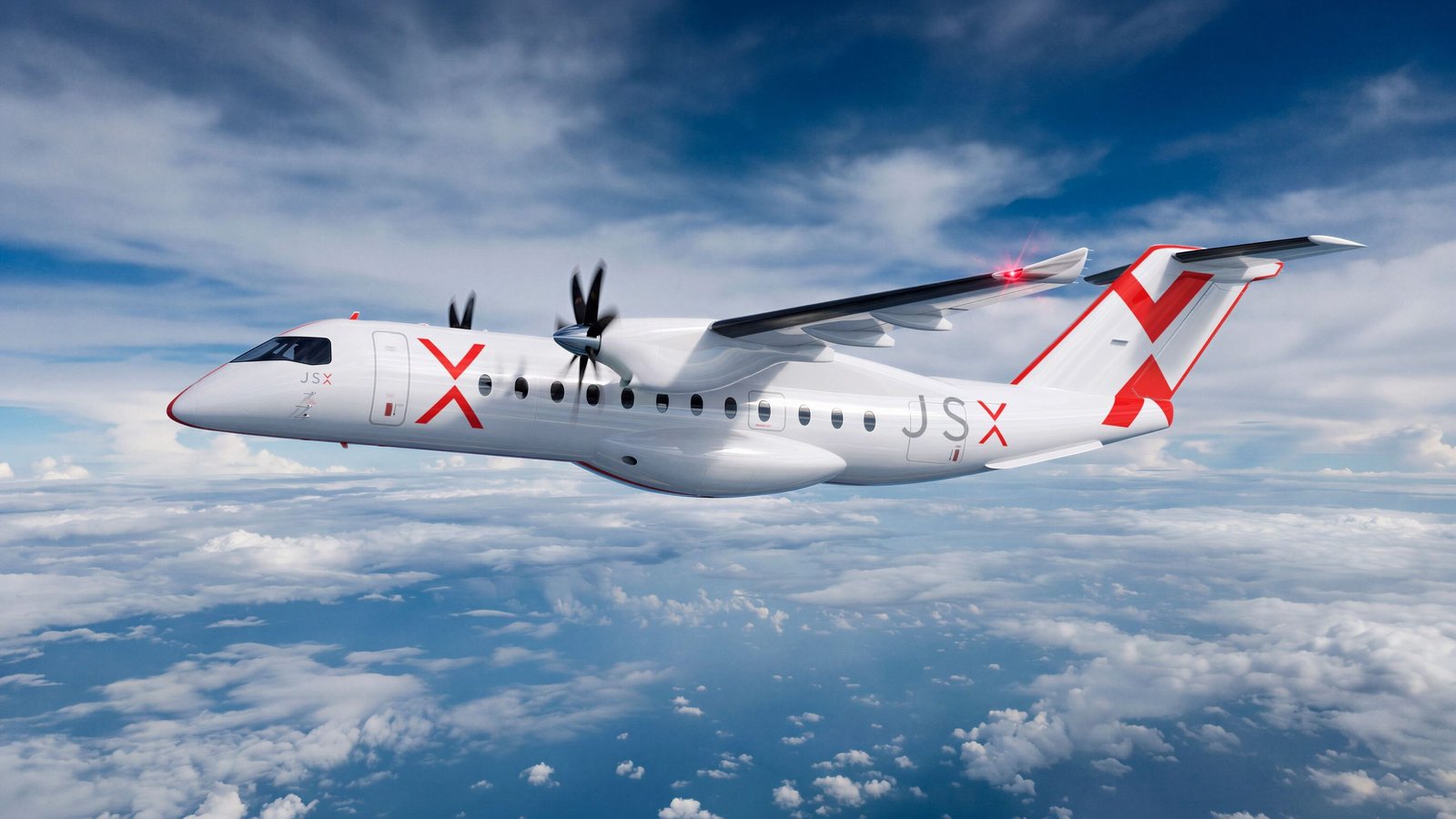
Developer drops independent hybrid-electric design in favour of “simplified” twin-electric motor configuration.
Heart Aerospace has pivoted to yet another version of the aircraft it intends to bring to market, unveiling the ES-36, a hybrid-electric design that ditches the four engines of its ES-30 predecessor in favour of a “simplified” two-nacelle and series-hybrid configuration with a shorter wingspan.
Disclosing the move, alongside a deposit-backed agreement with carrier JSX for 50 examples, the US developer says the switch to the ES-36 is “designed to further improve the Heart production aircraft’s operating cost advantage over legacy regional aircraft”.
The latest change will be the fourth iteration of Heart’s design. At the outset, it planned to build the 19-seat ES-19, but in 2022 switched to the original ES-30, a 30-seater powered by four 700kW-class electric motors, around 5t of batteries and twin turbogenerators in the rear fuselage as range extenders.
However, this configuration was dropped in 2024, with Heart instead adopting its unique “off the shelf” independent hybrid architecture, marrying a pair of 1.6MW electric motors with another pair of gas turbines in the 1,600shp (1,190kW) range. At the same time, it also abandoned other distinctive features of the earlier iteration such as the strut-braced wing and large under-fuselage battery bay.
Instead, the ES-36 will be powered by twin 1.65MW electric motors, running either from ground-charged batteries for full-electric flight or from two 1MW-class turbogenerators in a series configuration. Wingspan shrinks by around 3.3m (11ft) to 29m.
Range for the new aircraft will be 108nm (200km) in all-electric mode, or 647nm using the turbogenerator, in both cases plus reserves. Comparatively, the ES-30’s performance figures were 108nm and 434nm, respectively.
In addition to the cleaner appearance and greater hybrid range, the ES-36 gains another six passenger seats and 640kg (1,420lb) of payload – both increases of 20% – while maintaining the same 21t maximum take-off weight. However, the company had proposed a ‘high density’ version of the ES-30 featuring 34 seats with a reduced pitch of 29-30in.
Heart says its “aerodynamically optimised airframe allows more capacity to be dedicated to passengers and payload”, while the reduction in propulsion components cuts maintenance costs.
“The ES-36 design is a direct result of what Heart learned designing, building, testing and flying our X1 demonstrator aircraft,” – a milestone that took place in August – says Ben Stabler, chief technology officer at Heart.
“Those learnings have helped us make the production aircraft more capable in the air and more productive for operators.”
Chief executive Anders Forslund recently hinted in an interview with FlightGlobal that another configuration change was in the works and that it was reconsidering its previous propulsion architecture.
JSX’s agreement converts its 2023 letter of intent with Heart into a deposit-backed purchase commitment for 50 ES-36s, plus 50 options, and secures early delivery positions for the carrier.
Under the renewed agreement, JSX and Heart will also collaborate on the development of a cabin design and operational procedures.
Heart is now building its first pre-production ES-36 at its pilot manufacturing plant in Los Angeles, targeting first flight in the second half of 2028 and entry into service in 2031.
Although Heart had secured firm orders for around 250 ES-30s it has not disclosed whether these customers have also converted to the latest model.
On 12 August, the company completed the first – and so far only – flight of its X1 demonstrator from Plattsburgh in New York state.
The post Heart reveals ES-36 as it rejigs design for the fourth time first appeared on FlightGlobal.
