


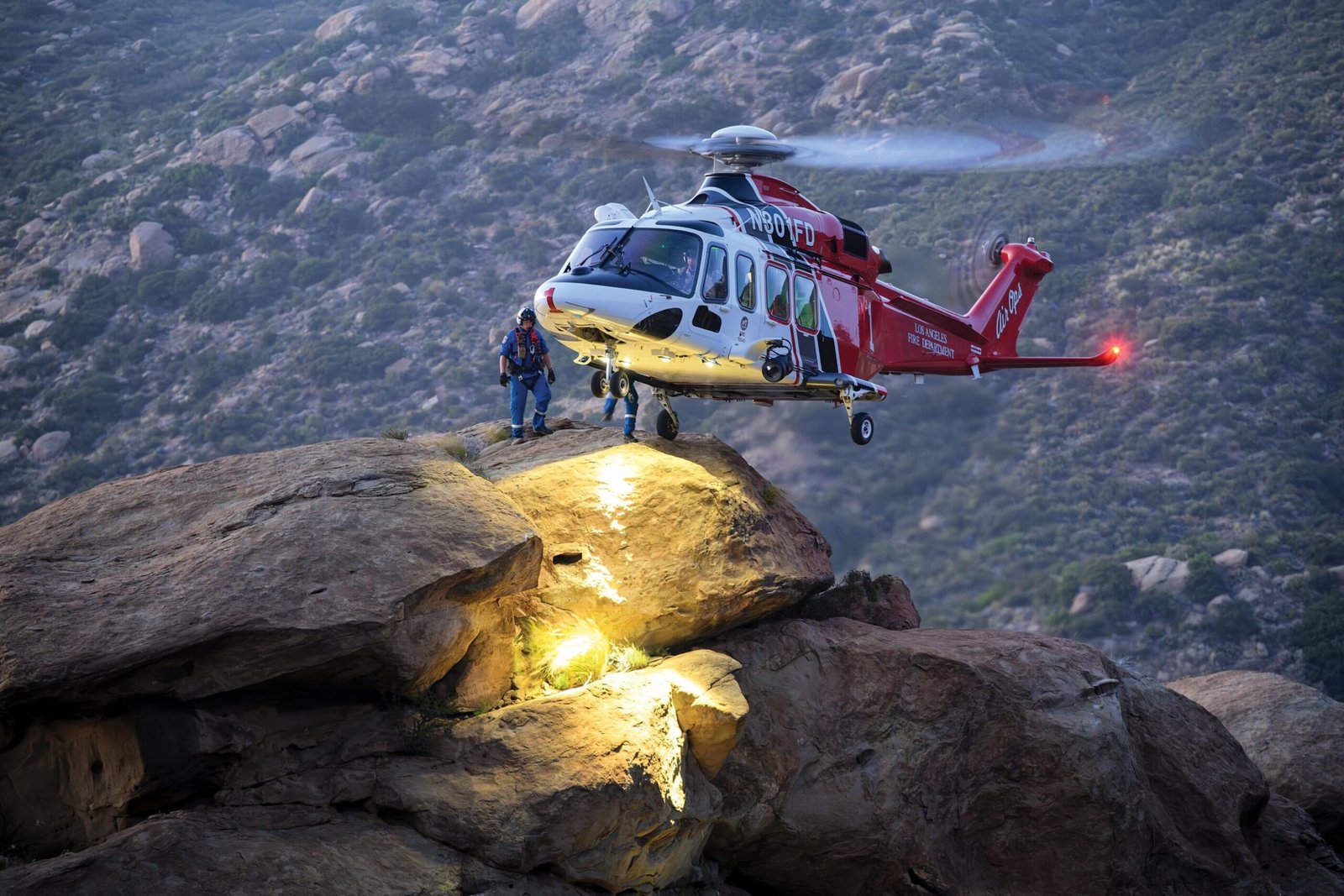
Helicopter emergency medical services have evolved significantly over the past several decades. Aircraft once viewed primarily as a means of rapidly transporting patients now serve as extensions of the hospital, carrying advanced medical equipment, specialized clinicians, and some of the most critically ill and injured patients.
As medicine has evolved, so have the demands placed on the aircraft.
Today’s HEMS operators must balance safety, performance, payload, cabin space, clinical capability, and operating cost while responding to increasingly complex missions. Healthcare systems are becoming more regionalized, critical care transport is growing more specialized, and operators face greater expectations for aircraft availability, efficiency, and flexibility.
For an aircraft manufacturer, the challenge is no longer simply to build a capable helicopter. It is to understand the mission, provide the right aircraft, configure it for the people carrying it out, and support it throughout its operational life.
That thinking shapes Leonardo’s approach to the global EMS market.
Starting With the Mission
There is no universal HEMS mission.
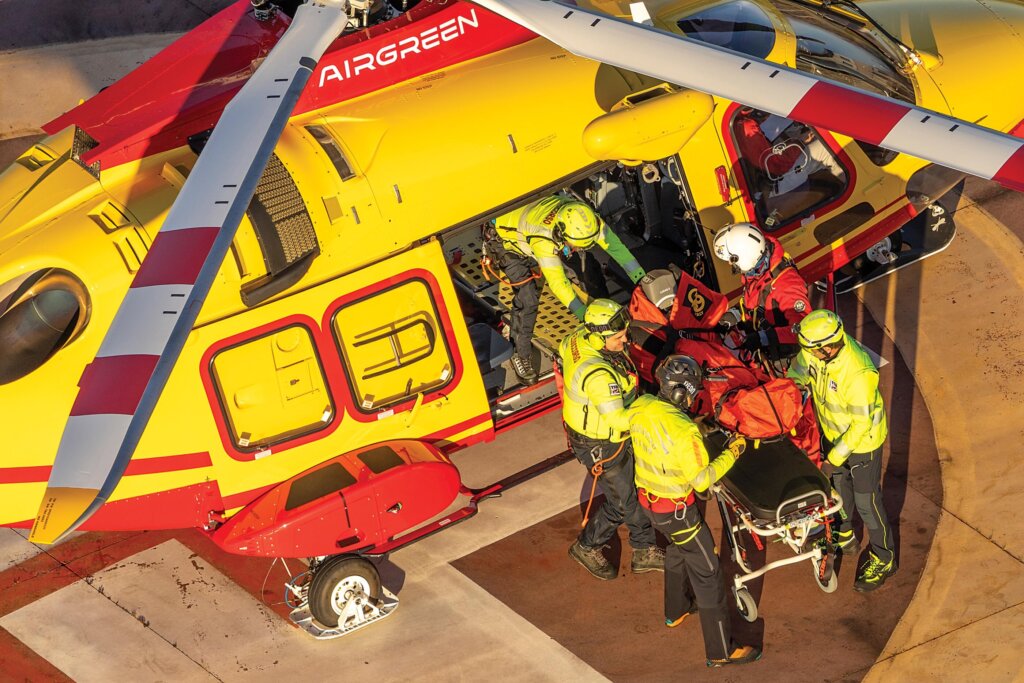
A program focused on regional scene response has very different requirements from one that routinely conducts long-distance critical care transports. Urban operations differ from rural missions, while mountainous terrain, hot-and-high environments, offshore operations, neonatal transport, search-and-rescue and highly specialized critical care each present distinct demands. Understanding those differences is central to Leonardo’s approach.
The process does not begin with aircraft specifications alone. It begins with understanding what the operator needs the aircraft to accomplish.
From a clinical perspective, that means considering whether caregivers can reach both sides of the patient, access critical equipment throughout the flight, perform procedures effectively, and integrate specialized equipment into the cabin.
Operational considerations include range, payload, aircraft footprint, performance, maintainability, availability and lifecycle cost.
The goal is to consider the mission as a whole — patient, crew, aircraft, and operator — rather than any one element in isolation.
A Portfolio Built Around Different Needs
The diversity of HEMS operations also means there is no single aircraft suited to every mission.
Leonardo’s helicopter portfolio allows operators to select a platform that fits their requirements rather than adapt the mission to a single aircraft offering.
The single-engine AW119 has established a significant EMS presence, particularly in North America, while the AW109 family provides a proven light-twin solution with a long history in air medical operations. The AW169 and AW139 offer greater cabin volume, payload, range and mission capability, while the AW189 can support larger and especially demanding EMS, rescue, and public-service missions.
The portfolio is also set to expand. The next-generation single-engine AW09 is progressing toward certification and features a large, adaptable cabin designed to support a range of missions, including EMS.
Together, these aircraft serve a broad spectrum of EMS operations — from efficient, single-engine regional programs to complex critical care, specialty transport, and rescue missions that require larger aircraft and greater capability.
Leonardo’s presence in EMS reflects that range. By 2020, the company had already reported more than 110 AW119, AW109, AW169 and AW139 helicopters serving the North American EMS market, and that presence has continued to grow. Around the world, Leonardo helicopters support emergency medical, rescue and public-service missions across different healthcare systems, geographies, and operating environments.
Thousands of Leonardo helicopters operate around the world, supported by a global network of training, product support, technical expertise, and operational experience throughout the aircraft lifecycle.
Designing Around the Patient
Historically, medical interiors were often created by adapting an existing aircraft cabin to accommodate a patient and the equipment needed to provide care. Modern HEMS requires a different approach.
Leonardo increasingly considers the medical mission from the beginning of aircraft and cabin development. The focus extends beyond where the stretcher fits to the full clinical environment surrounding the patient.
Caregiver access, equipment placement, lighting, electrical capacity, oxygen integration, loading systems, vibration, communication, infection control, and the ability to add future medical technologies, all affect how well the aircraft functions as a clinical workspace.
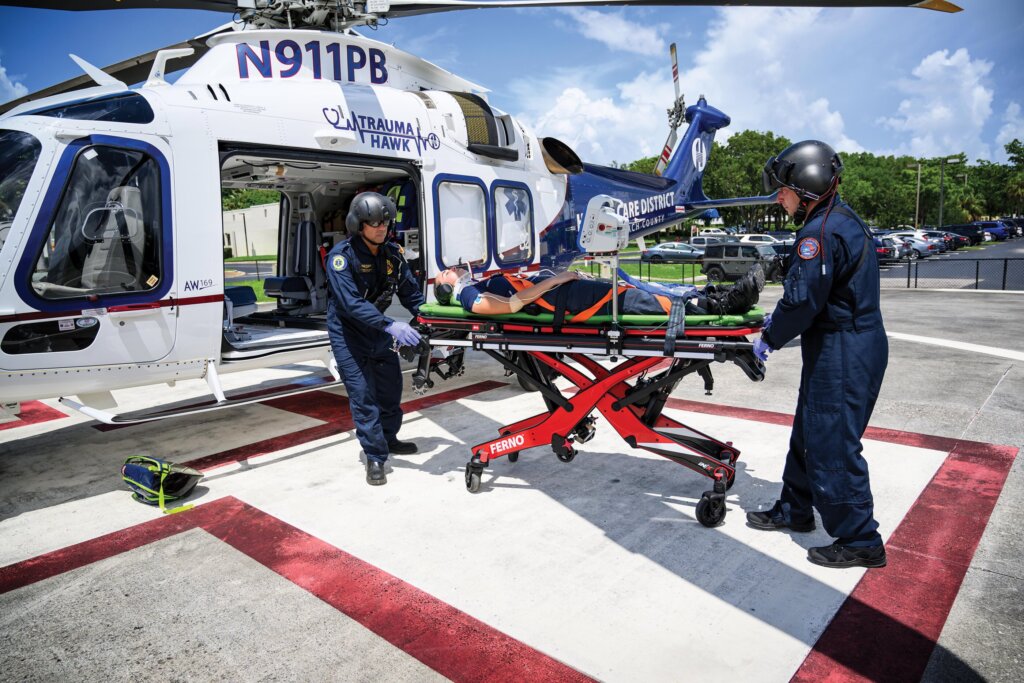
The AW169, for example, combines a flexible cabin and large sliding doors with high main- and tail-rotor clearance for safer patient loading. Its auxiliary power unit (APU) mode keeps the environmental control system, radios, and medical devices operating with the rotors stopped, allowing clinicians to continue caring for patients on the ground. That distinction becomes even more important as critical care transport grows increasingly complex.
Feedback from pilots, clinicians, mechanics, and operators continues to shape Leonardo’s aircraft and support services. That collaboration proved especially important during the Covid-19 pandemic, when operators introduced infectious-patient transport, biocontainment, and new decontamination measures — reinforcing the need for aircraft that can evolve with the mission.
Technology With a Purpose
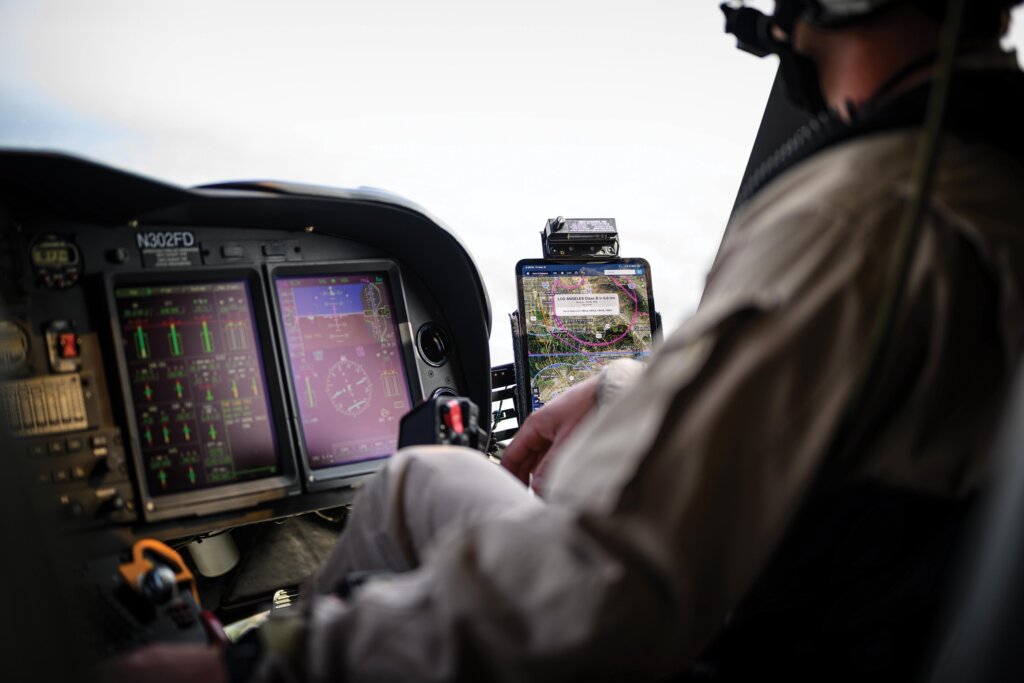
Advances in avionics, automation, digital connectivity, aircraft health monitoring, and simulation are changing HEMS operations. Their value lies in the problems they solve: improving situational awareness and reducing pilot workload, helping maintenance teams identify developing issues, and allowing clinicians to transmit patient information so receiving teams can prepare before the aircraft arrives.
Technology matters when it makes the mission safer, more efficient, or more clinically effective.
Supporting the Entire Mission
Long-term operational success depends on training, technical support, maintenance planning, parts availability, simulation and continued collaboration.
Leonardo supports operators beyond aircraft delivery through simulation, technical assistance, digital health monitoring, and its global support network. Together, these resources strengthen training, maintenance planning, fleet management, and aircraft availability.
For an EMS operator, availability is more than a fleet metric: an unavailable aircraft can mean a patient is not reached. Supporting the aircraft throughout its lifecycle is therefore part of supporting the mission.
The Next Chapter of HEMS
HEMS will continue to evolve as critical care transport becomes more specialized and advances in connectivity, automation, and aircraft design give operators new capabilities. Yet the mission remains unchanged: helping pilots, clinicians, maintenance professionals, and operators reach patients safely and deliver critical care. Leonardo’s role is to provide the aircraft, training, technology, and support they need to succeed.
Ultimately, success is measured not only by what an aircraft can do, but by what it enables its crews to accomplish.
