


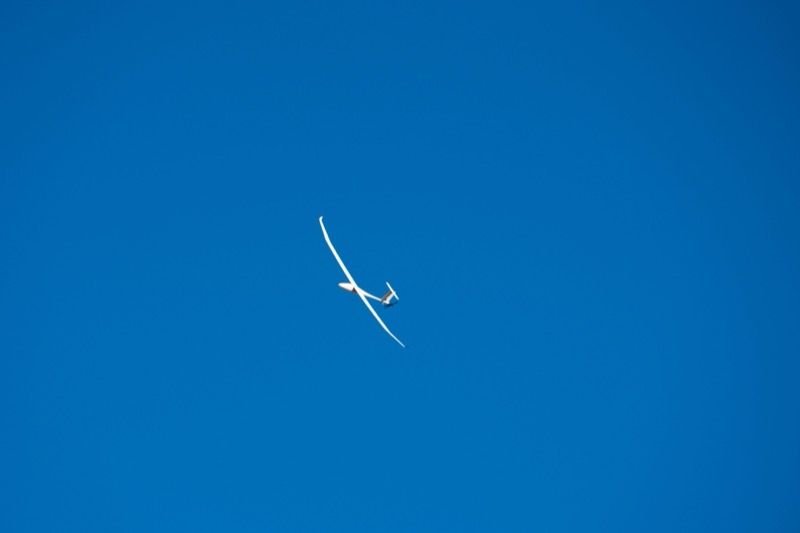
A laminar-flow demonstrator aircraft has completed a flight test campaign designed to validate predicted aerodynamic efficiency of an airframe developed under a US defence research programme.
Otto Aerospace conducted the campaign over the White Sands Missile Range (WSMR) in New Mexico, flying from Spaceport America. The uncrewed aircraft was built around laminar-flow aerodynamics intended to reduce drag by maintaining smooth, uninterrupted airflow over the airframe.
The demonstrator was developed under a 24-month contract from the USA’s Defense Advanced Research Projects Agency (DARPA) and the Operational Energy Capability Improvement Fund (OECIF), supporting DARPA’s Energy Web Aircraft (EWA) programme. The EWA effort explored laser-based power transfer across long distances using airborne relays to beam energy to aircraft, with the aim of keeping platforms aloft for extended periods.
Otto Aerospace said its role focused on developing a highly efficient laminar-flow airframe that could inform design parameters for future energy-relay systems and long-endurance platforms. The company said the flight campaign itself sat outside the scope of the DARPA and OECIF contract and was funded independently.
“This aircraft proved what we’ve modeled for years, that high-efficiency laminar-flow aerodynamics can deliver extraordinary endurance and performance,” said Scott Drennan, president and CEO of Otto Aerospace. “We’re proud that Otto’s expertise helped advance DARPA’s research objectives and equally proud of our team for executing a flawless flight campaign that pushes aerodynamic science forward.”
Flight operations were conducted in partnership with Swift Engineering, which managed vehicle preparation and coordinated range and telemetry support. Swift’s presence at Spaceport America and experience with high-altitude uncrewed aircraft supported multiple sorties over WSMR airspace.
Hamed Khalkhali, president of Swift Engineering said, “The performance demonstrated in flight confirms the promise of laminar-flow aerodynamics to redefine long-endurance efficiency for unmanned systems across defense and commercial applications.”
Otto Aerospace said the demonstrator provides a broader validation platform for its laminar-flow research, with data applicable to future energy-relay concepts and the company’s own commercial and defense aircraft programs. The Fort Worth, Texas-based company is developing a series of clean-sheet aircraft in the business and regional jet sectors.
“The data collected in this test opens new possibilities for energy-efficient aviation,” Drennan added. “From business jets to long-endurance UAVs, we’re showing how laminar flow can change what’s possible in flight.”
